

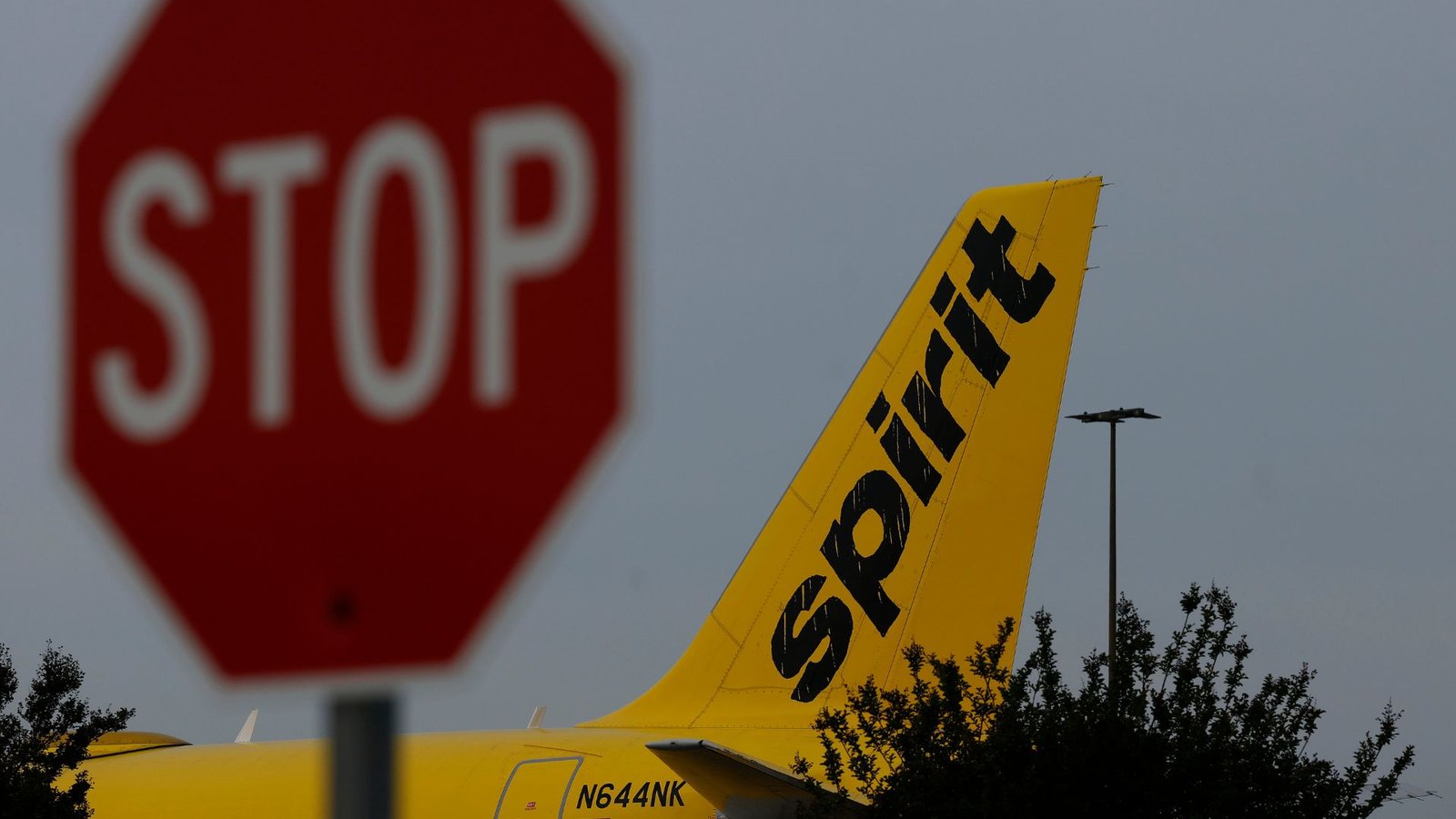
Two years after blocking a merger that would have kept Spirit Airlines from bankruptcy, the government is now offering to bail out the company to keep it afloat. President Donald Trump says it would save 14,000 jobs, but critics, even those in his own cabinet, are not thrilled with taxpayers saving another failing company.
On Wednesday, multiple reports suggested the Trump administration was considering a $500 million bailout for the budget airliner. The company has faced several challenging situations over the last few years, and the increase in jet fuel prices caused by the Iran War has only exacerbated that pain.
“Spirit’s in trouble,” Trump told CNBC’s “Squawk Box” on Tuesday. “I’d love somebody to buy Spirit. It’s 14,000 jobs, and maybe the federal government should help that one out.”
The deal could give the government an equity stake in the airline, the outlet reported. One person familiar with the negotiations said the plan would also put the government ahead of other stakeholders within the company.
The Trump administration blamed Spirit’s troubles on the Biden administration, which denied the merger in 2024. White House spokesman Kush Desai told CNBC that the airline would be “on a much firmer financial footing” if the previous administration hadn’t “recklessly blocked the airline’s merger with JetBlue.”
The airline has not spoken about the potential federal bailout, telling The New York Times that Spirit is “operating our business as normal.”
Why is Spirit failing?
The past few years haven’t been good to Spirit. According to The Times, the airline last turned a profit in 2019 and has lost billions of dollars since then.
The pandemic and the following years led to major struggles within the company as competition intensified. Spirit filed for Chapter 11 bankruptcy in August, the second time in less than a year.
The company had hoped that 2026 would be its year to resolve its bankruptcy case while maintaining business operations. But rising fuel prices because of the war in Iran had other ideas.
Spirit has lost almost half of its business from two years prior, according to The Times. In March, the airline flew about 15,000 flights, down from about 29,000 in 2024. Employees have also suffered job cuts during the same period, with Spirit saying it employed fewer than 10,000 people last year, down from nearly 12,000 a year earlier.
Critics push back
Despite Trump’s backing, not everyone in his cabinet agrees that bailing out Spirit is the right move. Transportation Secretary Sean Duffy questioned the idea, saying Spirit has yet to show it’s profitable.
“What we don’t want to do is put good money after bad, and there’s been a lot of money thrown at Spirit, and they haven’t found their way into profitability,” Duffy told Reuters. “And so would we just forestall the inevitable and then own that?”
Others in Trump’s administration also pushed back. FAA Administrator Bryan Bedford was on stage with Duffy during an event Tuesday. During Duffy’s remarks, Bedford interjected and said, “[Spirit] can’t have any of our money,” CNN reported.
Those in the airline industry also pushed back at the idea of a federal bailout for Spirit. United Airlines CEO Scott Kirby said Spirit was running on a “fundamentally flawed” business model.
“The U.S. airline industry is on the most solid footing coming into this fuel price spike than we’ve been, probably in my career,” he told CNBC. “I think this would have to get a whole lot worse before there was need to start bailing out airlines.”
The Cato Institute, a libertarian think tank, took issue with the idea, arguing that an equity stake in the company would make the government an owner. The institute said ownership could allow the government to pressure the company to make changes acceptable to the current administration.