

The war in Iran is costing American taxpayers close to $1 billion a day — and maybe more.
Tuesday could be especially pricey. Defense Secretary Pete Hegseth said it would bring the “most intense day” of U.S. strikes on Iran so far in the 11 days since the conflict began.
So far, U.S. forces have hit more than 5,000 targets, Gen. Dan Caine, chairman of the Joint Chiefs of Staff, said at an early morning news conference.
The war’s human costs are mounting. U.S. and Israeli strikes have killed more than 1,200 people in Iran, according to the nation’s health ministry, while close to 500 have died in Lebanon and 11 in Israel. Seven U.S. service members are dead, and officials warn more casualties are likely.
The financial costs are not as clear. The Pentagon has not released an official cost estimate for Operation Epic Fury, leaving outside analysts and research groups to fill the gap with varying projections.
By the numbers
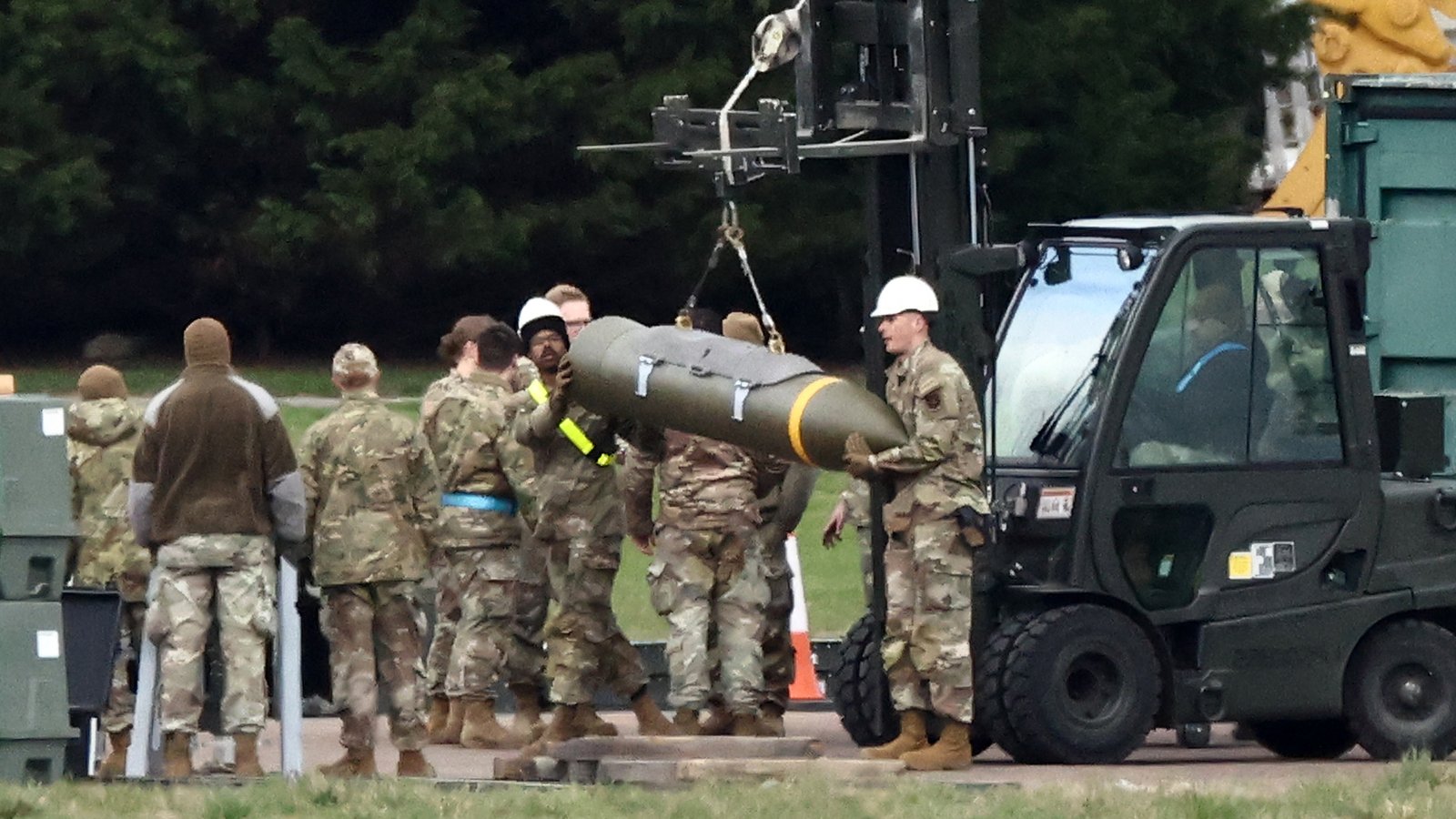
An analysis by the Center for Strategic and International Studies estimated the cost of the operation’s first 100 hours at $3.7 billion, or about $891.4 million a day. Roughly $3.1 billion was tied to replenishing munitions, and most of the total was not already budgeted.
CNN reported that Kent Smetters, faculty director of the Penn Wharton Budget Model, estimated a two-month war could cost U.S. taxpayers between $40 billion and $95 billion, depending on whether the U.S. deploys ground troops and how quickly it replaces expended munitions.
With no official Pentagon figure, early estimates suggest the opening phase was driven largely by spending on high-cost munitions. The Washington Post reported the Pentagon estimated it spent $5.6 billion on munitions in the first two days of the war.
MS NOW cited two congressional sources in reporting that the war was costing nearly $1 billion per day. Meanwhile, Politico reported that Republican lawmakers fear spending is closer to $2 billion per day.
Asked how much he expects the operation to cost, Rep. Tom Cole, R-Okla., the House appropriations chair, answered bluntly: “A lot.”
Congress seeks a tally
Rep. Brendan Boyle, D-Pa., the ranking minority member on the House Budget Committee, asked the Congressional Budget Office last week to analyze the war’s operational and sustainment costs, along with additional categories such as diplomatic operations and foreign aid. He also asked about “opportunity costs,” including how moving an aircraft carrier from near Taiwan to the waters off Iran could affect the U.S. response to potential Chinese aggression.
Boyle’s letter asked CBO to model scenarios in which the war lasts longer than four to five weeks — President Donald Trump’s initial estimate — and scenarios involving U.S. troops on the ground. In a separate statement, Boyle said taxpayers deserve an official estimate.
“That is why I have asked the Congressional Budget Office to provide an official analysis of how much this military operation will cost taxpayers,” he said. “American families don’t want billions of dollars wasted on an unnecessary war — they want lower costs and affordable health care.”
Munitions use shifts
A shift in strategy could make the war less expensive. The Post reported the Pentagon is shifting away from its initial reliance on precision munitions toward more plentiful laser-guided bombs, which analysts said could reduce per-strike costs.
As a precaution against a surge in Iranian retaliation, the Pentagon is rerouting missile defense assets, including part of a Terminal High Altitude Area Defense system from South Korea to the Middle East, while also drawing from Patriot interceptor supplies elsewhere.
The Pentagon expects to send Congress a supplemental defense request as soon as this week, potentially in the “tens of billions,” to help sustain the campaign, according to The Post. However, Pentagon spokesman Sean Parnell said the Defense Department has “everything it needs to execute any mission” on Trump’s timeline.
Cost to consumers
Americans are feeling the costs of the war in more direct ways. Gasoline and diesel prices have risen, which could impact everything from food prices to the cost of air travel.
Diesel prices are up 27% since the war began Feb. 28, to $4.78 a gallon, according to AAA. The average price of a gallon of regular gas hit $3.54 on Tuesday, up 43 cents in the past week.
The global oil market has experienced sharp swings in recent days. The global benchmark briefly approached $120 a barrel on Monday before falling back below $90 after Trump suggested the conflict might be shorter than previously thought.