

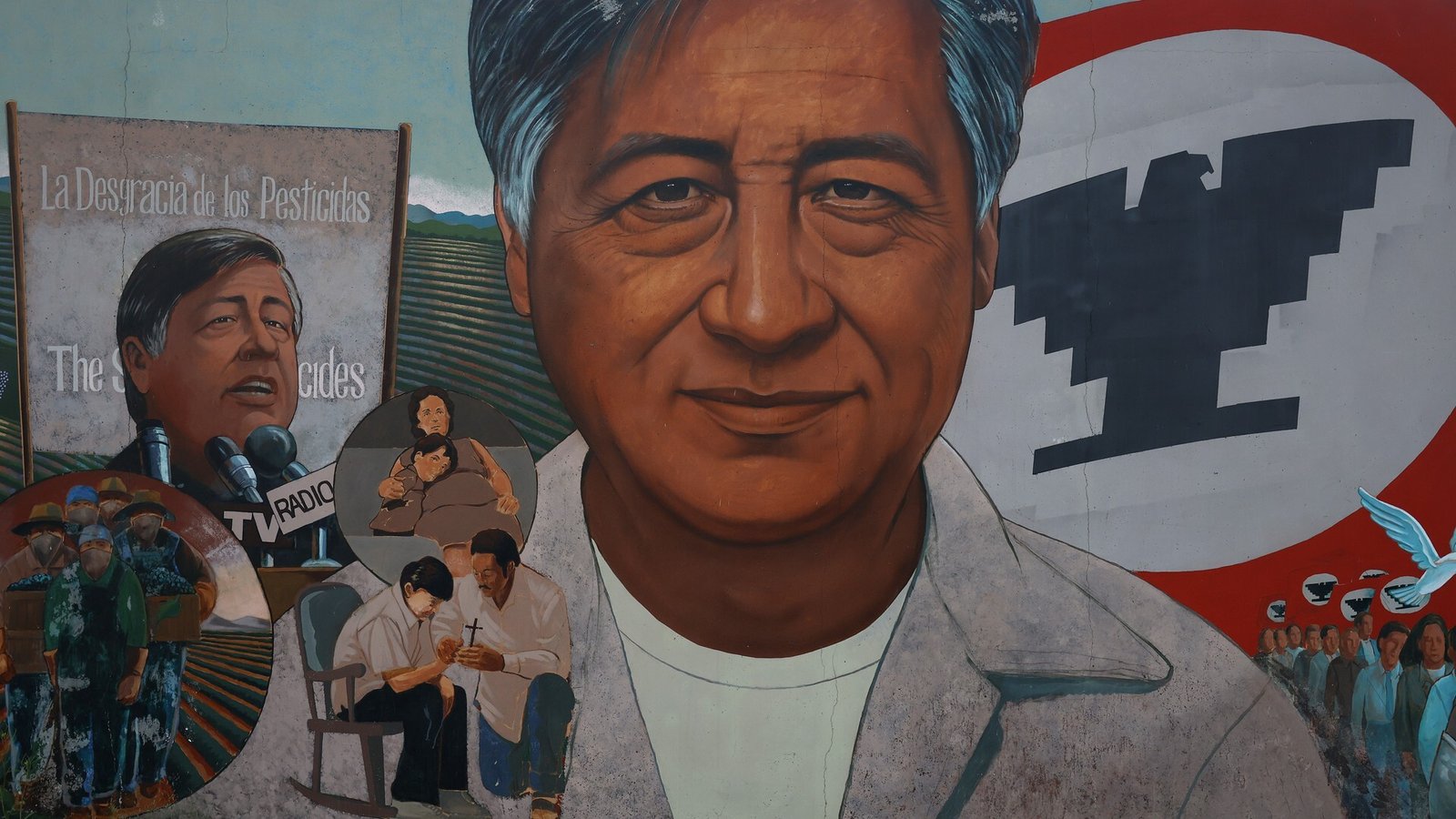
Events honoring the late civil rights leader Cesar Chavez are being canceled around the country over a report that he abused and molested young girls and women in his farmworkers labor movement for decades before his death in 1993.
The New York Times documented Chavez’s misconduct in a lengthy investigative story published on Wednesday. In anticipation of the story, the United Farm Workers union issued a statement referring to “troubling” allegations against its founder, and said it would not participate in events surrounding Cesar Chavez Day, a commemoration of his birthday on March 31.
Houston, San Antonio and Corpus Christi, Texas, are among the cities that canceled events honoring Chavez. Other celebrations were called off in Arizona, California and Michigan.
The Cesar Chavez Foundation, which promotes Chavez’s legacy, said it was working with the United Farm Workers to create a space where people could confidentially share their stories of misconduct, if they choose.
“In addition, we are investing time and resources to ensure the Foundation promotes and strengthens a workplace culture that is safe and welcoming for all,” the foundation said.
Who was Cesar Chavez?
Chavez was a first-generation American who devoted his life to improving conditions for farmworkers, particularly those born outside the United States, according to the foundation.
He worked full-time as a migrant worker after the Great Depression and traversed the nation, learning about the lives of other workers. Years later, he and Dolores Huerta established the nation’s first successful farm workers union — the National Farm Workers Association, rebranded to UFW.
Chavez intentionally lived a life of poverty until his 1993 death at age 66. The union adopted Huerta’s phrase “Sí se puede!,” meaning “yes, it can be done” or “yes, we can.”
Huerta, now 95, told The Times that Chavez raped her in 1966 and twice impregnated her. She kept the assault and the pregnancies secret, she said.

The UFW said it has received no direct reports of abuse against Chavez, but has declined to participate in any Cesar Chavez Day activities. The union encouraged people to instead promote immigration justice and support farmworkers or any vulnerable people in their areas.
“These allegations have been profoundly shocking,” the union said Tuesday. “We need some time to get this right, including to ensure robust, trauma-informed services are available to those who may need it.”
News about the impending report trickled across the nation to cities, a governor and several groups established in Chavez’s honor. In Michigan’s capital city of Lansing, the city cancelled an annual dinner. The city of San Antonio displays a banner on its website about the march’s cancellation. A spokesperson for Arizona Gov. Katie Hobbs, a Democrat, told several news stations the governor won’t recognize the activist in light of the allegations.
“The Governor’s Office has decided to not recognize Cesar Chavez Day this year,” according to a statement shared with Phoenix TV station KTAR. “Our thoughts are with the victims and all those affected.”
All have said they had received word that The Times was preparing a story about Chavez’s alleged pattern of sexual abuse and grooming women and young girls who worked in his movement.
NYT details abuse, grooming allegations against Chavez
The Times, which interviewed more than 60 people and reviewed union documents, emails and recordings, reported that Chavez sexually assaulted two minors for several years, assaulted Huerta and pursued at least a dozen young women who worked in the UFW movement.
Ana Murguia and Debra Rojas, both now 66, told The Times they knew Chavez at a young age through their parents, who were union organizers. Murguia said Chavez molested her from age 13 to 17, and Rojas said he fondled her breasts when she was 12 and had intercourse with her at age 15 in a California motel room. That encounter would be considered rape because Rojas was below the age of consent in California.
Huerta said that in 1966, during the UFW’s formative years, Chavez drove her to a grape field in Delano, California, and forced her to have sex with him inside his vehicle. She recounted a similar encounter in August 1960. Both times, she did not report the assaults because she feared other union organizers would not believe her.
“Unfortunately, he used some of his great leadership to abuse women and children — it’s really awful,” Huerta said.
The newspaper learned that those close to Chavez, including his son Paul Chavez, were told about the allegations in the 2000s. Paul Chavez told The Times the accusations were “hard to process.”
Reporters also found emails in which union members were concerned about how Murguia was affected by the abuse.
Huerta came forward on her social media accounts about the alleged abuse she endured.
“I have never identified myself as a victim, but I now understand that I am a survivor — of violence, of sexual abuse, of domineering men who saw me, and other women, as property, or things to control,” she wrote.
She noted that both times Chavez assaulted her, she became pregnant. She placed the two children with other families and has since built a relationship with them and the rest of her children.
“I have kept this secret long enough,” she wrote. “My silence ends here.”