

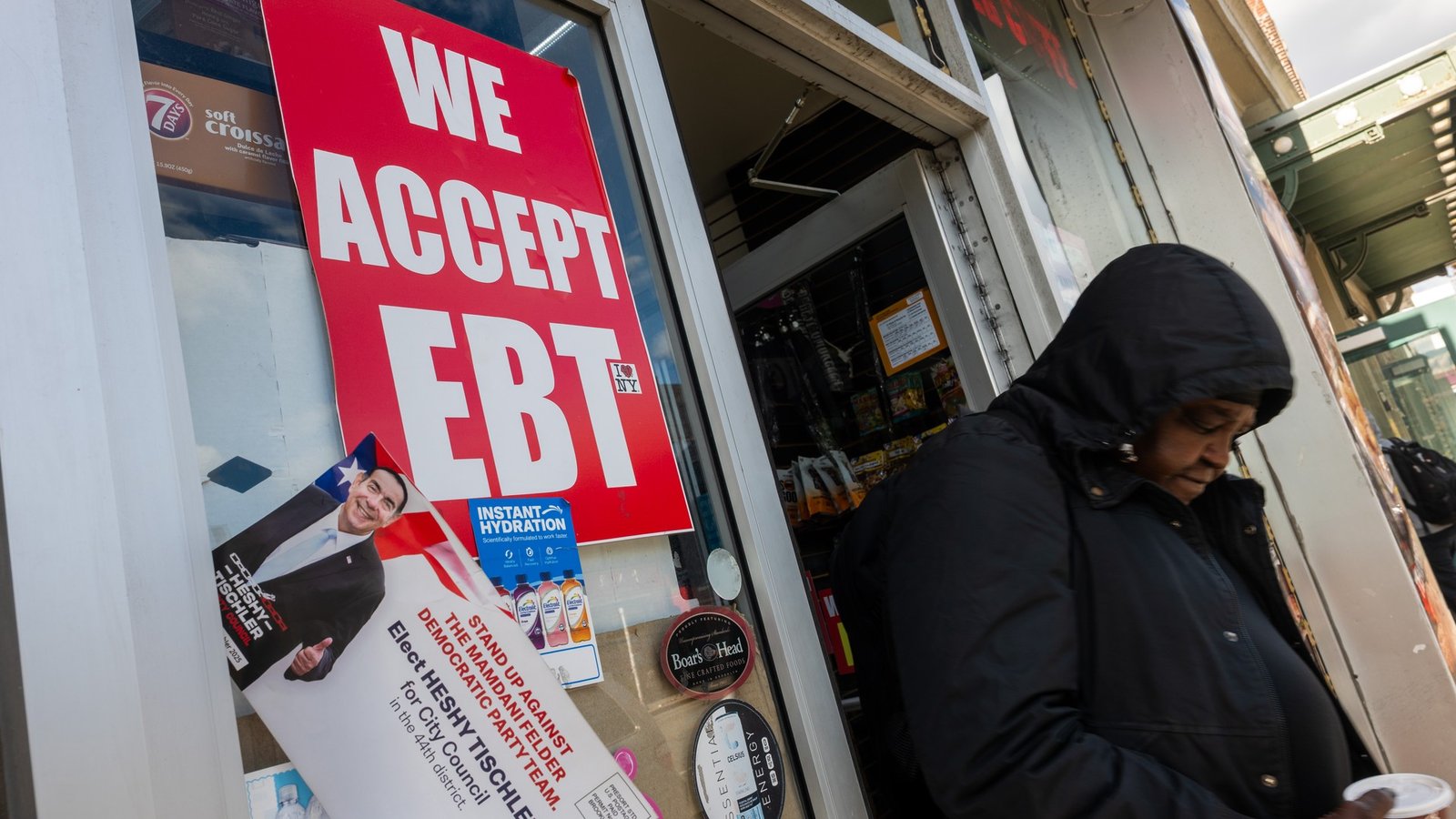
About 1.1 million noncitizen households that receive food stamps are at risk of losing benefits after a measure included in the One Big Beautiful Bill took effect Wednesday. Data isn’t available to detail exactly how many could lose benefits, but it affects a class of immigrants who are refugees, asylees and others.
Nearly nine months after President Donald Trump signed the federal spending bill into law, changes are being implemented for the nation’s Supplemental Nutrition Assistance Program, also known as food stamps. The latest change removed certain immigrants’ eligibility for benefits.
The U.S. Department of Agriculture manages the nation’s $101.7 billion food assistance program. Sec. Brooke Rollins said on July 10, after issuing notices relating to the new provisions, that it made clear “illegal aliens should not receive government dollars.”

Unbiased. Straight Facts.TM
According to the U.S. Department of Agriculture, about 1.5 million noncitizens received food stamps in fiscal year 2022.

Unauthorized immigrants are ineligible for SNAP, according to the American Immigration Council. The caveat is that the USDA provides benefits based on households, not individuals, so if an unauthorized immigrant applies for their U.S. citizen child, they would receive support, but only to supplement the eligible child.
According to the USDA’s report on characteristics of SNAP recipients, there were 39.2 million recipients in fiscal year 2022, with about 3.8% being either a refugee or other noncitizen. The report is the most recent one the department has issued. In terms of households, 20.7 million received benefits, with 5.1% — or 1.1 million households — considered noncitizens.
The department reported that, on average, households received $297 in benefits per month in 2022. For citizens, that was $285, and noncitizens received $359.50 a month.
The USDA didn’t immediately respond to Straight Arrow News’ request for comment.
Even if a noncitizen obtains legal permanent residency (a green card), the department requires, in most cases, that they wait five years before becoming eligible for benefits.
Boot ‘illegal aliens’ or make families struggle
Changing the groups’ eligibility has been a split decision among groups in support of unauthorized immigrants and those in favor of stricter immigration policies.
Those in favor of the change said the measure boots “illegal aliens” off the federal assistance program. David Ditch, senior analyst at the Economic Policy Innovation Center, wrote in a Feb. 12 report that the bill created a food stamp reform that’s projected to save $142 billion.
“Rather than harming at-risk Americans, the OBBB’s reforms are focused on common sense work requirements, incentivizing states to stop fraudulent enrollments, and keeping illegal aliens from being eligible,” he wrote.
Prior to the bill, asylum seekers, immigrants from certain countries, refugees, parolees, victims of human trafficking and people with a direct relation to a non-citizen who faced extreme cruelty were able to receive benefits, according to Arizona’s Department of Economic Security. They will lose benefits unless they become lawful residents and fulfill a five-year waiting period.
The changes took effect on Wednesday, but Elinor “Elly” Jordan, public benefits attorney at the Michigan Poverty Law Program, told Straight Arrow News that it could take states until June to be compliant due to the volume of recipients.
“This is set to take place sort of very soon, and states have been required to implement it quite quickly,” Jordan said, “and some of these folks are really in a position where they would struggle to make ends meet without the SNAP benefits that they’re entitled to currently. Those are set to abruptly change.”
New rules nullify several immigrants’ eligibility
Under the new changes, the federal spending bill meant that the following immigrants are likely to have lost or will lose their SNAP benefits:
- Immigrants with deportations withheld;
- Certain American Indians born abroad;
- Certain Hmong or Highland Laotian tribal members;
- Conditional entrants;
- Battered aliens;
- Victims of severe trafficking and their family members;
- Refugees;
- Asylees;
- Parolees;
- Certain Afghan nationals who were granted parole between July 31, 2021, and Sept. 30, 2023; and
- Certain Ukrainian nationals granted parole between Feb. 24, 2022, and Sept. 30, 2024.
If a person obtains a green card, they could avoid the five-year waiting period if they are under 18 years old, have 40 qualifying work quarters, are blind or disabled, were lawfully in the U.S. at age 65 or older on Aug. 22, 1996; have a U.S. military connection, were admitted to the U.S. as an Amerasian immigrant or were certain American Indians born abroad, or certain Hmong or HIghland Laotian tribal members.
The bill kept Cuban and Haitian immigrants, Compacts of Free Association Citizens and children under 18 in any SNAP-eligible alien group eligible for benefits.