

The Texas State Board of Education meets Tuesday to consider new statewide reading requirements that would include passages from the Bible.
The New York Times reports the proposed English and social studies curriculum would apply to millions of public school students and has already drawn pushback from some historians and Democratic board members.
Bible passages included across grade levels
Republicans hold a 10-5 majority on the board. The proposed lists span every grade, with middle and high school students assigned readings from the Bible, such as the story of David and Goliath and passages from the book of Corinthians.
Texas has nearly 5.5 million public school students. The lists also include works like Dr. Martin Luther King Jr.’s “I Have a Dream” speech, along with selections from Langston Hughes and Frederick Douglass. Critics say the overall list lacks broader representation of Hispanic and Black authors.
“There is a mass lack of representation,” said Marisa Pérez-Díaz, a Democratic board member representing San Antonio and parts of South Texas.
A separate proposal under consideration would narrow the number of books and introduce Bible verses as early as elementary school.
Shift toward US-focused history
The Times also reports that the social studies proposal emphasizes a chronological approach with a stronger focus on American and Texas history.
Critics say the changes lean heavily on American exceptionalism and place greater emphasis on Christianity in the curriculum.
Brendan Gillis of the American Historical Association questioned whether students would be prepared for a global economy with less exposure to world history.
Supporters argue the proposals reflect the roots of Western culture and treat biblical texts as foundational literature.
Mandy Drogin of the Texas Public Policy Foundation said Judeo-Christian values are central to the country’s history, pointing to the story of the Good Samaritan as one example.
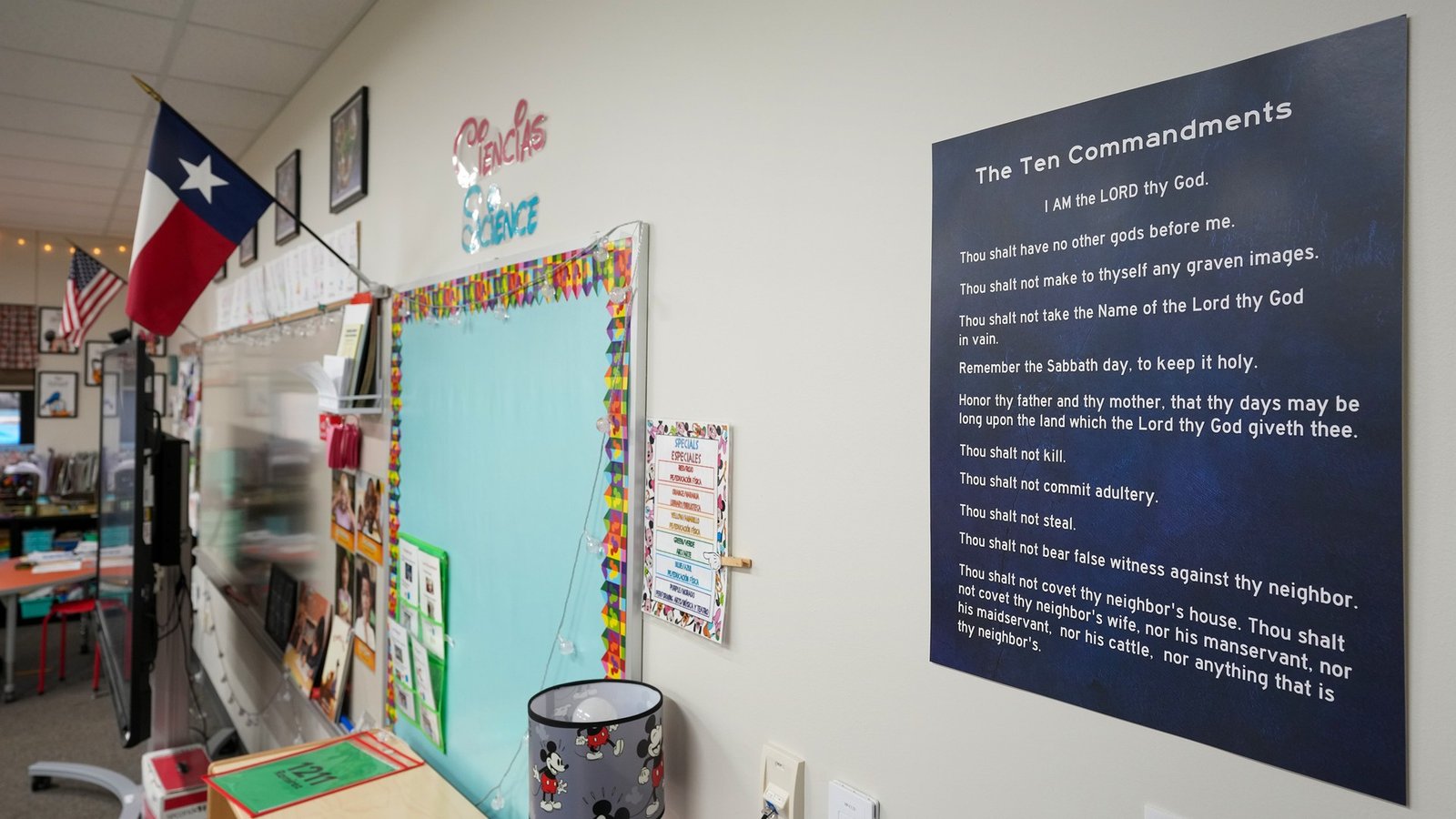
Lawmakers in Texas and at least a dozen states have also pushed to require the Ten Commandments in public school classrooms – efforts that have largely been challenged in court.
Next steps
The board is expected to take an initial vote later this week, with a final vote scheduled for June. If approved, the new requirement would take effect in 2030.