

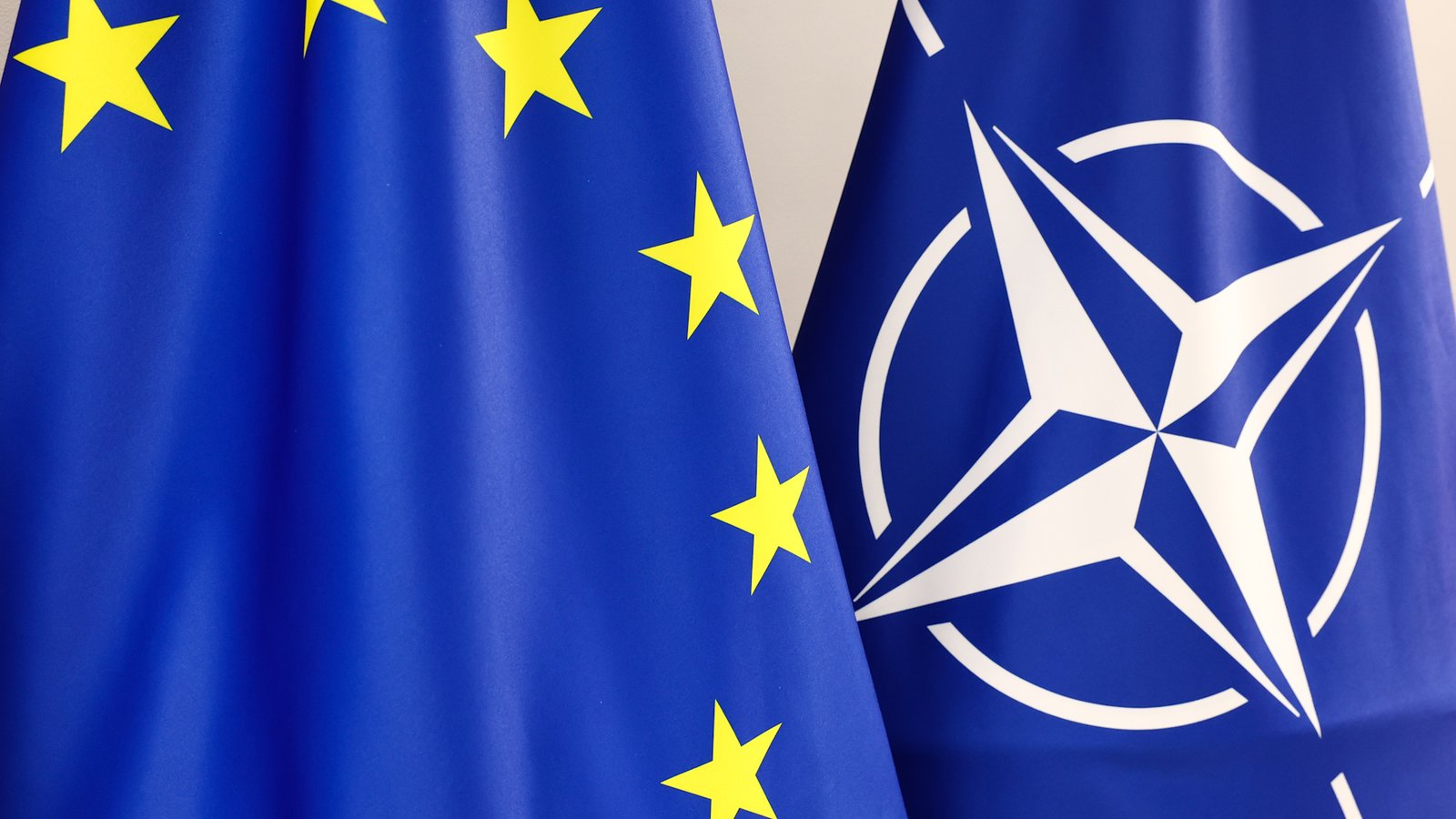
European leaders are quietly sketching out a backup plan for NATO, preparing for a reality in which the United States might take a back seat, The Wall Street Journal reported on Wednesday.
The discussions gained traction after Germany, which for years preferred to keep the U.S. at the center of European defense, began shifting its position under Chancellor Friedrich Merz.
Why Europe is preparing for a larger NATO role
The shift reflects growing concern across Europe that Washington may no longer be a dependable guarantor of the continent’s security.
The Journal reported that President Donald Trump’s threats against Greenland helped push the talks forward. More recently, Trump has complained bitterly about Europe’s refusal to back the U.S. military campaign in Iran, giving efforts to plan for a future without U.S. support new urgency.
That anxiety also surfaced publicly in February at the Munich Security Conference, where officials and analysts described a world order under strain and questioned whether the United States could still be counted on as it once was.
Straight Arrow News previously reported from the conference that its 2026 security report warned of “wrecking-ball politics” and that attendees voiced concern about whether long-standing alliances could hold.
Merz said at the conference that the rules-based order “no longer exists” and warned that Europe’s freedom is “not guaranteed.”

Unbiased. Straight Facts.TM
While no country has ever fully left NATO, France withdrew from the alliance’s military command structure in 1966 under President Charles de Gaulle before returning in 2009.

What officials say Europe would have to replace
Officials involved say the discussions are not about building a separate alliance, but about shifting more NATO responsibilities to European governments. The aim is to ensure the alliance can still deter Russia and continue operating if the United States reduces its presence or support.
That would require Europeans to take on responsibilities now heavily concentrated in U.S. hands. The alliance’s framework relies heavily on American dominance across key areas, including supply chains, reconnaissance and military authority.
According to The Journal, officials are now working through practical questions about who would run key military functions if U.S. officers stepped aside, including exercises, logistics and force movement near NATO’s eastern flank.
German Defense Minister Boris Pistorius said NATO remains “irreplaceable” for both Europe and the States.
“But it’s also clear that we Europeans must assume more responsibility for our defense, and we are doing that,” said Pistorius, according to The Journal. “NATO must become more European in order to remain trans-Atlantic.”
Finnish President Alexander Stubb said Europe is already taking on more of that burden and argued the transition should happen in a “managed and controllable way,” not through a rapid U.S. withdrawal.
How Germany’s shift changed the debate
The biggest political change appears to be in Berlin. The Journal reported that Merz began rethinking Germany’s traditional dependence on the U.S. after concluding late last year that Trump appeared willing to abandon Ukraine and that shared values were no longer clearly shaping Washington’s NATO policy.
That shift in Berlin helped bring together countries — including France, Britain, Canada, Poland and the Nordic states — for contingency discussions.
Still, the hardest gaps remain unresolved. While European governments can assume more command positions, years of relying on U.S. military power have left them short on critical capabilities. The Journal reported that Europe still lacks key strengths in intelligence, surveillance, missile warning and nuclear deterrence.
That helps explain why some of the most sensitive discussions now extend beyond conventional forces. After Trump threatened Greenland, Merz spoke with French President Emmanuel Macron about whether France’s nuclear umbrella could be broadened to protect Germany and other European allies, The Journal reported.
What Europe can do now — and what it still cannot replace
For now, the planning is informal and has not become an official NATO overhaul, The Journal reported. But officials are already considering steps that could reduce Europe’s dependence on Washington, such as increasing defense production and, in some countries, reconsidering military conscription.
Even supporters of the shift say the transition would be difficult and incomplete without the U.S. The Supreme Allied Commander Europe post remains American, and no European government can quickly replace the military, intelligence and nuclear role Washington now fills.