

The man who one day hopes to take your job is now designing your consolation prize — and he wants the federal government to pay for it.
Tech billionaire Elon Musk on Friday proposed that the federal government establish a universal high-income program, a plan he first suggested in 2023 but never fully endorsed until now.
“Universal HIGH INCOME via checks issued by the Federal government is the best way to deal with unemployment caused by AI,” Musk wrote on X. “AI/robotics will produce goods & services far in excess of the increase in the money supply, so there will not be inflation.”
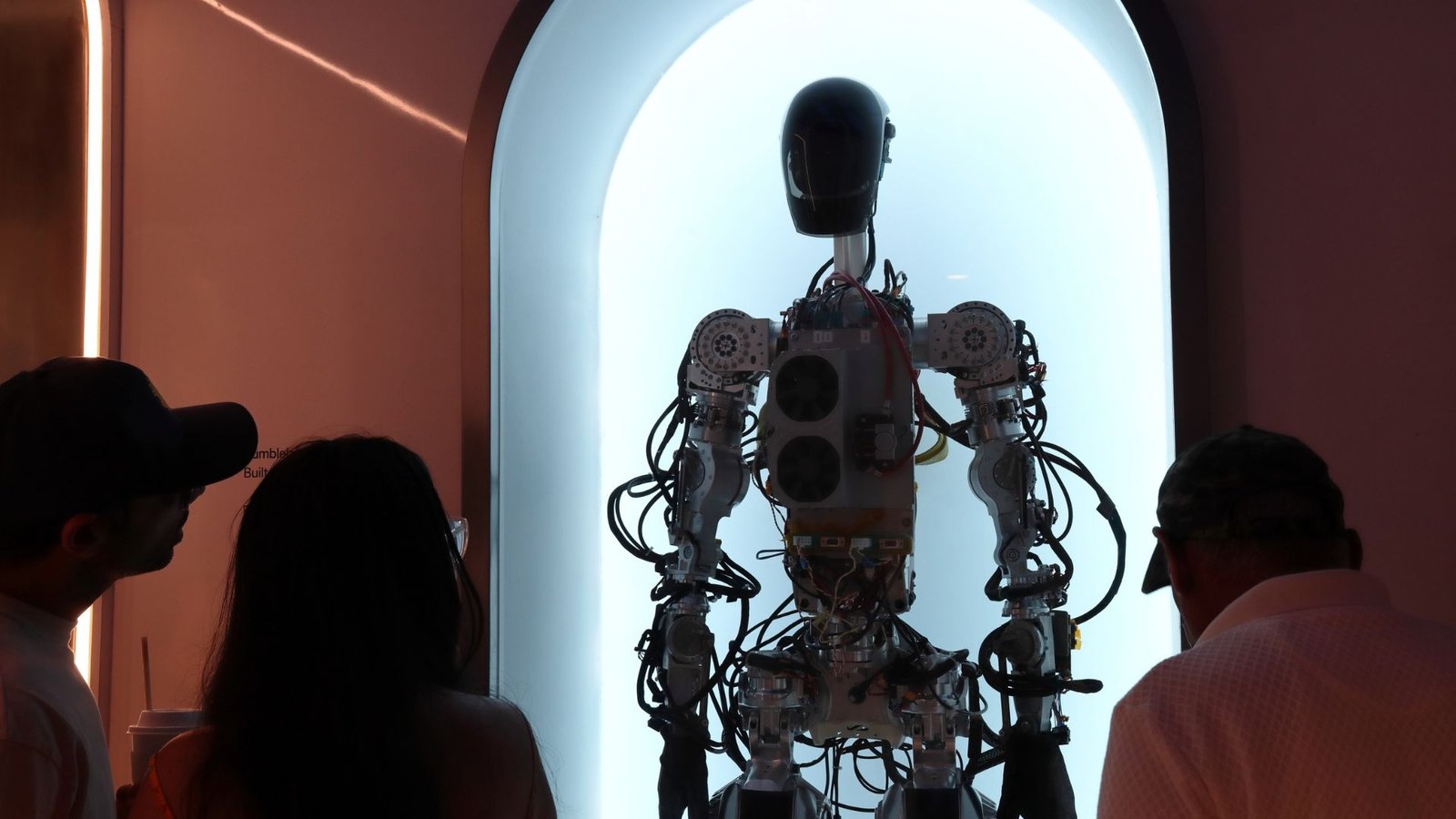
Musk’s comments come as fears grow over AI-driven job losses — a fear that he has helped stir with his work developing Optimus, Tesla’s humanoid robot. Companies across industries have cited artificial intelligence as the reason for recent rounds of layoffs, according to International Business Times.
What’s the difference between UBI and UHI?
Universal high income, known as UHI, is very similar to universal basic income, or UBI. The policy proposal has roots in both progressive American politics and libertarian philosophy.
In 1962, American economist Milton Friedman wrote about a negative income tax in his book “Capitalism and Freedom.” His proposal, a form of UBI, would have provided a minimum income to poorer families and replaced the country’s welfare system, which he described as costly and inefficient.
But Friedman’s idea of the government sending people checks if they earned below a certain threshold differs from what Musk and others have proposed. Friedman’s plan replaced the welfare state, while Musk’s plan creates an entirely new system on top of the existing ones.
Recent UBI proposals and trials are typically small, only providing applicants with the bare minimum needed to survive. Musk’s plan implies it goes beyond subsistence, Bezinga reports, saying if AI and automation make society more productive, companies could share those gains so everyone can benefit.
“Universal High Income isn’t a bigger safety net — it’s a dividend narrative,” Ryan Waite, a policy expert at Think Big, told the publication. “It’s about sharing AI-driven surplus so people participate in growth, not just get cushioned from loss.”
Earlier this year, during a discussion with NVIDIA CEO Jensen Huang, Musk said working may become almost like a hobby in the future if his predictions about automation are correct.
“My prediction is that work will be optional,” Musk said. “It’ll be like playing sports or a video game or something like that.”
Musk isn’t the only person in Silicon Valley pushing for UHI. OpenAI CEO Sam Altman has floated the idea before, too. In 2025, Altman suggested “universal extreme wealth.”
His solution to an AI-dominated future would measure the world’s AI output in tokens before distributing them worldwide. In an example examined by Moneywise, if an AI company created 20 quintillion tokens a year, it would give 60% to the traditional capitalist system and share the rest equally among everyone.
“I think society will very quickly say, ‘Okay, we got to have some new economic model where we share that and distribute that to people,’” Altman said. “I used to be really excited about things like UBI. I still am kind of excited, like, universal basic income, where you just give everybody money.”
Could this program even work?
During the COVID-19 pandemic, the government issued three rounds of stimulus checks to help address the economic hardships many people faced. But the checks had a direct impact on consumer prices, with the Federal Reserve blaming them for an increase in the inflation rate of 2.5 percentage points.
But in his post on Friday, Musk said he believes that automation and AI would create enough goods and services to counteract the money supply, leading to no inflation.
People close to Musk agree. Peter Diamandis, the founder of the XPRIZE Foundation, wrote in a recent Substack post that if automation causes a price drop, consumers’ buying power would increase.
“When AI and robotics collapse the cost of living’s five major categories by more than half, a $3,000/month check that barely covers basics today becomes a genuinely prosperous life,” Diamandis wrote. “The check doesn’t change. The world does.”
But others aren’t so sure. The Tax Project, a non-partisan educational research foundation, said market dynamics won’t change despite AI’s productivity gains.
“In Musk’s best-case framing, scarcity evaporates and everyone can have what they want,” the group wrote. “In that world, UHI could raise baseline security while still leaving competition intact. Or it could pour fuel on inflation if supply constraints are not addressed.”
UBI’s ethical dilemma
In the past, Musk has supported deregulation, even serving as head of the controversial Department of Government Efficiency, which sought to cut government spending. But UHI would be a massive federal program with equal federal spending.
His plan also raises an important question: if AI companies control people’s money, what’s stopping them from taking it back?
A 2025 peer-reviewed paper argues that tech CEOs have begun promoting the program because it makes them appear “benevolent visionaries who are concerned about the wellbeing of humanity.” But this could be a facade.
“Promoting UBI can be a strategic way for AI elites to deflect criticism, maintaining control over narratives about AI’s future while avoiding challenges to their profit motives,” the authors of the paper wrote. “This framing distracts from the fact that the same individuals who are pushing for UBI are also those who stand to gain the most.”
Former Greek Finance Minister Yanis Varoufakis argues tech companies are trying to create a new form of feudalism called technofeudalism. Rather than creating a UBI program, Varoufakis believes governments should require big tech companies to issue new equity into a public trust that generates income for workers replaced by robots. He calls this a universal basic dividend.
“Effectively, society becomes a shareholder in every corporation,” Varoufakis wrote, “and the dividends are distributed evenly to all citizens.”
Looking towards an AI future
The same people and companies disrupting the economy are the ones trying to figure out a fix to that disruption. But it’s difficult to plan when you don’t know exactly what’s going to happen.
Researchers say the expanding influence tech CEOs have with the government “highlights a calculated effort to control AI’s development and its societal implications.”
Musk has pushed back on that, saying that the world is entering “a positive AI future.” But conceded that those who find purpose in their work may have difficulties.
“In [UHI], everyone can have whatever goods & services they want,” he wrote. “It is less clear how we will find meaning in a world where work is optional.”