

Imagine heading to the grocery store to pick up something to cook for dinner. You decide on salmon, so you head to the fish aisle, pick up a piece that looks good, and then you see the price tag reads $203.
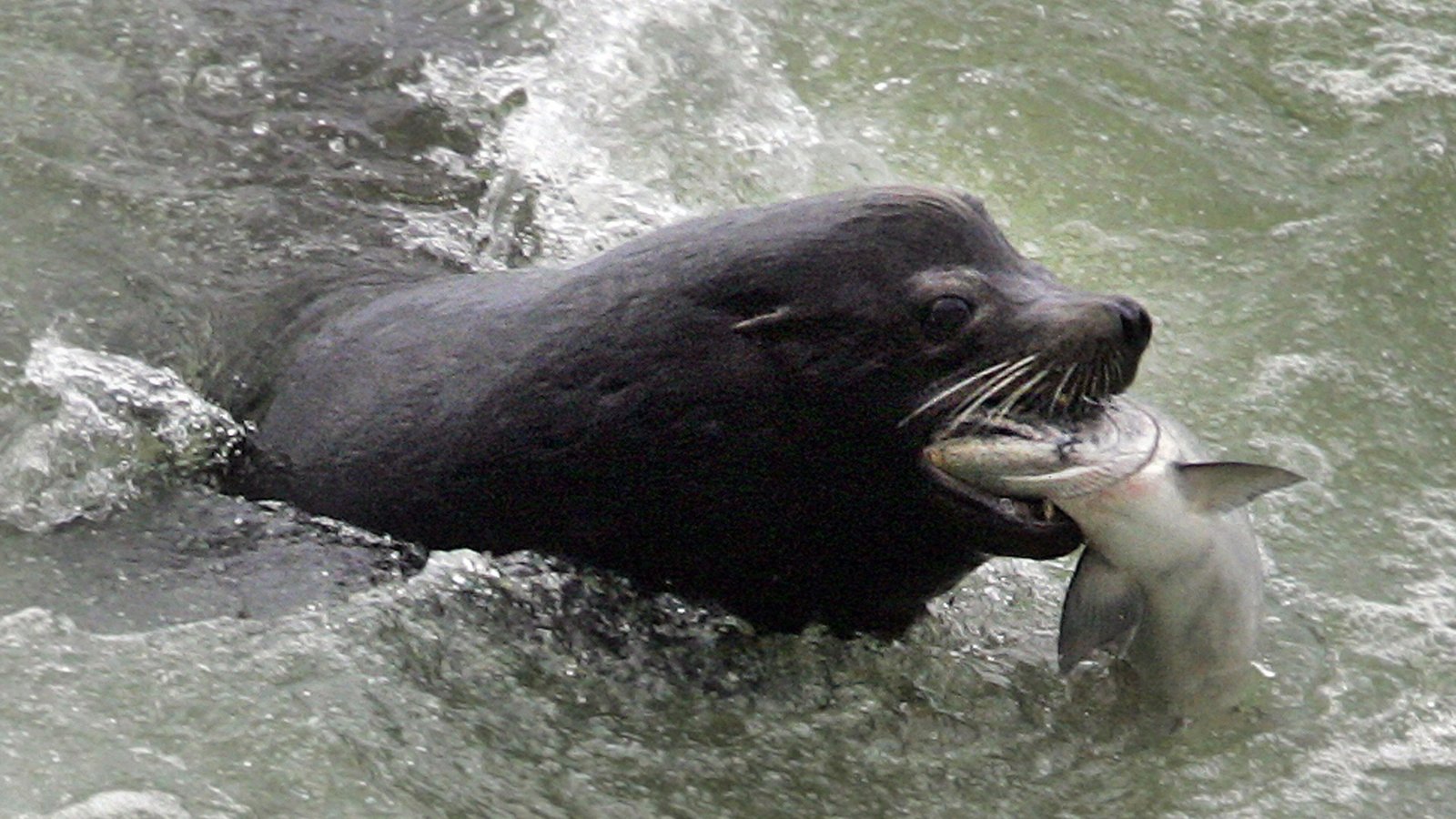
That’s how much taxpayers are currently paying for every salmon it saves from a California or Stellar sea lion in the Pacific Northwest, according to one congresswoman who wants to see that cost come down.
Rep. Marie Gluesenkamp Perez, D-Wash., sent a letter to Commerce Secretary Howard Lutnick asking for just that and to ramp up these efforts.
Culling sea lions
Sea lions are smart animals, and they figured out they can swim into the Columbia River from the Pacific Ocean, where they find all the salmon they want.
“They will congregate at places where, typically, human intervention and the environment has led to concentrations of fish, particularly salmon in the Pacific Northwest, and then they’ll eat a lot of the salmon at certain times of the year,” Peter Cook, associate professor of marine mammal science at New College of Florida, told Straight Arrow.

To protect those salmon populations, the government often culls the sea lion population.
Perez said it’s been going on for years, but the efforts of the National Oceanic and Atmospheric Administration, or NOAA, in partnership with states and tribes, have not been enough.
“At times, sea lions have eaten four times as many salmon as our fishermen and Tribes have harvested in the Columbia River in a year,” Perez wrote. “During the 2025 spring season, nearly one-fourth of fish at Bonneville Dam show wounds from sea lion bites.”
Sea lions are protected under the Marine Mammal Protection Act, or MMPA, but overpopulation led to a new program decades ago that allowed for entities to act on lowering those populations in specific circumstances.
Sea lions destroying the salmon population is one of those circumstances.
“There were a couple decades where people tried a bunch of different non-lethal approaches to moving the sea lions with minimal success,” Cook said. “And that did lead to some adjustments and some local exemptions to federal law where state and tribal officials could sometimes target California or Stellar sea lions for lethal removal.”
Cost of culling
That program allowing for the culling of those animals is quite specific on how it needs to be done.
“They typically identify the animal they want to remove, they trap them, they anesthetize them, and then they kill them and dispose of them,” Cook said.
Every single part of that process is costly, with each sea lion costing around $38,000 to be euthanized, according to Perez.
That starts with trapping them. You can get a rat trap online for under $3, but a rat weighs about a pound.
A full-grown male California sea lion can weigh up to 800 pounds or about as much as a typical hot tub. A full-grown male Stellar sea lion can weigh up to 2,500 pounds or as much as a Toyota Corolla.
“There’s just a lot of work required to trap and move these animals,” Cook said.
And it all requires people.
“A lot of the cost comes from personnel time,” Cook said.
Once they are trapped and captured, the sea lions are euthanized through chemical injections. Anyone who’s ever needed to go to a pharmacy knows the cost that comes with getting drugs in the U.S.
“The drugs aren’t necessarily always super cheap,” Cook said.
There also needs to be a veterinarian present when the deed is done.
“They typically need a wildlife veterinarian to oversee the drug killing of the animal, and veterinarians are busy,” Cook said.
The number of wildlife veterans in the U.S. is so small that it’s not readily available. The number of people in the American Association of Wildlife Veterinarians is just over 300.
Once a vet is present and the animal is euthanized, there are also specific instructions on how to dispose of the carcass.
“There’s just a lot of personnel, some degree of equipment, and a fair bit of time and effort that goes into it,” Cook said.

Between all of that and the regulatory work on the front end, this process takes a lot of time and a lot of money.
That leads to officials not meeting the quota they were given on how many animals they were allowed to dispose of.
“When Congress amended the MMPA in 2018 to expand removal authorities in the Columbia River, it provided that eligible managers could remove up to 540 California sea lions and 176 Steller sea lions during the five-year life of the take permit,” Perez said. “During that time, the managers removed 111 of both species.”
What can be done?
Perez wants NOAA to partner with states and tribes to come up with a plan that better accomplishes the goal without the exorbitant price tag.
A bill last year also directed NOAA to study which removal strategies are most cost-effective and humane.
“I urge your assistance with the Department to complete this assessment,” Perez said.
At issue is balancing the humaneness of killing the sea lions and the overall cost for effectiveness.
“I think that there’s probably not a huge amount that could be done to make it cheaper while still keeping it humane,” Cook said. “And I would say that $30,000 or $40,000 is obviously meaningful to an individual. But the federal and state governments spend huge amounts of money on a huge amount of things.”
Eliminating any part of that process could make things less humane for the sea lions.
“If people determine that it’s very important to kill a lot of sea lions more cheaply, there’s going to be a trade-off, and it’s going to result in a lot more cruelty, and I would suspect less efficacy per kill,” Cook said.
Cook said another solution would be to continue to find non-lethal options to keep the sea lions away from the salmon.
“A lot of people are kind of at their wits end there, and they’re not entirely sure what to do,” Cook said. “But I would say from the scientific side, there are avenues that continue to be explored there.”
That includes using sound to deter the sea lions from traveling to certain parts of the river.
That has worked in some cases but has not proven entirely effective.
“We should keep exploring that,” Cook said. “That said, there’s clearly a lot of political will behind lethal removal, and it’s going to keep happening for some time, I think, until we have an alternative that is proven to be really effective. I would just stress that for the sake of doing it humanely and for letting the science play out, instead of trying to pinch pennies on the sea lion removal, which is never going to be the biggest part of any state’s budget. We should be thinking about doing it maximally effectively.”
Round out your reading
- Work for food: New SNAP rules reshaping who gets to eat.
- How Iranians actually feel about regime change and war.
- Feds warn that Russians may hack your internet router. Why?
- The truth behind a medical condition that never existed.
- We’re building a new Straight Arrow. Help us shape our future by taking our survey.