

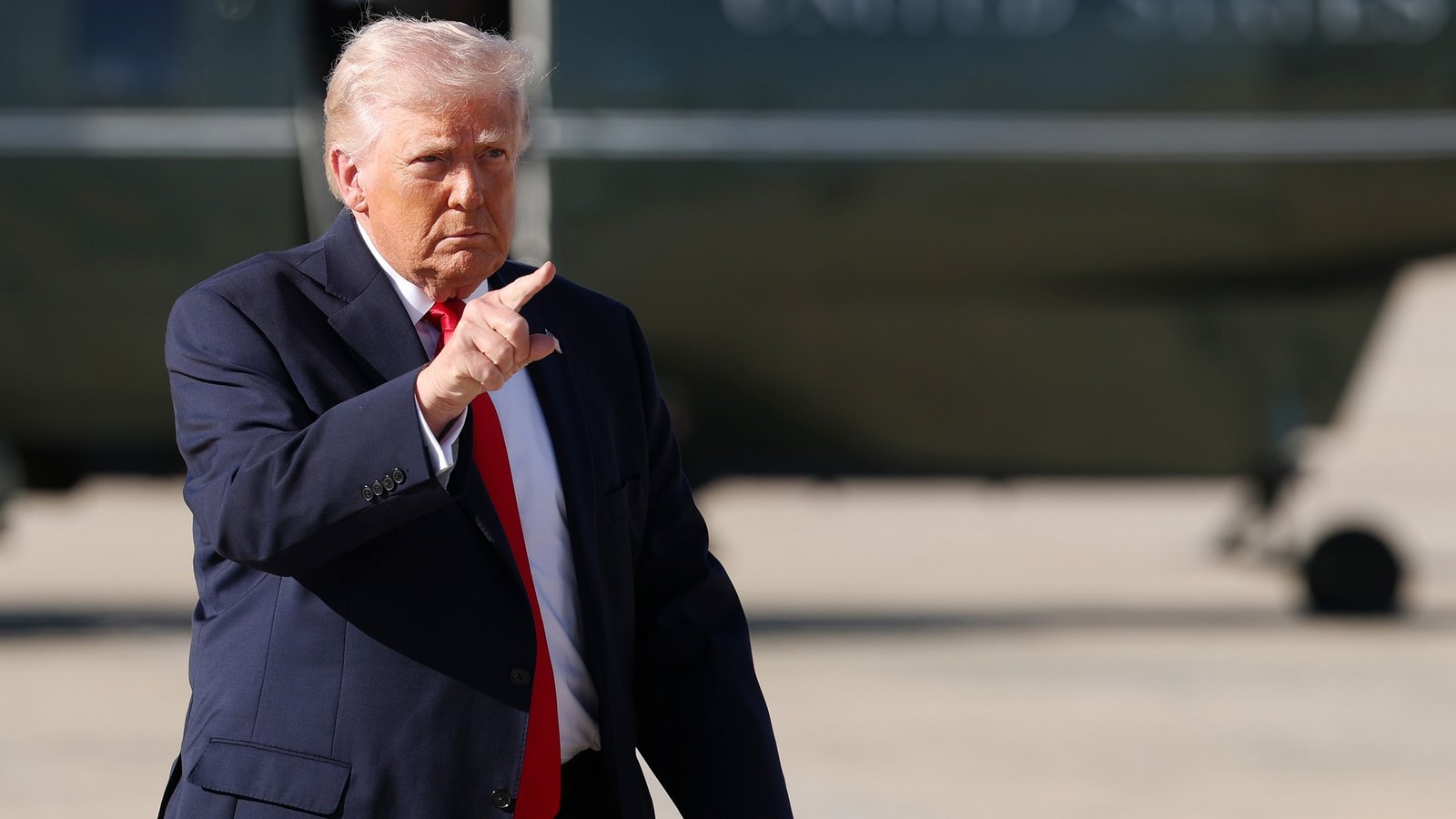
President Donald Trump signed an executive order Friday, reintroducing the firing squad and lethal injection for criminal executions. The order is part of the administration’s push to revive the death penalty, a capital punishment that has had weakening support for decades.
It’s the second executive order related to the topic, after Trump signed another order on his first day back in office, renewing capital punishment in federal prisons.
History of the death sentence
The Biden administration issued a moratorium on executions and banned lethal injection in a move that Attorney General Todd Blanche now says “inflicted untold damage on victims of crime, and, ultimately, to the rule of law itself.”
“The prior administration failed in its duty to protect the American people by refusing to pursue and carry out the ultimate punishment against the most dangerous criminals, including terrorists, child murderers, and cop killers,” Blanche said in a statement Friday.
The administration and the Department of Justice now say they plan to “correct” the administration’s “failures” and restore the death penalty.
With the executive order, the Justice Department says it will seek death sentences against 44 defendants.
State vs Federal
Despite many states having bans or even laws in place against the death penalty, federal executions can still take place anywhere in the U.S. However, typically, federal executions take place in Indiana.
Federal executions are also rare, according to the Death Penalty Information Center. When President Ronald Reagan signed legislation reinstating the federal death penalty in 1988, it was limited to just 60 offenses, causing them to occur much less frequently than state executions.
In fact, the last federal execution occurred in 2021, and prior to 2020, there hadn’t been a single federal execution in 17 years.
Trump, however, wants to change that. As Straight Arrow previously reported, Trump has called for mandatory capital punishment of anyone convicted of killing a police officer, unauthorized immigrants convicted of capital offenses and everyone convicted of murder in Washington, D.C.
The Supreme Court previously ruled that mandatory sentencing, like what Trump proposed, is unconstitutional because it bars individualized sentencing and the consideration of mitigating evidence.
Round out your reading
- Work for food: New SNAP rules reshaping who gets to eat.
- How Iranians actually feel about regime change and war.
- Feds warn that Russians may hack your internet router. Why?
- The truth behind a medical condition that never existed.
- We’re building a new Straight Arrow. Help us shape our future by taking our survey.