

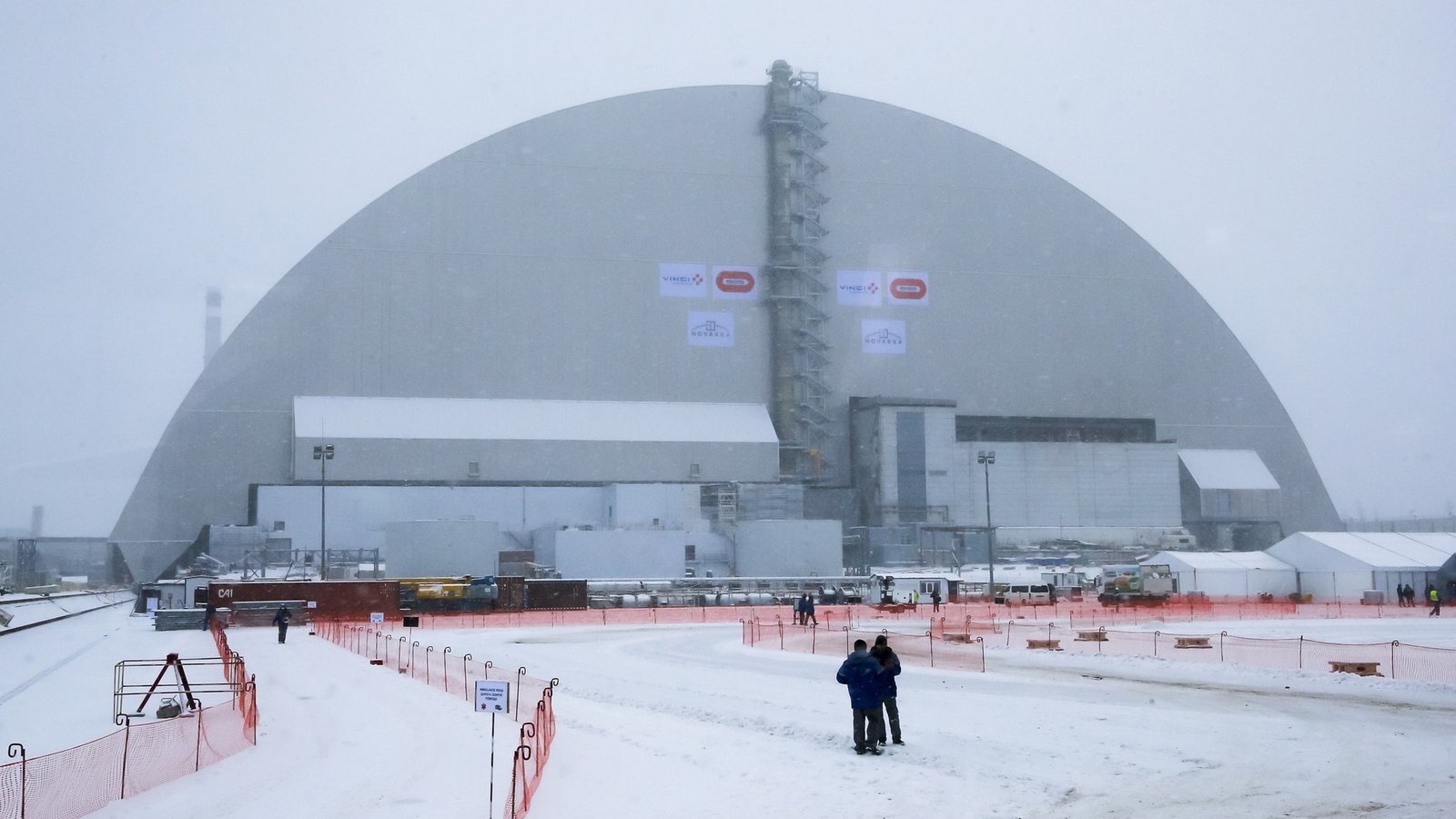
On April 26, 1986, what should have been a routine safety test of Reactor 4 at the Chernobyl Nuclear Power Plant in modern-day Ukraine became a world-altering disaster. The fallout was not limited to radiation; Chernobyl and other disasters caused U.S. utility companies to hit the brakes on nuclear development, but today, there are signs that’s changing.
In May 2025, President Donald Trump issued four executive orders aimed at expanding the nuclear power industry. Trump called for 300 gigawatts of new nuclear power plants by 2050 — enough to power Texas three to four times over. The executive orders also mandated faster reactor testing, licensing, fuel recycling and expanded fuel production.
One executive order required an overhaul of the Nuclear Regulatory Commission (NRC).
“Instead of efficiently promoting safe, abundant nuclear energy, the NRC has instead tried to insulate Americans from the most remote risks without appropriate regard for the severe domestic and geopolitical costs of such risk aversion,” the May 23, 2025 executive order said.
While the industry and lawmakers push ahead for a new era of nuclear power, skeptics warn that the U.S. must maintain stringent regulation. In a Thursday blog post, Edwin Lyman, director of nuclear power safety at the Union of Concerned Scientists, warned that the U.S. appears “anxious to unlearn” lessons from Chernobyl.
“Complacency is the enemy of safety, and that is the main lesson that’s being unlearned now,” Lyman told Straight Arrow.
What happened at Chernobyl in 1986?
A chain of problems led to the explosion of Reactor 4, which had been brought online in 1984. Two years later, it had not passed a safety test to determine that in the event of a shutdown, the slowing spin of the plant’s main turbine would provide enough energy to operate cooling liquid pumps for an interim period while diesel generators kicked in.
The night crew on April 25 was ordered to perform the test. But according to a summary report from the World Nuclear Association, the test was carried out “without a proper exchange of information and coordination between the team in charge of the test and the personnel in charge of the safety of the nuclear reactor.”

Problems started when the power output from Reactor 4 dropped to about 30 megawatts — way below the 700 to 1,000 megawatt threshold for optimal testing conditions. Since the nuclear reaction had slowed too much, operators decided to remove some control rods from the reactor. With fewer rods — which typically stop a nuclear reaction from becoming too powerful — the power output increased to 200 megawatts, and operators could start the test.
Once the test started, a characteristic of the Soviet RBMK reactor design that’s more pronounced at low power sealed Chernobyl’s fate. Known as a “positive void coefficient,” when coolant boiled and turned to steam, it increased the nuclear reactivity. In the early hours of April 26, this led to rapid power surges.
Operators attempted to re-insert the control rods, which should have acted as a brake, but instead made things worse. While the main control rods are made of a material that helps stabilize nuclear reactions, the graphite tips, which entered the reactor first, can briefly cause reactivity to spike.
The reactor exploded.
In the aftermath, 8.4 million Soviet citizens were exposed to radiation, according to the United Nations. The official death toll is 31, but the real number of people who died as a result of the radiation is likely well in the thousands.
Today, a massive steel structure has enclosed Reactor 4. But fighting in the war between Russia and Ukraine has again raised the risk of radiation. In August 2025, a Russian drone attack hit the enclosure.
How did regulators respond after Chernobyl?
The U.S. Nuclear Regulatory Commission issued a report in 1989 examining whether the U.S. nuclear power industry could face similar risks. The report concluded that an accident like Chernobyl could not happen in the U.S., in part because the country did not have RBMK reactors.
But coming just a few years after the 1979 accident at Three Mile Island nuclear site in Pennsylvania, Chernobyl gave American regulators another reason to focus on safety.
“Although a large nuclear power plant accident somewhere in the United States is unlikely because of design and operational features, we cannot relax the care and vigilance that have made it so,” the report said.
The NRC maintained that vigilance by formalizing a few rules around safety culture and risk assessment, but Chernobyl did not lead directly to any significant regulatory changes.
Where is nuclear power headed today?
The nuclear power industry has undergone cycles of hype that a nuclear renaissance is just around the corner. This time the signals are strong, but mixed.
The tech industry is investing heavily in nuclear power as a means to provide electricity to data centers that run artificial intelligence tools. Meta agreed to a deal that will extend the life of an aging nuclear plant in Illinois, while Microsoft has a contract to help restart one of the reactors at the Three Mile Island nuclear site in Pennsylvania.
But building new nuclear power plants remains costly and slow. The newest large-scale nuclear power plants in the U.S., two new units at Plant Vogtle in Georgia, took 15 years and $36 billion to complete.
Small modular reactors that can be mass-produced rather than custom-built for each site have garnered a lot of attention, but none have been constructed in the U.S. The Trump administration’s push to reform the NRC aims to make small reactors a reality and expand the fleet of conventional reactors by bringing down costs.
The Nuclear Energy Institute said in a 2025 report that NRC reform efforts are “not about replacing the agency but transforming and modernizing it to meet the demands of today and the future.”
Is Chernobyl still relevant today?
Some scholars, however, are not on board with proposed changes to the NRC.
“Regulation has always been the scapegoat for the nuclear industry,” said Sonja Schmid, a science and technology studies professor at Virginia Tech University.
Schmid told Straight Arrow that the NRC approval has long been a “gold standard” for companies to show investors that their reactor designs are viable. But “if you have a weak regulator, your safety is worth nothing.”
In an interview with Straight Arrow on Friday, Lyman drew several direct lines from what went wrong 40 years ago to deregulatory actions pushed at the NRC.
That includes a carve out that would exempt some companies from building thick concrete and steel-lined containment structures around reactors, if they can demonstrate on paper that foregoing the shell will not compromise safety. Lyman also said that some small modular reactor designs also have a positive void coefficient, and that the NRC is considering exempting nuclear plants from off-site emergency planning steps designed to mitigate the fallout of potential accidents.
Referring to the 1989 report on the Chernobyl accident, Lyman said, “many of the aspects of reactor design, operation and oversight that the NRC singled out as flaws of the Soviet system are now being undertaken here.”