

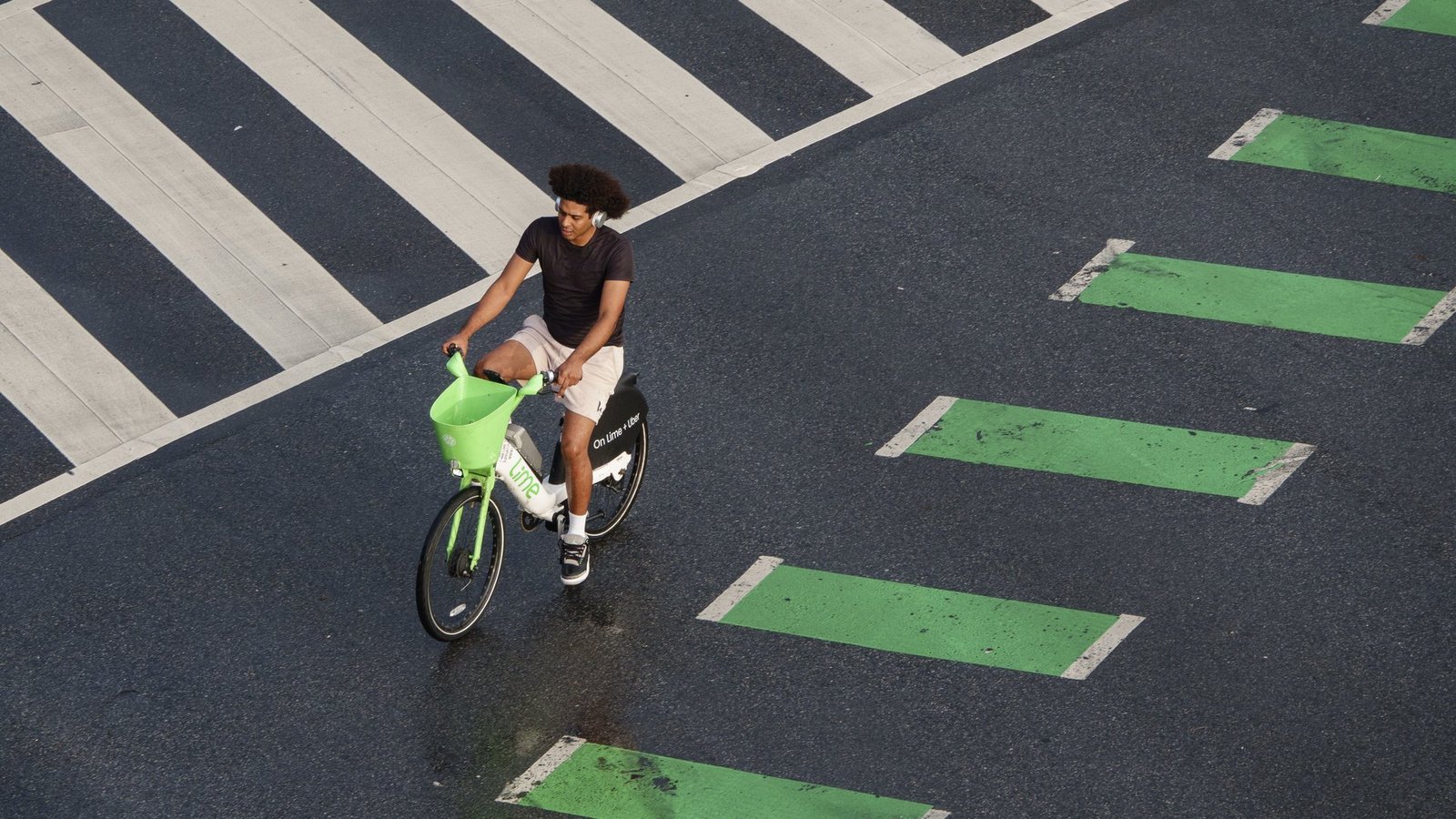
Spring weather is approaching, drawing more people outside to enjoy the warmer temperatures and use alternative means of transportation. One form that’s exploded in popularity is the e-bike, but that has come at a cost, one doctor says, that is too much to wager.
Dr. Lindsay Clukies, a pediatric emergency medicine specialist at Washington University Medicine in St. Louis, told Straight Arrow that her hospital is starting to see more and more kids admitted to the emergency room with injuries from riding electric bikes, commonly referred to as e-bikes. She equated it to the bike’s explosion in popularity and an unfortunate trend of laws not catching up with technology.
“We’re seeing a major increase in e-bike and e-scooter — what we call micromobility — injuries nationwide,” Clukies said. “It’s really tens of thousands of people every year who are getting injured.”
An April report on micromobility product-associated deaths and injuries from the Consumer Product Safety Commission found e-bikes accounted for 22.2% of all emergency room visits from 2017 to 2024. Electric scooters had the highest rate at 54.4% of all 698,500 visits.
Injuries from e-bikes increased by 48.5% annually from 2022 to 2024, with the largest increase from 2023 to 2024 at 57.4%. Clukies said her hospital sees traumatic brain injuries, contusions, bruises and soft tissue injuries more often than others. Those injuries have become more severe compared to nonmotorized bikes.
“It’s now normal to see multiple e-bike or e-scooter injuries every single week, especially during warmer months,” she said. “It tracks with how these devices are becoming more available, becoming more popular.”

Federal commission found high fatality risks with e-bikes
The CPSC found that e-bikes accounted for 72% of all mobility fatalities — or 97 out of 135 — in 2024. The report focused on e-scooters, self-balancing scooters and e-bikes.
For youth 24 years of age and younger, they had a 12% fatality risk from 2017 to 2024, compared to adults 65 and older who had a 24.2% fatality risk. The commission noted ages were unknown for 61 fatalities.
“Collisions with moving or parked motor vehicles were the leading cause of death associated with e-bikes, accounting for 170 reported deaths,” according to the commission.
For injuries, Clukies has warned parents that youth generally have poor reaction time, so traveling at high speed is problematic because they can’t avoid a crash as quickly as an adult can.
She encouraged parents to review and study the different classes of e-bikes, which some states have regulated. Those are Classes 1, 2 and 3. Himiway, an e-bike retailer, said in November that the Class 1 feels most like a bicycle, with the motor assisting riders once they hit 20 mph, but they must pedal after hitting that threshold.
The second class of bikes includes a throttle, which allows the bike to accelerate without pedaling, and the motor cuts out at 20 mph, forcing the rider to pedal.
The third class is considered the fastest category by many states and provides pedal assistance up to 28 mph. The throttle stops at 20 mph, but pedaling can create higher speeds.
States regulate with a lack of federal law
Electric bikes aren’t federally regulated, leaving it up to states and local governments to govern how riders use them and what types are allowed on their streets.
Bike advocacy group People for Bikes reviewed regulations across the nation and said states like Florida, Maine and Oklahoma have model legislation that defines and classifies e-bikes in three classes and affords riders similar rights and duties nonmotorized bicyclists have to follow. It considered Alaska and Rhode Island to have “problematic” legislation for regulating the bikes as mopeds and using “confusing” requirements on equipment, registration and infrastructure.

Unbiased. Straight Facts.TM
According to e-bike retailer Velotric Bike, 13 states require e-bike riders to always wear a helmet.

“E-bike owners favored safer batteries far more than other options, while non-owner votes were more evenly distributed,” according to Ebikes.org. “Strict age and speed limits fell in the middle for both groups, leaving rider insurance and license requirements as the clear least favorites.”
Illinois Secretary of State Alex Giannoulias announced on April 15 that the state Senate unanimously passed his proposed e-bike regulations. He said in the release that the proposal clears up confusion from local laws. If Illinois Gov. JB Pritzker signs the legislation during the current session, it would take effect on Jan. 1.
Provisions include requiring riders to be 15 years of age or older to ride a Class 1 or 2 electric bike; requiring riders of high-speed (more than 28 mph) to license, register and insure the bikes and prohibiting all electrified transit options from operating over 28 mph on all roads, bike lanes and sidewalks.
“As these devices become faster, heavier and more powerful, our laws must keep pace to protect riders and the public,” Giannoulias said in the release.
Doctor: Wear a helmet
Of the 59,200 injuries people reportedly suffered from e-bikes in 2024, the CPSC found that 40% of incidents involved riders wearing helmets, compared with 18% of e-scooter injuries. Data was not available on self-balancing scooters.
Clukies encouraged people to review which bike they purchase, as higher classes require more specialized helmets. She said Class 3 riders should wear a light motorcycle helmet for protection.
“If I had a single recommendation, it would be to absolutely wear an appropriate helmet every single time,” Clukies said. “It is so simple, and it is so easy, and it is so essential in mitigating or preventing these injuries.”
Round out your reading
- Work for food: New SNAP rules reshaping who gets to eat.
- How Iranians actually feel about regime change and war.
- Feds warn that Russians may hack your internet router. Why?
- The truth behind a medical condition that never existed.
- We’re building a new Straight Arrow. Help us shape our future by taking our survey.