

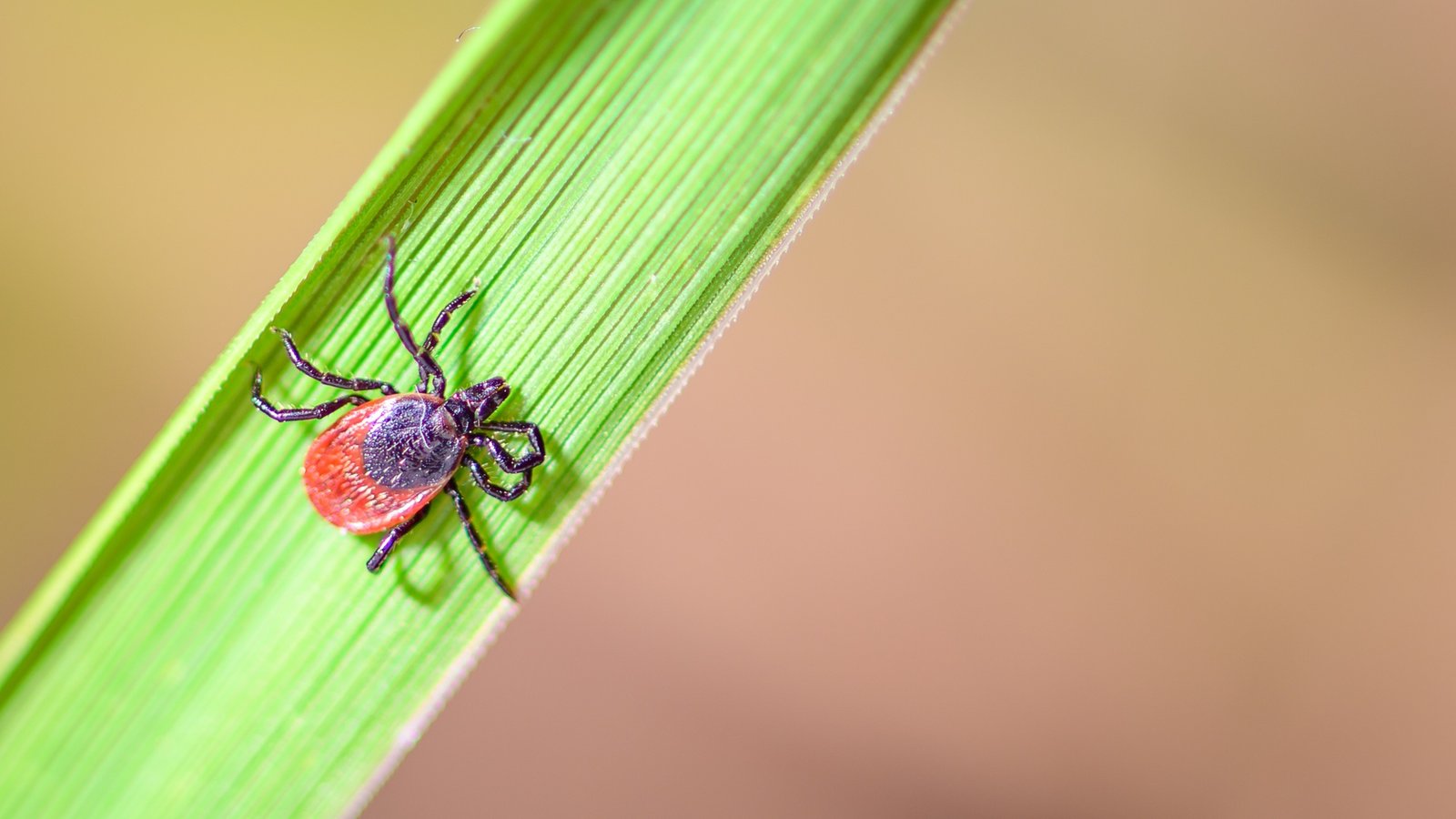
Tick season is starting earlier than usual across much of the United States, with doctors and public health officials warning that early signs point to a potentially rough year for tick-borne diseases.
Weekly emergency room visits for tick bites are already the highest for this time of year since 2017 in nearly every U.S. region, according to data released this week by the Centers for Disease Control and Prevention. The increase comes weeks ahead of when tick bites typically spike, which is usually in May.
Scott Williams, a tick researcher at the Connecticut Agricultural Experiment Station, told the Associated Press that people always ask if it’s going to be “a good tick year or a bad tick year.”
“And what we say is it’s never going to be a good tick year, but we’re off to a strong start with it being a bad tick year,” he said.
CDC officials said the early data is limited and represents only a snapshot, but they issued an advisory urging the public to take precautions as warmer weather draws more people outdoors.
Between federal surveillance and what researchers are seeing on the ground, early tick activity appears to be tied to weather patterns, Williams said. A brief warm spell following a very cold winter helped trigger a surge in adult blacklegged ticks in parts of Southern New England.
“The ticks become active during that period,” Williams said. “People get outside because they’re sick of being cooped up.”
As spring begins, large adult ticks are often the first to appear. They are easier to spot, which can help reduce the risk of disease when people promptly remove them, Williams said.
“Coming out of winter, the adult ticks become active and they’re large and conspicuous, and people see them,” he said. “And then those adult populations tend to drop off and become less active in later spring.”
Shortly after the lull comes the juvenile ticks. They become most active in May and June and are responsible for most human infections.
“They’re very, very small,” Williams said. “They’re the juvenile stage … and they’re active May and June.”
The CDC estimates that around 31 million people in the United States are bitten by ticks each year. Lyme disease is the most common tick-borne illness, with roughly 476,000 patients treated annually. Other diseases include Rocky Mountain spotted fever and alpha-gal syndrome, a potentially serious red meat allergy.
Connecticut remains one of the nation’s most active tick hotspots. In fact, Lyme disease is named after the town where it was first identified. Earlier this month, the Connecticut Agricultural Experiment Station reported residents were submitting an average of about 30 ticks per day for testing. Roughly 40% of those ticks tested positive for the bacteria that cause Lyme disease, with others carrying pathogens linked to babesiosis and anaplasmosis.
Wildlife biologist Megan Linske said she does not expect a dramatic jump in tick numbers from last year, but she anticipates a steady increase over time.
“I don’t think we’re going to see this huge jump from 2025 to 2026,” Linske said. “But I do think we are going to see this steady incline over the next five, 10, 15 years.”
Climate change, shifting wildlife populations and expanding tick habitats are all contributing factors, experts say. Warm, humid conditions favor tick survival, and booming populations of mice and deer give them more opportunities to feed.
Linske described the growing tick problem as a “one health” issue — the intersection of public health, environmental health and wildlife health.
“We’re just not in a proper balance amongst those three areas,” she said. “And it’s causing this real application to public health that we’re seeing in real time.”
CDC officials stressed that while early data is concerning, it will take months of systematic tick sampling before it’s clear whether there will be a major surge in illness this year. Many people who are bitten by ticks never seek medical care, which means surveillance systems likely underestimate the true number of bites.
In the meantime, health officials urge people to be cautious outdoors. Ticks typically perch on ankle-high vegetation along wooded edges and grassy areas, waiting to latch onto passing animals or humans.
Prevention remains the best defense, CDC epidemiologist Alison Hinckley said.
“You can wear EPA-registered insect repellent and permethrin-treated clothing, do tick checks, and remove attached ticks as quickly as possible,” she said.
Williams also recommended keeping ticks on the outside of clothing by tucking pants into socks or wearing gaiters.
“If you can keep the tick on the outside of your clothing instead of permitting it to crawl on the inside of your pant leg,” he said, “you’re going to be much better able to detect that tick and prevent it from biting you.”
If a tick is found attached, experts say it should be removed immediately. Medical care is generally not necessary unless the tick has been attached for several days or a rash, fever or other symptoms develop.
Round out your reading
- Work for food: New SNAP rules reshaping who gets to eat.
- How Iranians actually feel about regime change and war.
- Feds warn that Russians may hack your internet router. Why?
- The truth behind a medical condition that never existed.
- We’re building a new Straight Arrow. Help us shape our future by taking our survey.