

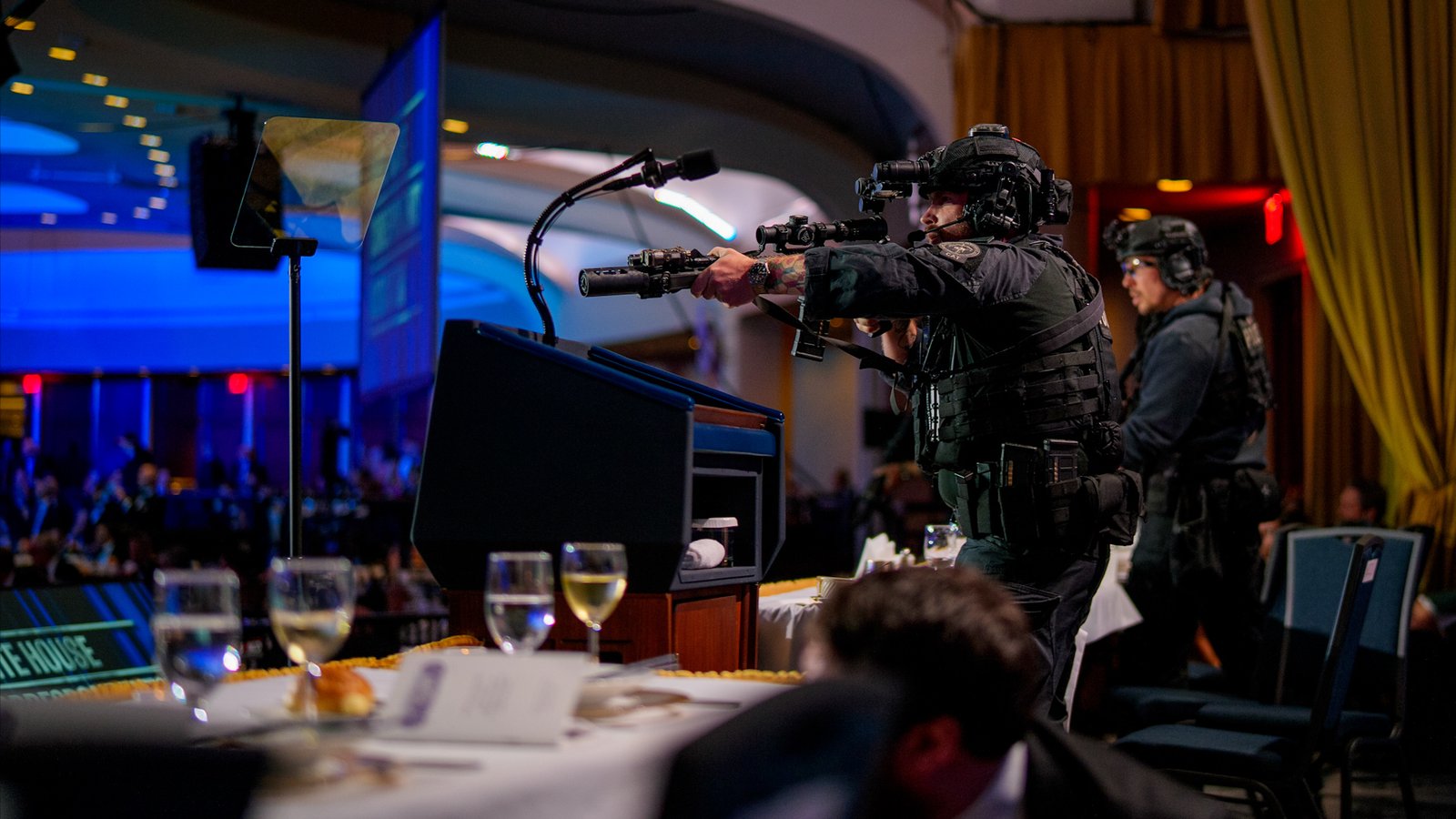
The shooting at the White House Correspondents’ Dinner is putting new pressure on the Secret Service, not just over the security breach itself, but over whether leadership decisions and staffing gaps are leaving the agency stretched too thin to protect the president and other top officials.
Criticism is now focused on Secret Service Director Sean Curran. Behind the scenes, some administration insiders are also pointing to White House chief of staff Susie Wiles. Saturday night, 31-year-old Cole Tomas Allen rushed a security checkpoint at the Washington Hilton with multiple weapons, shot a Secret Service agent and was quickly taken into custody.

Questions extend beyond one night
The focus is no longer just how an armed man got that close to a room filled with the president, vice president, Cabinet officials and members of Congress.
It’s whether the agency was already under strain, and whether Saturday exposed deeper vulnerabilities.
That strain predates the incident. A September 2025 Department of Homeland Security inspector general report found the Secret Service’s counter-sniper unit was understaffed by 73% relative to mission needs.
Between 2020 and 2024, demand for sniper coverage jumped 150%, while staffing grew only 5%. To fill those gaps, the agency leaned heavily on overtime and even deployed marksmen without up-to-date weapons certifications.
The agency has already been trying to expand. The Washington Post reported in January that the agency aims to add 4,000 employees by 2028 to address burnout and staffing shortages.
Criticism focuses on security setup
Much of the criticism since Saturday has centered on perimeter security and entry procedures at the hotel. In an MS NOW opinion piece, former FBI agent and Marine Robert D’Amico wrote that the checkpoint setup lacked basic safeguards, with no barriers to slow movement and no clear reason the entry point remained open once the president was inside.
He also cited accounts from attendees who said security allowed entry with printed tickets and did not consistently verify identities against an official guest list.
Fox News separately quoted former D.C. detective Ted Williams calling the security “lax” and questioning how the suspect was able to bring weapons into the hotel after checking in.
Public defense, private frustration
Publicly, administration officials have focused on the response.
Curran said the suspect’s apprehension showed the agency’s multilayered security worked, pointing to how quickly agents stopped the attack.
“Tonight we saw exactly what our brave men and women do each and every day to protect our protectees,” Curran said Saturday evening. “And that individual, when he charged a checkpoint, was apprehended. It shows that our multilayered protection works.”
Privately, the tone is much harsher.

Even though the Secret Ssrvice agents and officers acted heroically to save lives, there… pic.twitter.com/icb0YcBJp7
— Susan Crabtree (@susancrabtree) April 26, 2026
Sources tell RealClearPolitics some officials are questioning how many incidents it will take before leadership changes. Some are blaming Wiles for keeping Curran in place, while others say Trump’s sons pushed for his appointment.
What comes next
The Secret Service now faces renewed scrutiny over how it secures large-scale events, particularly in venues such as hotels with multiple access points.
The leadership question also remains unresolved.
For now, Trump continues to publicly back the agency, even as internal pressure builds.
Longer term, the agency is still working to build up staffing ahead of major events, including the midterms, the 2028 election cycle and the Olympics. The larger issue raised by the dinner shooting is whether it can address those structural problems in time.