

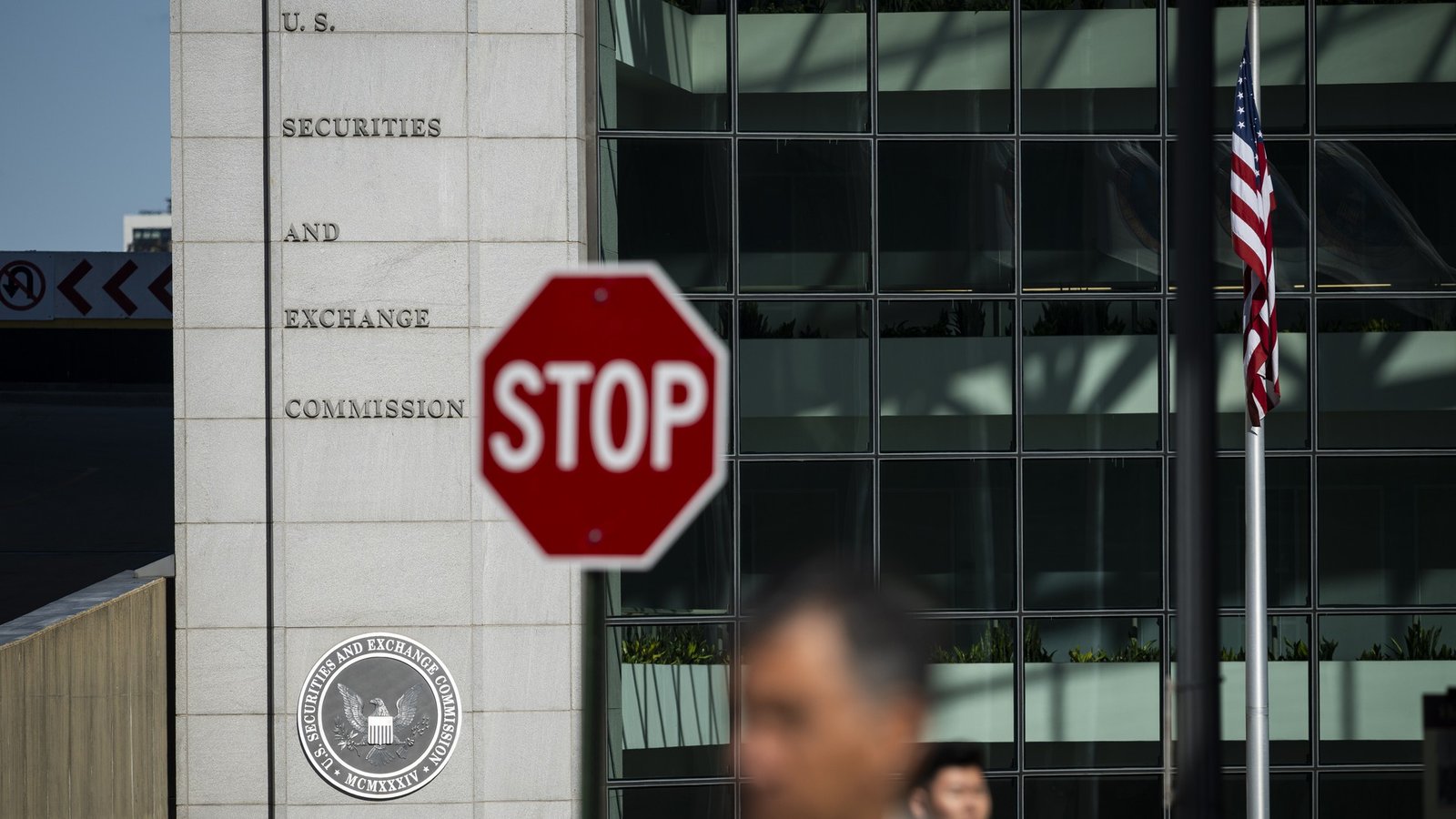
When tech billionaire Mark Cuban refused to settle with the U.S. Securities and Exchange Commission, he dropped about $12 million defending himself against insider trading charges — and ultimately won at trial.
Most people who run afoul of the SEC can’t afford this option.
Instead, they settle. And in doing so, they often agree to a little-known provision that silences them from publicly discussing their side of the story — for the rest of their lives.
The SEC’s gag rule, adopted half a century ago, prevents companies or individuals that settle with the commission from publicly talking about their defense or even denying the allegations against them. As a result, the SEC’s allegations may forever be the only public information available about what happened. It’s an extraordinary exercise of power that ensures the government controls the narrative of its investigations on the public’s behalf.
But now the Supreme Court is considering the gag rule’s legality, and among those urging the court to strike it down is a group of former SEC attorneys.
The Investor Choice Advocates Network (ICAN), a nonprofit legal organization that represents the interests of small investors and entrepreneurs, filed a “friend-of-the-court” brief with the court last week on behalf of 12 former SEC lawyers who are seeking a review of the gag rule.
The brief says roughly 98% of SEC civil enforcement actions end in settlements and that an estimated 2,700 defendants have been prevented from speaking about their cases just since 2017.
The lawyers, many of whom held leadership roles in the SEC, argue that the rule effectively prevents scrutiny of how the SEC operates.
“The agency that Congress charged with stamping out misleading omissions in the capital markets has for fifty years operated the most sweeping compelled-omission regime in federal regulatory practice,” the ICAN brief says.
Origin of a rule
The gag rule dates back more than five decades and reflects the SEC’s belief — stated in the rule’s text — that “it is important to avoid creating, or permitting to be created, an impression that a decree is being entered or a sanction imposed, when the conduct alleged did not, in fact, occur.”
What does the SEC say today?
“We decline comment,” an agency spokesperson told Straight Arrow.
Whatever its reasoning, the rule doesn’t take into account defendants who find it less expensive and less burdensome simply to agree to the government’s demands than to fight them in court. And, critics say, the SEC was far from transparent in adopting it.
“The gag rule was slipped into the Federal Register in 1972 without notice and comment,” Margaret Little, senior litigation counsel at the New Civil Liberties Alliance, which is challenging the rule at the Supreme Court, said in a video on the nonprofit public interest law firm’s website. The NCLA initially challenged the gag rule in 2018. “What the rule does is it says that if you settle with the SEC, you can never criticize the agency’s case against you. Astonishingly, you can be gagged for life.”
But in a case it heard last year, the 9th U.S. Circuit Court of Appeals ruled that the gag rule is constitutional, declaring that people can voluntarily give up their First Amendment right to free speech in exchange for something of value — such as the settlement of an SEC complaint.
That case, Powell v. SEC, is now headed to the Supreme Court. It involves Thomas Powell, who built Resolute Capital Partners, a firm that helps companies raise money and has handled more than $2 billion. In 2021, the SEC accused Powell of misleading investors. Powell settled and paid a fine of $75,000.
When he settled the case, Powell neither denied nor admitted wrongdoing. But now he can’t talk about it.
“The reason for my suing the SEC at this point is because we can’t share our side of the story,” Powell said in an interview on the NCLA website.
The challenge to the gag rule comes amid broader questions about the SEC and its power and authority.
In 2024, the Supreme Court ruled in SEC v. Jarkesy that the agency cannot use its own in-house judges to impose certain financial penalties. The court said defendants charged by the agency have a Seventh Amendment right to a jury trial in federal court.
In another current case, SEC v. Sripetch, the Supreme Court is weighing whether the SEC has to prove that investors lost money in order to force defendants to give up their profits, a process called “disgorgement.”
Lack of transparency
In their brief filed by ICAN, the former SEC lawyers said businesses or individuals that face accusations from the SEC lose an average of 38% of their net worth once the charges are announced. Often, that announcement contains all the information that becomes public.
“Essentially the SEC gets the last word,” Kara Rollins, senior litigation counsel at NCLA, said in a video on the organization’s website.
ICAN’s brief says the gag rule stands in “direct contradiction” to the SEC’s own principles regarding transparency.
“By conditioning settlement on a defendant’s agreement never to publicly deny — directly or indirectly — any allegation the SEC has made against them,” the brief says, “the Gag Rule imposes a lifetime prior restraint on speech and buries information that may be material to the very investors and markets the Commission exists to protect.”
Round out your reading
- Scientists unearth new evidence on how the Grand Canyon was shaped.
- Why the Army is adding a second fitness test for combat.
- Illegal midwives, growing demand: The fight over home birth in America.
- 40 years after Chernobyl, the U.S. pushes nuclear power once again.
- We’re building a new Straight Arrow. Help us shape our future by taking our survey.