

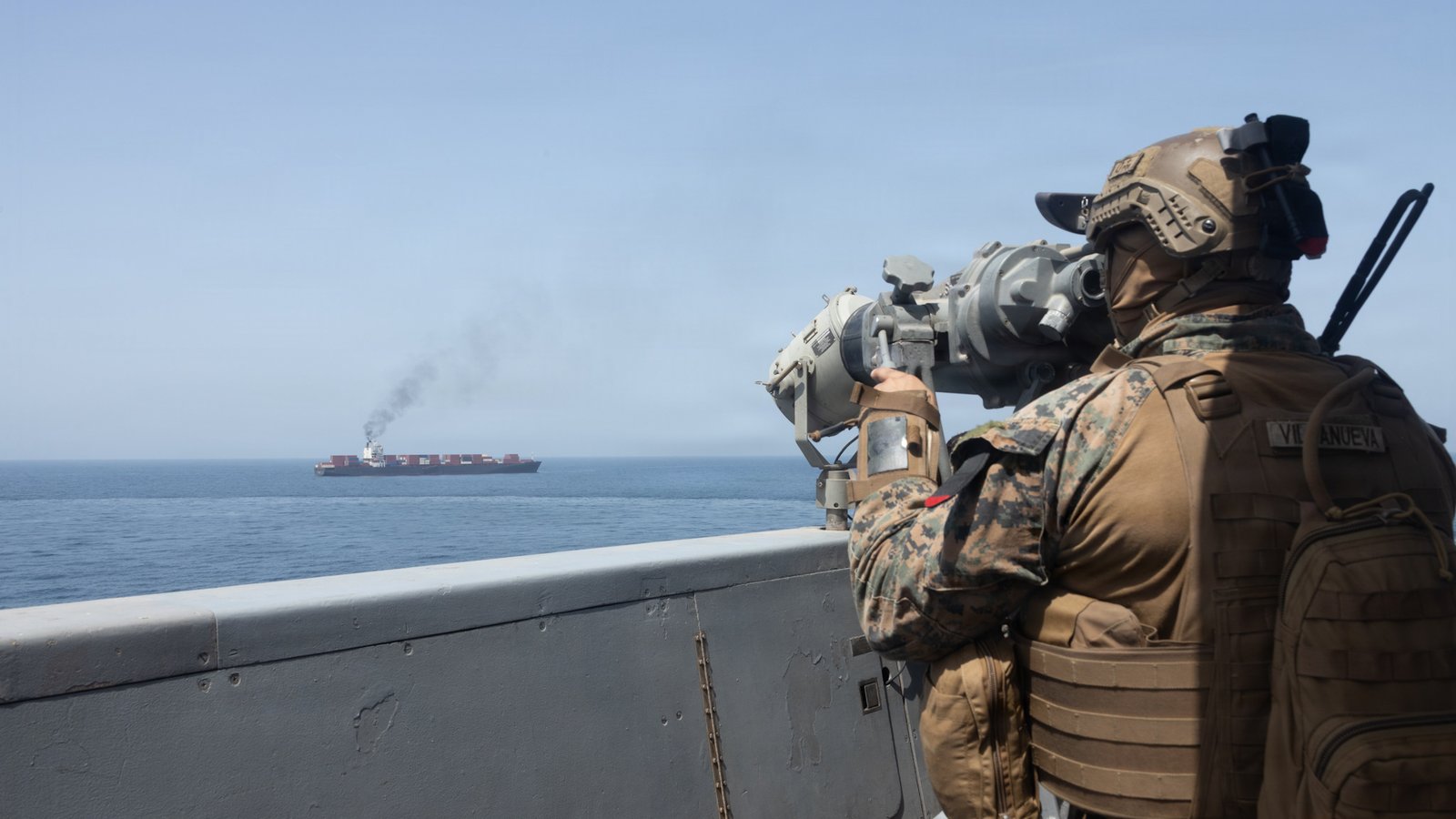
The Trump administration is asking other countries to join a new “Maritime Freedom Construct” aimed at restoring commercial navigation in the Strait of Hormuz.
The push comes after ship traffic failed to rebound even as President Donald Trump said the waterway was open and insisted the U.S. blockade of Iranian ports was working.
The Wall Street Journal first reported on a State Department cable describing the request for other countries’ assistance.
Why the administration is looking for outside help
The move suggests the blockade has not solved the central problem in the Strait of Hormuz, as ships are still not moving normally through one of the world’s most important energy chokepoints. Before the U.S. and Israeli strikes began on Feb. 28, the Strait handled 20% of global oil and gas. But in response to the war, Iran asserted control over the Strait, and passage has nearly stopped, with Iran laying mines and targeting vessels that refuse to pay transit fees.
The proposal also comes as the administration weighs other ways to break the stalemate with Iran. Axios reported that Trump is set to receive a Thursday briefing on new military options, including a possible resumption of strikes, a potential operation to reopen part of the Strait and a possible mission to secure Iran’s enriched uranium stockpile.
What the cable says the coalition would do
Secretary of State Marco Rubio approved the new coalition, to be run jointly by the State Department and the Pentagon, according to a cable issued Tuesday and detailed by Reuters.
The State Department l would handle diplomacy with foreign allies and shipping companies, while the Pentagon would use its Florida-based CENTCOM headquarters to manage ship movements and talk to crews navigating the waterway.
Allies are being asked to contribute by deploying naval forces, sharing intelligence, strictly enforcing sanctions or providing diplomatic backing. The cable also instructs U.S. embassies to present the proposal orally by May 1. The U.S. will not seek assistance from adversaries such as Russia, China, Belarus and Cuba.
The Journal reported that the administration is pitching the coalition as a way to share information, coordinate diplomacy and enforce sanctions while complementing maritime efforts already being led by Britain and France. It also said the cable asks governments whether they want to be diplomatic partners, military partners or both.
Trump said Wednesday that “the blockade has been 100% foolproof,” according to The Journal. That same report said the administration’s outreach to foreign governments shows Washington wants outside help managing the Strait now and possibly in the future.
How the coalition push fits with Trump’s pressure campaign
The policy picture is getting more complicated, not less. Trump had previously told allies, especially in Europe, to take responsibility for the Strait themselves and had mocked NATO for not helping during the Iran war.
Now the administration is asking partner governments to join a U.S.-led framework. While European nations have been holding their own meetings on the issue, U.S. officials accuse them of moving too slowly and bureaucratically, according to The Journal. Notably, the cable stresses that this new maritime construct is distinct from Trump’s “Maximum Pressure” campaign.
At the same time, Axios reported that Trump sees the blockade as his main leverage over Iran. He told the outlet it was “somewhat more effective than the bombing.”
But Axios also reported that CENTCOM has prepared a “short and powerful” strike option in case Trump decides the blockade is not enough to break the negotiating deadlock.
The coalition effort is not replacing military pressure. It is developing alongside it.