

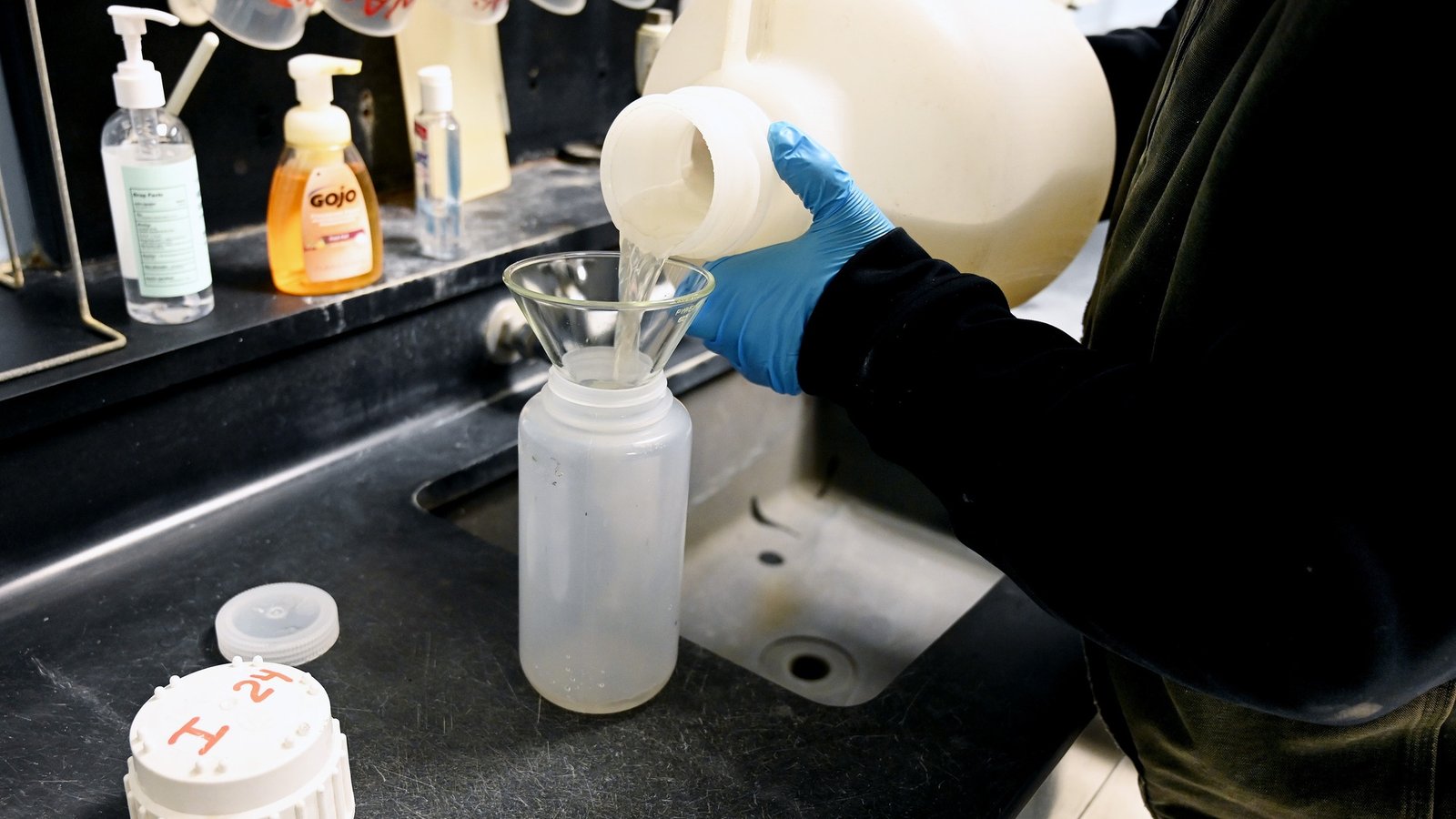
The Trump administration plans to release a proposal to use wastewater to get data on illegal drug use in real time, a draft of a new drug control strategy obtained by CBS News shows.
Wastewater has been used to track infectious diseases, particularly during the COVID-19 pandemic. The Centers for Disease Control and Prevention used it to track respiratory viruses and explore trends over time at the state, regional and national levels.
Now, the Trump administration wants to “prioritize establishing new data systems to monitor drug consumption in real-time, through a national wastewater-based monitoring system and biosurveillance,” according to the 195-page document.
This document, CBS reported, is set to be released this week. Along with testing wastewater, administration officials also want to: use artificial intelligence technologies to screen cargo for illegal drugs at ports of entry; examine electronic health records to “identify patients at high risk of overdose and create search algorithms to detect emerging threats,” per the plan.
Straight Arrow reached out to the White House for comment and to ask how much these measures would potentially cost.
How wastewater monitoring works
According to the CDC, wastewater monitoring can help scientists understand the risk of influenza Z, SARS-CoV-2, which causes COVID-19, and respiratory syncytial virus, or RSV, in communities.
Months after COVID-19 was declared a pandemic by the World Health Organization, the CDC launched the National Wastewater Surveillance System (NWSS), which provided local health officials across the country with the infrastructure to track infectious diseases through wastewater.
Being able to see the spread of SARS-CoV-2 was “vital to interrupting chains of transmission, preventing new cases of illness, and saving lives,” the CDC wrote.
Scientists do this with whole-genome sequencing technology (WGS), which decodes the genetic information of infectious disease pathogens. WGS isn’t able to confirm the presence of any one specific variant in wastewater, as the virus’ RNA breaks into pieces of wastewater. However, WGS of wastewater samples can detect pieces of variant-defining mutations. These can provide strong early evidence that there’s a variant present, or could be spreading, even before a clinical case is detected.
A Morbidity and Mortality Weekly Report published by the CDC in January 2022 showed evidence of Omicron variant mutations in community wastewater in late November 2021, months before this variant was identified in actual cases.
This is how the University of Arizona was able to stop the spread of COVID during the first week of on-campus classes in the fall of 2020. The university’s Water and Energy Sustainable Technology Center sampled wastewater from several dorms.
An analysis showed the presence at one location that same evening. More testing the next day confirmed these results, and the university began testing at the affected dorm and found that three students tested positive. The students were removed from the residence hall to stop the spread, and classes were able to continue as planned.
How effective is wastewater testing for examining drug use?
Dr. Jeffrey Brent, a distinguished clinical professor in the CU Division of Pulmonary Sciences and Critical Care Medicine and Dr. Stephanie Weiss, a staff clinician at the National Institute on Drug Abuse, writing in a commentary for JAMA Network Open, said that wastewater sampling “has many characteristics of an ideal drug surveillance system.”
“Because every member of the population contributes to wastewater production, such sampling surveys everyone in a given geographic area rather than just a hopefully representative sample,” the doctors wrote.
Wastewater sampling is also done anonymously, which has “important implications for accuracy and protection of individual privacy,” they said.
This anonymity means that wastewater testing won’t have the potential biases that pop up in “passive drug surveillance systems.”
Still, they note, the wastewater drug surveillance may stigmatize the communities shown to frequently test positive for drugs. This has implications for local real estate prices, businesses’ willingness to move to the area, and community gentrification, Weiss and Brent said.
Round out your reading
- Scientists unearth new evidence on how the Grand Canyon was shaped.
- Why the Army is adding a second fitness test for combat.
- Illegal midwives, growing demand: The fight over home birth in America.
- 40 years after Chernobyl, the U.S. pushes nuclear power once again.
- We’re building a new Straight Arrow. Help us shape our future by taking our survey.