

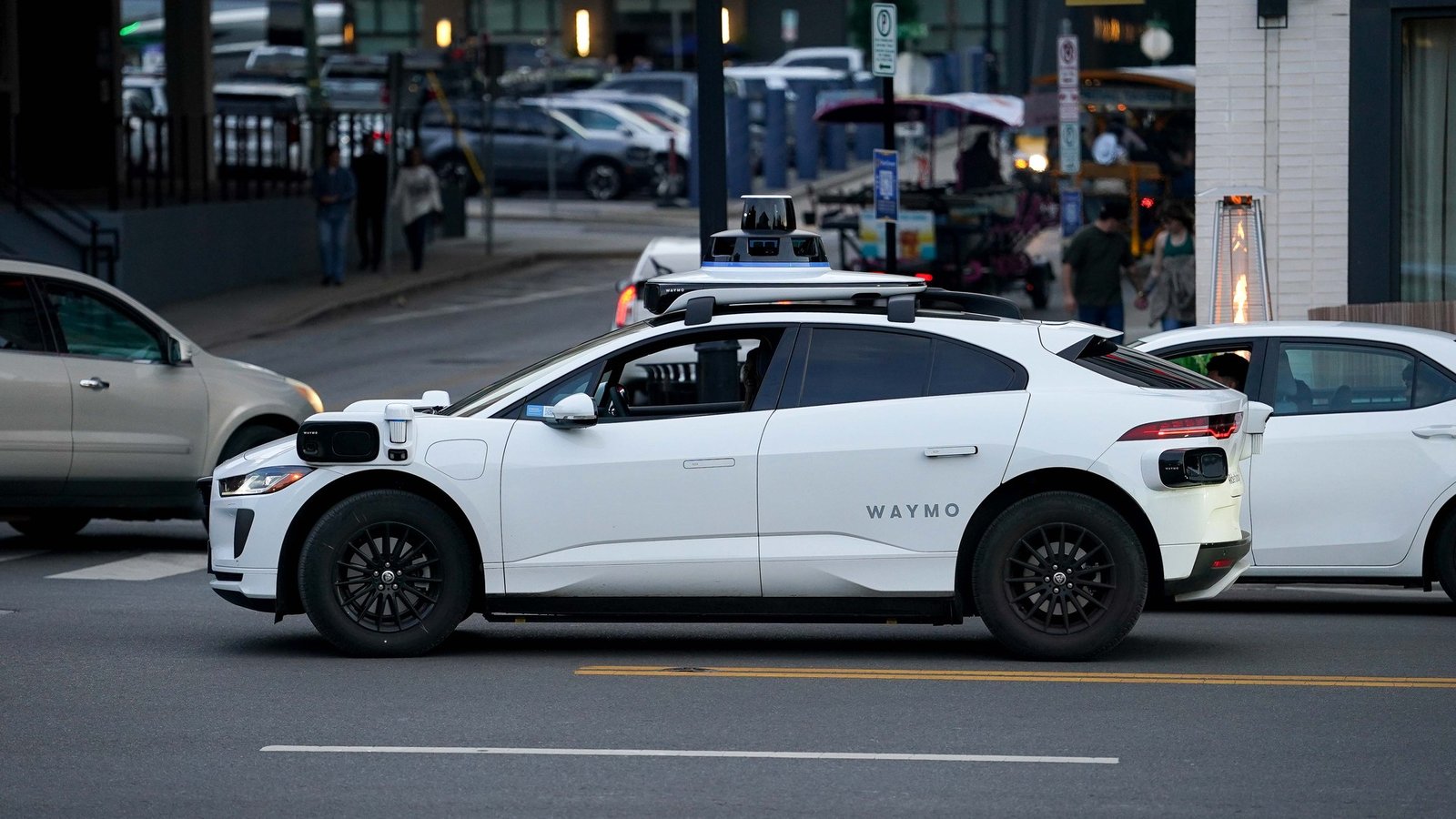
Picture this: You’re driving in California, and all of a sudden, a vehicle flies past you, runs a red light or even bumps into another vehicle. But, it’s a driverless vehicle, so it can’t really be pulled over, and the driver can’t be ticketed — because, obviously, there is no driver.
Annoying, dangerous and pretty terrifying, right? Well, it seems the state of California agrees with you.
California DMV issues new rules
Beginning July 1, driverless vehicles that break traffic laws can officially get ticketed in California under a law recently passed by the state Assembly. It’s apparently the first state law in the nation to address traffic violations by autonomous ride share vehicles operated by companies like Waymo, Zoox, Cruise and May Mobility.
The California Department of Motor Vehicles announced new rules to implement the law last week, saying that when those driverless vehicles break traffic laws, officers can now issue citations to the vehicles’ manufacturers.
If manufacturers don’t comply, their permits to operate in the state could be suspended.
The DMV also expanded testing requirements for manufacturers to obtain permits and added training and other requirements for employees who remotely operate the vehicles.
“California continues to lead the nation in the development and adoption of AV technology, and these updated regulations further demonstrate the state’s commitment to public safety,” DMV Director Steve Gordon wrote in a statement.
A series of incidents
The legislation and implementing regulations responded to a series of incidents involving driverless cars. Since 2014, when the cars first hit the road in California, the state has received almost 1,000 reports of autonomous vehicle collisions, according to The Hill.
Other reported incidents include vehicles sitting in the middle of intersections with malfunctioning or nonoperating stoplights, bumping into parked cars and even driving through flooded streets and making illegal U-turns.
Some driverless vehicles have even received parking tickets for illegal behavior. According to The Washington Post, in 2024, driverless taxis got 589 parking tickets across San Francisco. The vehicles incurred over $65,000 in fines for obstructing traffic, disobeying street-cleaning restrictions, and parking in prohibited areas.
At the time, parking tickets were one of the few ways to track how often autonomous vehicles break the law.
The companies operating driverless vehicles say their “drivers” are safer than humans. In March, Waymo said its cars have been involved in 92% fewer fatal crashes than vehicles driven by humans under the same driving conditions, 83% fewer crashes in which airbags were deployed and 82% fewer crashes involving any injuries at all.
Waymo says it “continues to make roads safer in the places in which we operate.”
Round out your reading
- First, it was the schools. Now they’re coming for your cellphone at work
- Why one of America’s top economic forecasters is worried about a recession
- AI companies may not be adhering to their own guidelines — with potentially deadly outcomes
- Data centers are a thorny issue for Democrats. Maine shows us why
- We’re building a new Straight Arrow. Help us shape our future by taking our survey