

America’s top-rated television news show, “60 Minutes” on CBS, underwent a major shakeup Thursday, and the program’s new top editor wasted no time before announcing plans for drastic changes to the storied, 58-year-old program.
The result could change what Americans watch on Sunday evenings and beyond, and could influence the direction of the television news business.
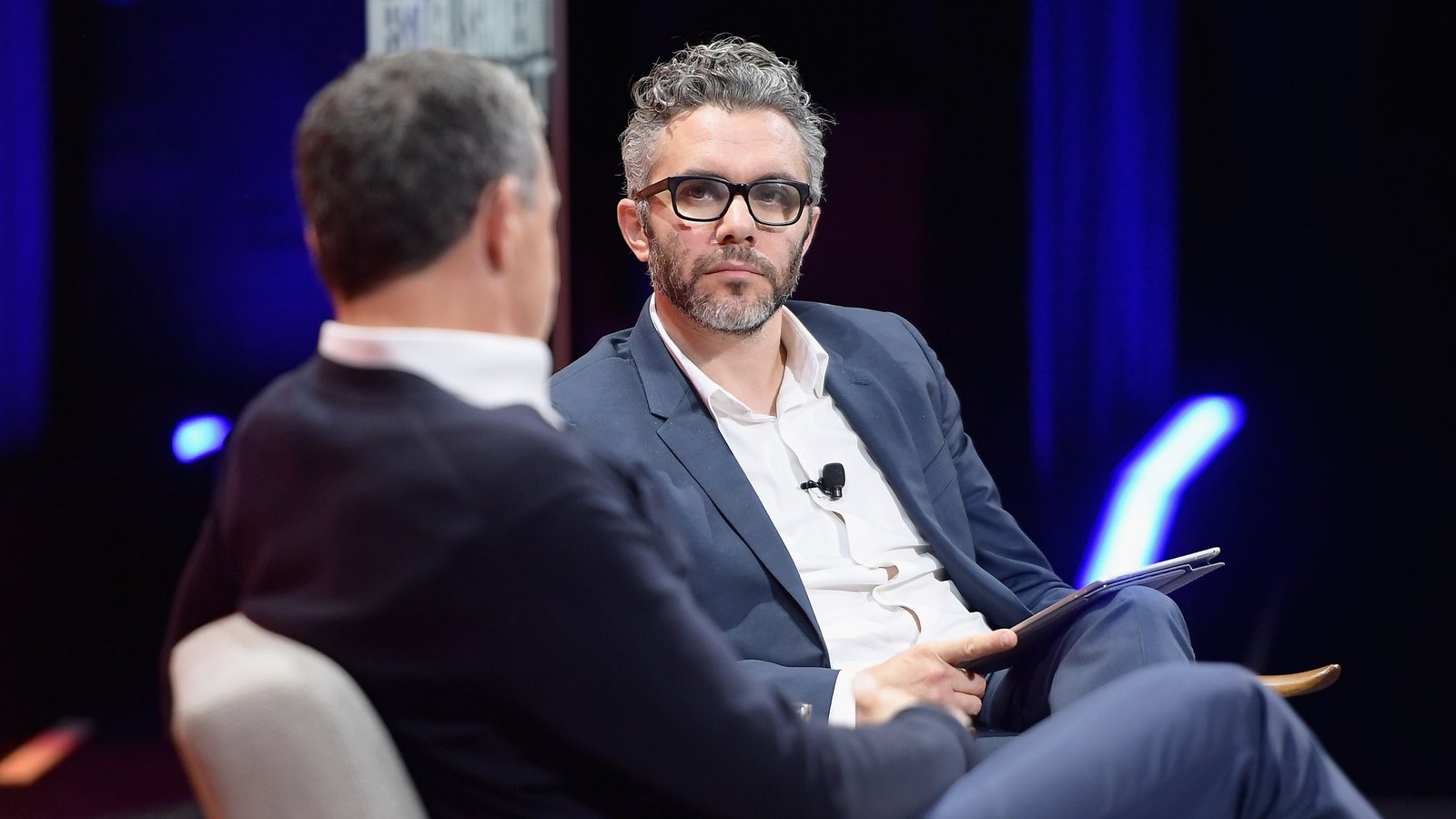
Nick Bilton, a documentary filmmaker and technology journalist, is making his broadcast news debut — as the program’s executive producer. He replaces Tanya Simon, who worked on “60 Minutes” for more than 30 years.
Bari Weiss, the CBS News editor-in-chief, whose rebrand of the network has been marred by controversy and speculation about her own future at the company, called Bilton “one of the most entrepreneurial journalists of our time.”
“We have huge ambition for 60 MINUTES to reach new heights through deep, revelatory journalism that breaks news, exposes wrongdoing, widens public understanding and forces accountability from every institution and every center of power,” Weiss said in a news release announcing the shakeup. “Nick shares this mission and will bring his deep investigative experience and understanding of the technological moment we’re in to 60 MINUTES so that its important journalism comes to life for all audiences.”
The outsider at the helm of ‘60 Minutes’
Bilton, who previously worked as a technology columnist at The New York Times before producing the documentaries “Fake Famous” and “Biggest Heist Ever,” hasn’t previously worked in broadcast news. The program’s fifth executive producer, he is “the first to bring experience from outside linear television,” according to the network.
In a memo to staff and shared on X, Bilton acknowledged his status as an outsider.
“Some of you I’ve met,” Bilton wrote. “Most of you I haven’t.”
While announcing Bilton’s hiring, the news release didn’t note other major changes to the program. Along with Simon, the executive producer, the network fired two correspondents: Sharyn Alfonsi and Cecilia Vega.
Alfonsi was dismissed six months after Weiss abruptly canceled the airing of her segment on torture in a Salvadoran prison to which the U.S. had deported immigrants. Although the story eventually ran, the episode was widely viewed as a rightward pivot at the network under Weiss, an opinion journalist who also lacked broadcast experience before being tapped for the role by the network’s new owner, media mogul David Ellison.
Much as she publicly aired her complaints when the prison piece was held, Alfonsi announced Wednesday that CBS News declined to renew her “60 Minutes” contract. The network reportedly fired her outright on Thursday.
“In the coming days, network leadership may attempt to hide behind corporate euphemisms like ‘modernization’ and ‘restructuring’ to explain away my departure,” Alfonsi said in a statement.
“Don’t be misled,” Alfonsi continued. “This was not a routine corporate transition; it was a deliberate choice to penalize a journalist for refusing to sanitize factually accurate reporting, and it sends a chilling message to the entire newsroom.”
In his memo to the program’s staff, Bilton described “60 Minutes” as the nation’s “most important television journalism brand,” thanks to producers, correspondents, editors and others who “decided that the work mattered more than the noise.”
But since the first episode aired in 1968, he continued, the news industry has undergone transformative changes — and that he was hired to make even more.
“The world we are reporting on, and the world we are reporting to, where people consume their news, has moved,” Bilton said. “And if we don’t move with it, in the ways that matter, we won’t be here for the next sixty years.”
What changes should viewers expect?
Throughout his career as a technology journalist, Bilton said, he has documented how “industry after industry” — including taxi companies, travel agencies and video stores — “got obliterated” by technology companies like Uber, Airbnb and Netflix.
The only companies that survive the tech-infused economy, he said, are the ones that “adapted before it was too late.”
As news outlets increasingly rely on artificial intelligence to write and repackage stories, he said the industry faces similar headwinds. He was hired to “lead this show, not preserve it under glass” he said, although he did not outline specific changes.
“I have a notebook full of ideas,” he wrote. “Some are about the show itself. Some are about the next generation of correspondents. Some are about the strange fact that we produce one extraordinary hour for one night a week in a world that consumes content around the clock.”
In the press release, CBS News President Tom Cibrowski offered a hint about what viewers should expect soon. The hourlong program could occupy a lot more airtime than a weekly, hour-long block. Bilton’s experience on the technology beat could be a major part of the transformation.
“Hiring Nick represents a deliberate vision for 60 MINUTES to go beyond an hour on Sunday evenings to become a 360-degree product that reaches audiences wherever they consume information,” Cibrowski said. “Our ambition is to do hard-hitting journalism that respects our existing audience, brings in new audiences and enables viewers to proactively devote their attention to our work across every platform and medium.”
Round out your reading
- Tennessee officials will pay $835,000 for jailing man over Charlie Kirk meme.
- Why the immune system turns on women more often than men.
- More than 340 newspapers block the Wayback Machine. What that means for the future of the internet.
- Why Rep. Cohen filed articles of impeachment against Supreme Court Justice John Roberts.
- We’re building a new Straight Arrow. Help us shape our future by taking our survey.