

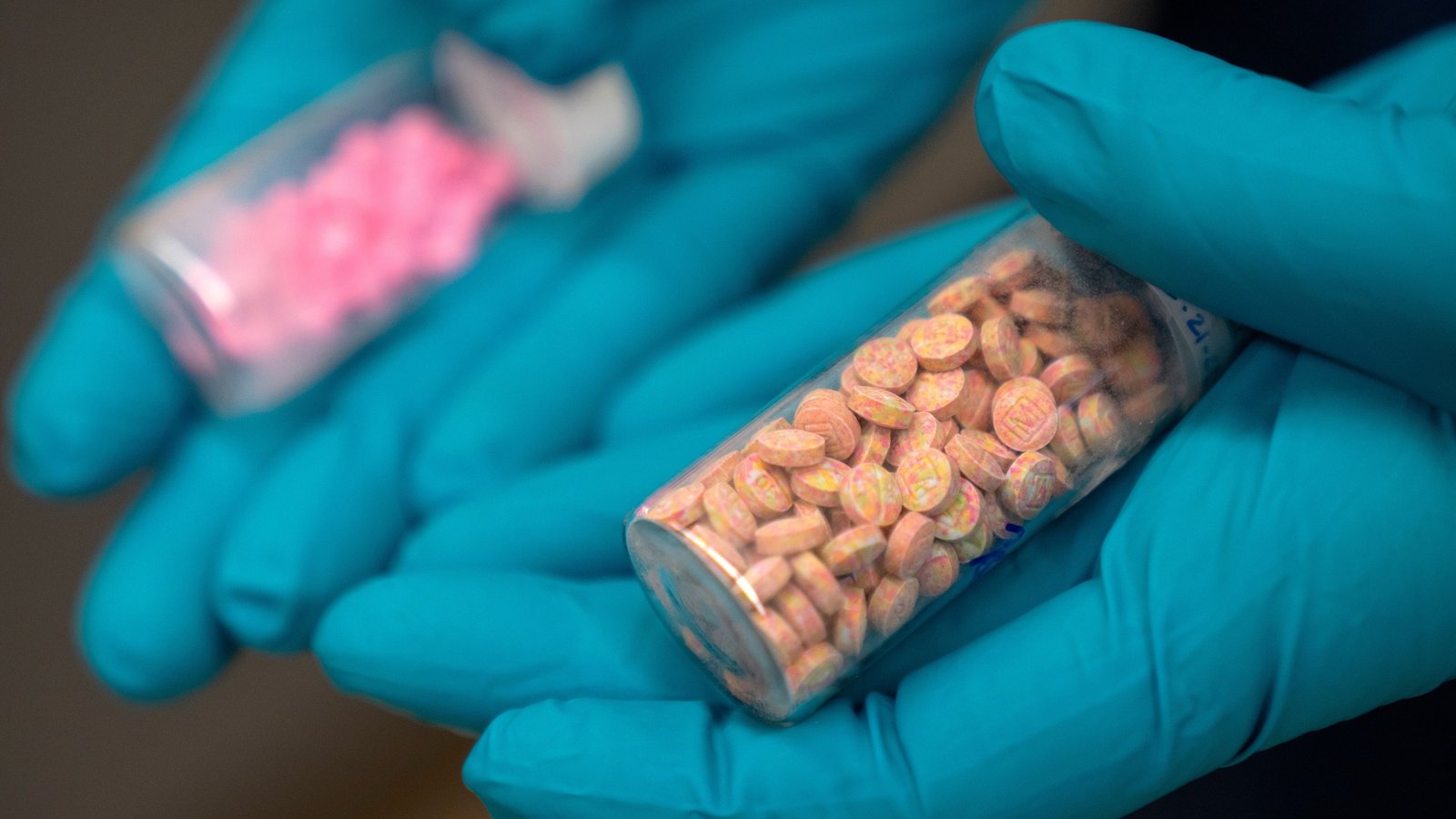
Federal officials are warning that the nation’s drug crisis is entering a more dangerous phase due to illicit fentanyl mixed with synthetic substances. This includes a newly identified opioid compound never before seen in national forensic data.
In a public safety advisory earlier this month, the Drug Enforcement Administration said the United States continues to face an “unprecedented and evolving drug threat” as fentanyl is combined with a growing array of synthetic drugs, making the illegal supply more unpredictable and deadly.
Among the newest concerns is the detection of a compound known as 5‑chloro desmethyl chlorphine, part of a class of substances sometimes referred to as “orphines.” The DEA said the drug was identified in a seizure in Knoxville, Tennessee, marking the first time it has appeared in the agency’s National Forensic Laboratory Information System. The sample was found to be 34% pure.
#AnalysisAlert: New orphine detected! DEA found 5-chloro desmethyl chlorphine in a Knoxville, TN seizure—never before seen in NFLIS. Sample was 34% pure. Watch for this emerging synthetic opioid in the illicit supply. @TheJusticeDept #DEAForensicshttps://t.co/Jq4YxdRxmo pic.twitter.com/f7J0DRjhGv
— DEA HQ (@DEAHQ) May 27, 2026
Officials say the discovery underscores how rapidly drug trafficking organizations are evolving, introducing new substances to evade enforcement and regulation.
Hidden mixtures driving risk
The DEA reports that fentanyl is increasingly mixed with substances such as xylazine and medetomidine. Both drugs are used by veterinarians as sedatives.
The agency also warns of nitazene and cychlorphine, which are highly potent synthetic opioids. These substances are often undetectable to users and frequently appear in counterfeit pills or powders sold on the illicit market, leaving individuals unaware of what they are taking.
“That deception is at the heart of the growing danger,” said Jonathan Pullen, associate chief of operations for the DEA’s South Central Region. “Someone thinks they’re using cocaine, and what they actually get is a lethal dose of carfentanil.”
Extreme potency compounds concern
Authorities warn that many of the emerging synthetic drugs can be even more potent than fentanyl. This increases the risk of overdose.
Carfentanil, one of the substances highlighted by the DEA, is approximately 100 times more potent than fentanyl and can be lethal in nearly invisible amounts. Originally developed as a tranquilizer for large animals, it poses a significant risk not only to users but also to first responders.
“It’s essentially fentanyl on steroids,” Pullen said. “Carfentanil is about 100 times stronger than fentanyl. In incredibly small amounts, it can be lethal to humans.”
Officials said the drug is rarely sold on its own and is often mixed with other substances, including heroin, cocaine and counterfeit prescription pills.
The growing combination of substances is also complicating efforts to reverse overdoses.
Some additives, such as xylazine and medetomidine, are not opioids. This means naloxone may not fully reverse their effects. Other synthetic opioids, such as nitazene, may require multiple doses of the medication.
A rapidly changing threat
While fentanyl remains the leading driver of overdose deaths, federal officials say the emergence of new compounds like the newly detected “orphine” reflects a broader shift in the drug landscape.
“The drug market is evolving,” Pullen said. “As we pressure one substance, they pivot to another. There’s always something new, and it’s usually more dangerous.”
Officials also warn that counterfeit pills made to resemble prescription medications are contributing to the risk. They often contain fentanyl or stronger substances without the user’s knowledge.
“These pills look real,” Pullen said. “Even trained professionals sometimes need lab tests to tell the difference. The average person on the street has no chance of knowing what’s actually in them.”
The DEA is urging the public to assume that any illicit drug may contain fentanyl or similarly potent substances.
“We hear the same heartbreaking stories over and over,” Pullen said. “A teenager takes a pill from a friend — something they think is safe — and they don’t wake up the next morning.”
Round out your reading
- Tennessee officials will pay $835,000 for jailing man over Charlie Kirk meme.
- Why the immune system turns on women more often than men.
- More than 340 newspapers block the Wayback Machine. What that means for the future of the internet.
- Why Rep. Cohen filed articles of impeachment against Supreme Court Justice John Roberts.
- We’re building a new Straight Arrow. Help us shape our future by taking our survey.