

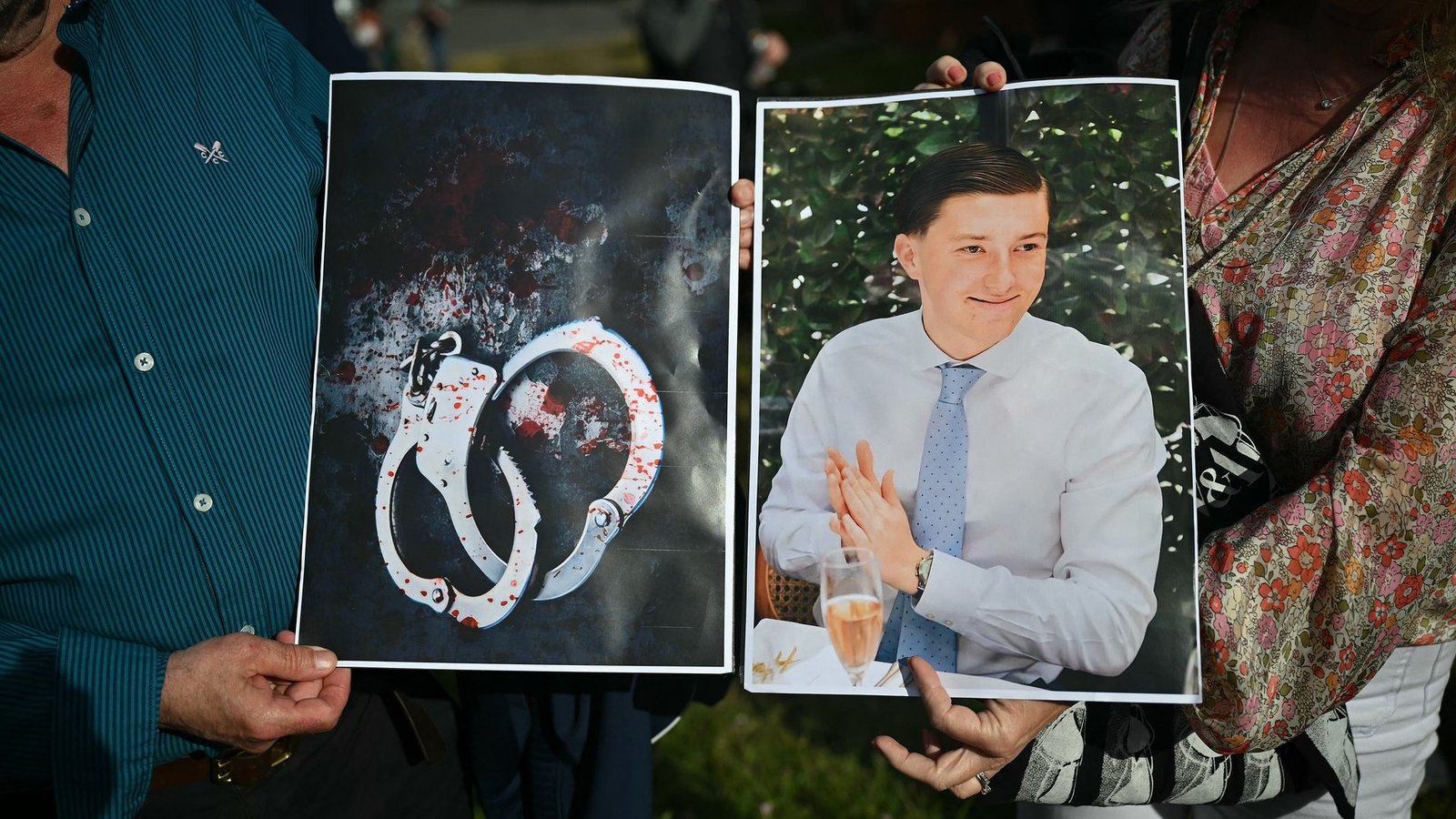
Britain’s police watchdog is investigating the response to the murder of an 18-year-old college student who was handcuffed by police while lying dying from stab wounds.
Henry Nowak, the victim, was stabbed multiple times during a confrontation in Southampton late last year. His killer, 23-year-old Vickrum Digwa, falsely claimed that Nowak had racially abused him during the encounter.
Digwa was sentenced this week to life in prison for Nowak’s murder. But the case has continued to generate outrage over how police treated Nowak in the minutes before his death, with critics arguing police were too quick to accept Digwa’s account and too slow to recognize that Howas was critically injured.
What happened
It started with a chance encounter on a December night in 2025. According to trial testimony, Nowak was walking home from a night out when he spotted Digwa carrying a religious knife.
According to The New York Times, Judge William Mousley said Nowak “perhaps cheekily” asked whether Digwa was a “bad man” while recording a video on his phone.
“I am a bad man,” Digwa responded, grabbing Nowak’s phone.
What happened next remains disputed, but the judge said there appeared to have been a “physical struggle” as Nowak tried to retrieve his phone. During that confrontation, Digwa’s turban may have been “knocked, pulled or potentially punched” off his head.
Digwa then pulled the knife, stabbing Nowak, according to the court.
While carrying a knife at all times is a strict requirement under Digwa’s Sikh religion, Mousely noted they’re usually small and worn around the neck. But Digwa was also carrying a second, larger knife that was clearly visible.
When police arrived, Digwa told them he’d been racially attacked.
Police found Nowak on the ground, but body camera footage shows officers initially dismissing his repeated claims that he had been stabbed and couldn’t breathe. At one point, an officer can be heard telling him, “I don’t think you have, mate.”
The judge said officers handcuffed Nowak for about a minute before recognizing the severity of his injuries and attempting CPR.
‘White lives matter, too’
The case has quickly become part of a broader debate over race and policing in Britain.
Nigel Farage, leader of the anti-immigration Reform UK party, compared aspects of the case to the death of George Floyd in the United States and argued that police have developed what he called a “two-tiered” approach to policing.
“White lives matter, too,” he said in a video statement.
Body camera footage released this week fueled public anger and prompted demonstrations near the scene of the killing. Some protesters threw rocks, flares and other items at riot police while yelling, “I can’t breathe.”


After Digwa’s sentencing hearing Monday, Nowak’s father said he does not want his son’s death to be used to “create further division, hatred or tension.”
Investigation underway
Britain’s Independent Office for Police Conduct is investigating the officers’ response.
The inquiry began the day Nowak died after the local police referred the case to the watchdog. Hampshire Police Service has since said that one of the officers involved in the incident has resigned, according to The Times.
U.K. Home Secretary Shabana Mahmood, who oversees policing, has said she fully supports the investigation, but emphasized this is “not a case about racism. This is a case about murder.”
British Prime Minister Keir Starmer called the footage “harrowing” and said the police involved have some serious questions to answer regarding “accusations of racism informed the decision-making in this case.”
A political commentator for The Telegraph, Sam Ashworth-Hayes, argued otherwise.
He said Nowak’s death was a “natural outcome” of the U.K.’s “Macpherson principle,” which emerged in the wake of the 1993 racist murder of Stephen Lawrence, a Black British teenager.
He points to the College of Policing’s official guidance, which says police should “respond positively to allegations, signs and perceptions of hostility and hate”, maintaining a “standard for the priority response” to “hate crime and non-crime hate incidents.”