

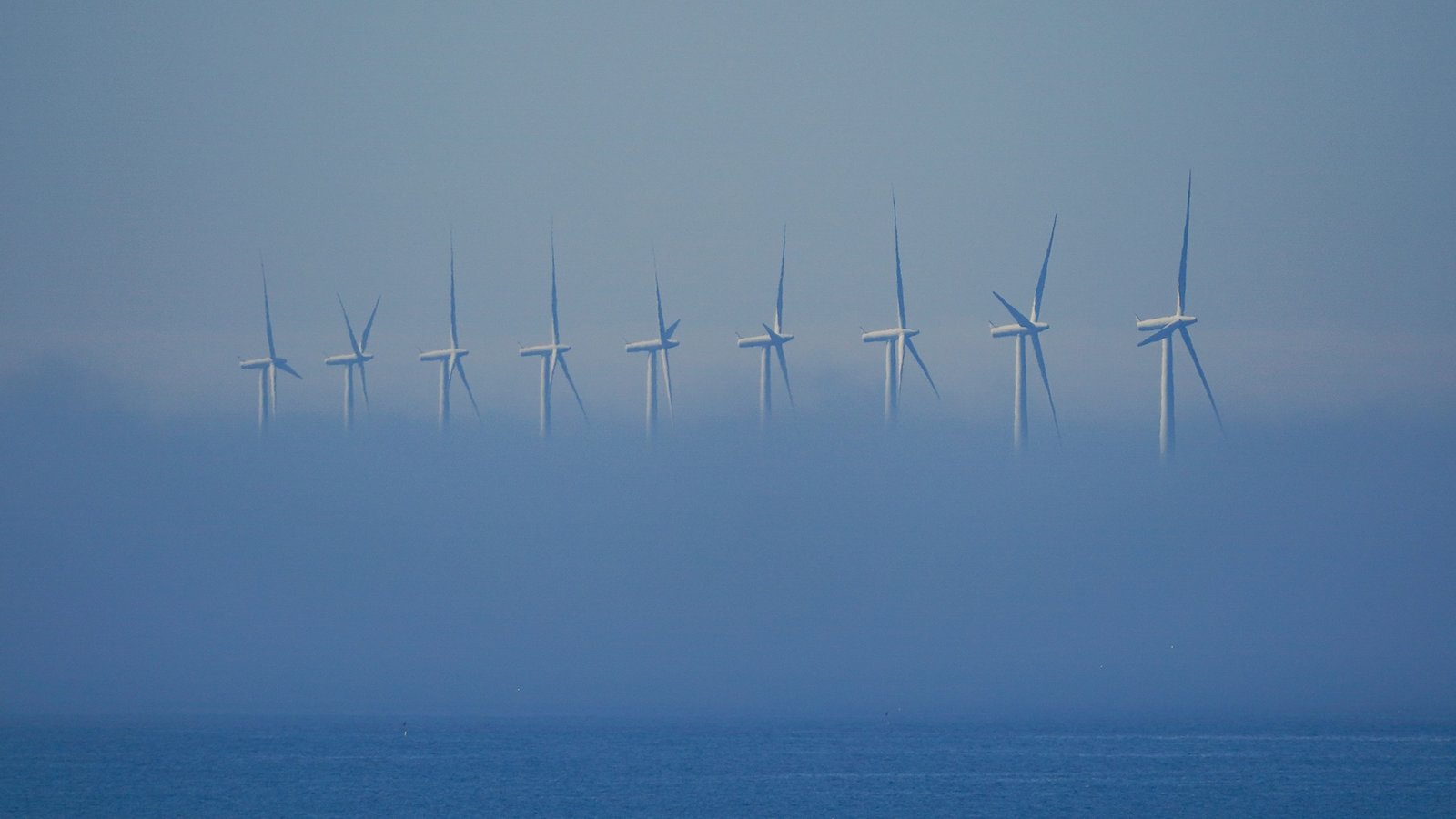
Seven states from New Jersey to Maine are suing the Trump administration to reverse a deal that rescinded a major offshore wind lease. It’s the latest example of a growing trend: Blue states have routinely taken the Trump administration to court over energy projects.
The lawsuit, filed Tuesday for Attorneys General in Connecticut, Maine, Massachusetts, New Jersey, New York, Rhode Island and Vermont, argues that the U.S. Department of the Interior violated the Outer Continental Shelf Lands Act in a deal it reached with French company TotalEnergies.
In that deal, which was announced in March, the U.S. government paid TotalEnergies $928 million to abandon two leases off the coast of New York and North Carolina, where the company had previously planned to build offshore wind farms. Instead, the company would invest those dollars in oil and gas projects.
From rescinded federal grant funding to stop-work orders on wind farms that were already under construction, President Donald Trump’s energy policy has faced fierce and often successful legal challenges. The court outcomes are shaping which large renewable energy projects are built.
The lawsuit narrows in on the 84,000-acre New York lease TotalEnergies purchased in 2022. The wind farm planned for that site would have produced up to 2.7 gigawatts of power — enough to power 1.3 million homes — according to the legal filing.
“New York and New Jersey have relied on the development of the Lease area as a component of their respective long-term strategies to support grid reliability, energy diversification and climate goals,” the lawsuit argues, later adding that the remaining five states would also have benefited from the ability to import power from New York.
What is the federal government’s argument?
The Interior Department responded to the lawsuit: “The only thing blatantly unlawful here was the process by which these offshore wind leases were negotiated and imposed under the Biden administration,” a spokesperson told ABC News.
Offshore wind is too expensive and unreliable, according to the spokesperson, who also noted the deal was previously reviewed by the Justice Department.
In the March announcement, Interior Secretary Doug Burgum framed the deal as part of Trump’s efforts to stem the tide of rising electricity bills. Instead of offshore wind, TotalEnergies agreed to invest $928 million in oil and gas drilling, and expanding a liquefied natural gas (LNG) export terminal in Texas, according to a press release.
LNG export facilities, however, do not feed domestic energy supply. Instead, U.S.-produced natural gas is converted to a liquid and shipped to markets in Europe and Asia. And there’s a heated debate among energy economists, with one side arguing increased LNG exports adds upward pressure to electricity prices due to increased demand for gas.
How have previous offshore wind lawsuits gone?
Democrat-run states generally have a winning track record when it comes to offshore wind.
In December, the Interior Department ordered ongoing construction to stop on five offshore wind farms, citing a classified report that raised national security concerns around potential radar interference. In five separate rulings, judges sided against the Interior Department, and allowed construction to continue.
Round out your reading
- Plea bargains keep America’s courts running. Guilt or innocence barely matters.
- Trump says the media isn’t covering one of his biggest accomplishments. We checked.
- Mike Lindell denied MyPillow was hacked. Its private data is now online.
- Red meat allergy rises with ticks as HHS targets Lyme disease, alpha-gal syndrome.
- We’re building a new Straight Arrow. Help us shape our future by taking our survey.