

A group of researchers led by Ramon Sun, a biochemist and molecular biologist at the University of Florida, reported this week that they identified a potential new driver of Alzheimer’s disease progression: Glucosamine.
The discovery emerged from a new technique called multi-imaging, developed by Sun’s laboratory, which allows scientists to examine the brain in unprecedented molecular detail.
“It’s essentially a robot with lasers that scans the brain for all the biomolecules that we’ve previously been missing for the last couple of decades,” Sun said. “This gives us a brand new view of what’s in our brain.”
Researchers used the technology to analyze brain samples from three Alzheimer’s patients and three people who did not have the disease. Although the sample was small, the researchers found a striking difference: Brains affected by Alzheimer’s contained substantially higher levels of glycans, a type of sugar that attaches to proteins and helps cells function.
Sun likens glycans to scaffolding around a building, helping support and stabilize cells throughout the body. While glycans are essential for normal brain function, the researchers found that Alzheimer’s brains accumulated excessive amounts of the sugars, a condition known as hyperglycosylation. The researchers published their findings in the journal Nature Metabolism.
Sun said the glycan build-up represents a newly identified feature of Alzheimer’s disease that may contribute to disease progression through a previously unrecognized pathway.
Scientists still do not fully understand what causes Alzheimer’s disease or what might accelerate progression. Over the years, researchers have implicated a wide range of factors — including the buildup of amyloid plaques and tau tangles, chronic inflammation and even infections.
READ MORE: What’s behind the alarming rise of ‘old age’ diseases in younger Americans?
Sun said his team’s findings add to growing evidence that metabolic dysfunction plays a central role in Alzheimer’s disease.
“Fundamentally, I think it really gives good evidence to show that Alzheimer’s disease is a metabolic crisis,” Sun said. “It’s a result of metabolism going haywire in the brain.”
And the study’s findings have excited researchers outside of its original circles.
“This is really mind blowing,” said Hudson Freeze, a glycobiologist at Sanford Burnham Prebys who was not involved in the study though he has collaborated with Sun on other research. “It’s something that I don’t think anyone would have really suspected.”
Freeze said scientists still know relatively little about sugars, especially those beyond glucose, including how they move through cells and how changes in sugar metabolism affect health and disease.
“This is the kind of sugar that has been long ignored,” he said.
Glucosamine may accelerate Alzheimer’s progression
To determine whether the excess glycans were simply a consequence of Alzheimer’s disease or actively contributing to it, the team turned to mouse models.
Researchers found that reducing glycan production improved cognition and memory, while increasing glycan production worsened cognitive decline. The findings suggested hyperglycosylation may be helping drive the disease.
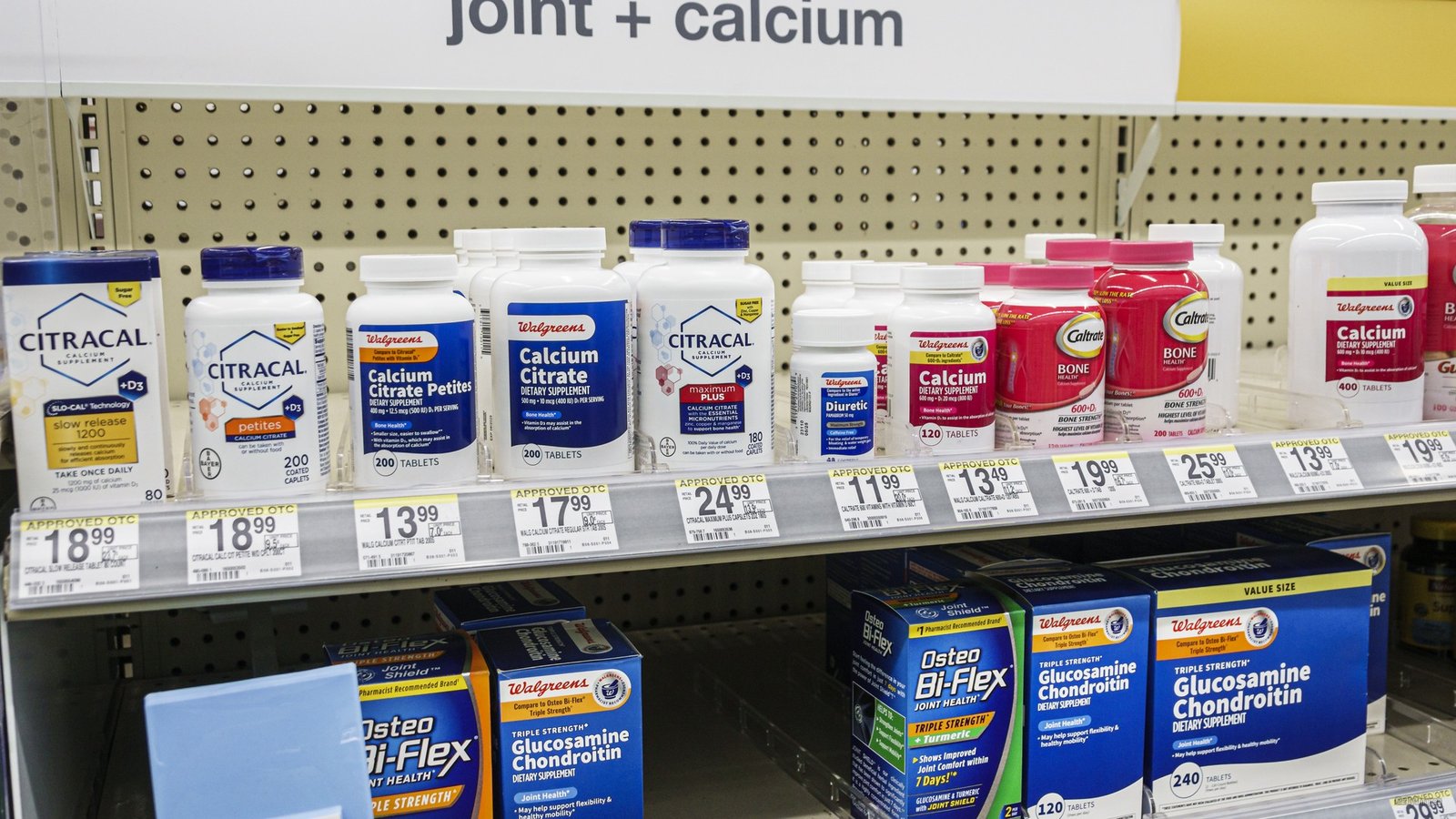
The researchers then gave Alzheimer’s mice glucosamine, a popular dietary supplement often marketed for joint health. Because glucosamine is used by the body to build glycans, the team hypothesized that it would further increase glycosylation.
The mice who received the supplements developed more severe cognitive impairment.
“If we reduce the pathway, can we improve cognition and memory and reduce dementia? And if we increase the pathway, can we accelerate [Alzheimer’s disease] development?” Sun asked. “The answer is yes.”
Glucosamine is one of the most widely used supplements in the U.S.; roughly 5 million people take it each year. Sun said use is even more common among older adults, with an estimated 8% to 10% taking the supplement. While glucosamine is generally considered safe, studies have produced mixed results regarding its effectiveness for joint pain and arthritis.
Researchers also analyzed electronic health records to explore whether the apparent link between glucosamine and poorer outcomes observed in mice could also be seen in humans. They found that Alzheimer’s patients taking glucosamine had higher mortality over a five-year period than those who were not taking the supplement.
Sun said roughly 25% more Alzheimer’s patients taking glucosamine died during the study period compared with those who were not taking the supplement.
The study did not determine whether glucosamine directly caused those differences, and Sun stressed that the findings do not suggest glucosamine causes Alzheimer’s disease in otherwise healthy people.
“We think that for healthy normal people, glucosamine doesn’t impact their cognition and dementia, and it does not give them dementia at all,” he said.
Instead, the researchers suspect that in brains already affected by Alzheimer’s disease, excess glucosamine may further fuel the metabolic dysfunction underlying the condition. Researchers could eventually conduct a clinical trial in which some Alzheimer’s patients stop taking glucosamine supplements, allowing scientists to evaluate whether discontinuation affects disease progression, according to Sun.
Freeze also pointed out that important questions — such as what forms of glucosamine patients were taking and at what doses — remain unanswered.
More research is needed before physicians make clinical recommendations. However, if future studies confirm the findings, Sun said physicians may eventually advise Alzheimer’s patients to stop taking glucosamine supplements. The newly identified pathway may also provide researchers with a potential target for future drug development.
In addition to its implications for Alzheimer’s, the study underscores how much is unknown about the role of sugar in health and disease.
“A lot more research needs to be done on this forgotten area of sugar metabolism,” Freeze said.
Round out your reading
- People are overdosing on GLP-1 injections. What does that look like?
- Researchers put chatbots in a simulation. Grok ended the world in 4 days.
- Fearing more e-bike injuries, Illinois looks to become 10th state to mandate registration, insurance.
- Why are young professionals facing such a tough job market? Hint: It’s not just AI.
- We’re building a new Straight Arrow. Help us shape our future by taking our survey.