

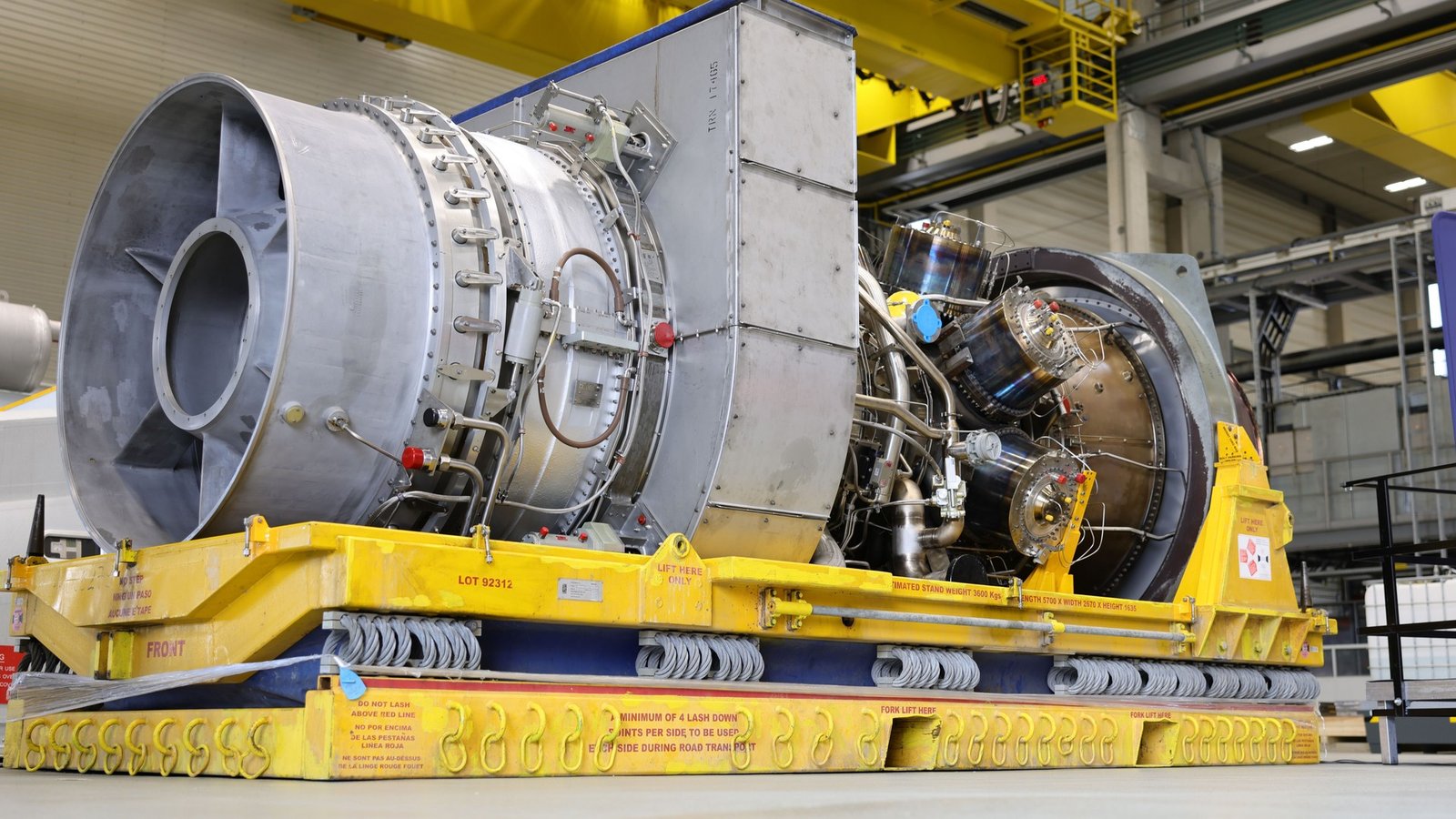
The energy price fallout from the U.S. war with Iran is reaching beyond gasoline prices at the pump. An executive for a major manufacturer of turbines needed for gas power plants said the war has caused turbine prices to increase. That means it costs more to build new power plants at a time when monthly electricity bills are already high, due in part to increased electricity demand.
Due to the threat of attacks on power plants, demand for gas turbines from countries in the Middle East is on the rise, according to a report from Reuters.
“If you look at some of these countries, especially in the Gulf, you see that they are launching new tenders. So that if a big power plant is down, they are not out,” said Karim Amin, executive board member at Siemens Energy, one of the three largest gas turbine manufacturers in the world.
Demand for gas turbines was already elevated due to the skyrocketing demand for electricity from data centers that power artificial intelligence tools. The tech industry can install power plants behind the meter — like Elon Musk’s xAI campus in Memphis — or the industry can connect to the wider power grid in a place where the regional utility company will build the power plants it needs, which is the case with Meta’s data centers in Louisiana. In either configuration, artificial intelligence is largely powered by gas turbines.
What’s the state of the gas turbine market?
Power plants generally share a common design feature: fuel burns to heat water, generating steam. The steam rises, spinning a turbine, which is the crucial piece of machinery that turns thermal energy into electricity.
Turbines for gas power plants are on track to cost 195% more by 2027 compared with their baseline in 2019, according to an April report from Wood Mackenzie. The report reveals a mismatch between total global turbine orders of 110 gigawatts — equal to about 55 Hoover Dams — for gas power plants that are planned, but the projected turbine manufacturing output lags behind at 60-70 gigawatts.
That mismatch is the primary driver of higher costs, and Big Tech appears ready to pay up. SpaceX, which owns xAI, is committed to spending $2.8 billion on gas turbines, according to reporting in Wired.
“This supply constraint, compounded by six-year lead times and order books sold through 2027, has fundamentally shifted the market from fuel-economics-driven decisions to procurement-strategy-driven project viability,” said Aurora Tenorio, a senior analyst at Wood Mackenzie, in a press release.
The increased costs are also affecting utilities that primarily serve the public. When Austin Energy, the city-owned utility in Texas’s capital, announced plans for a new 400-megawatt gas power plant last month, the company told Straight Arrow that the plant will cost an estimated $1 billion.
How has war driven up costs?
During the Iran war, both sides have raised the specter of direct attacks on power plants. Starting with a late-March message that the U.S. would “obliterate” Iran’s power plants, President Donald Trump has repeatedly threatened to target Iran’s power grid if a peace deal is not reached.
In March, Iran launched missiles that struck near Israel’s largest power plant, though the grid did not take any direct damage. Last month, a drone strike caused a fire near a nuclear power plant in the United Arab Emirates, though the perpetrator of the attack is unknown, according to the BBC.
Executives at Siemens Energy said governments in the Middle East have reserved an increased number of gas turbines in recent months. More turbines mean backup power plants can be built, or repairs can happen more quickly.
The other two companies that lead in gas turbine manufacturing, GE Vernova and Mitsubishi Power, have not stated publicly whether the Iran war is having an effect on their prices.
Round out your reading
- People are overdosing on GLP-1 injections. What does that look like?
- Researchers put chatbots in a simulation. Grok ended the world in 4 days.
- Fearing more e-bike injuries, Illinois looks to become 10th state to mandate registration, insurance.
- Why are young professionals facing such a tough job market? Hint: It’s not just AI.
- We’re building a new Straight Arrow. Help us shape our future by taking our survey.