

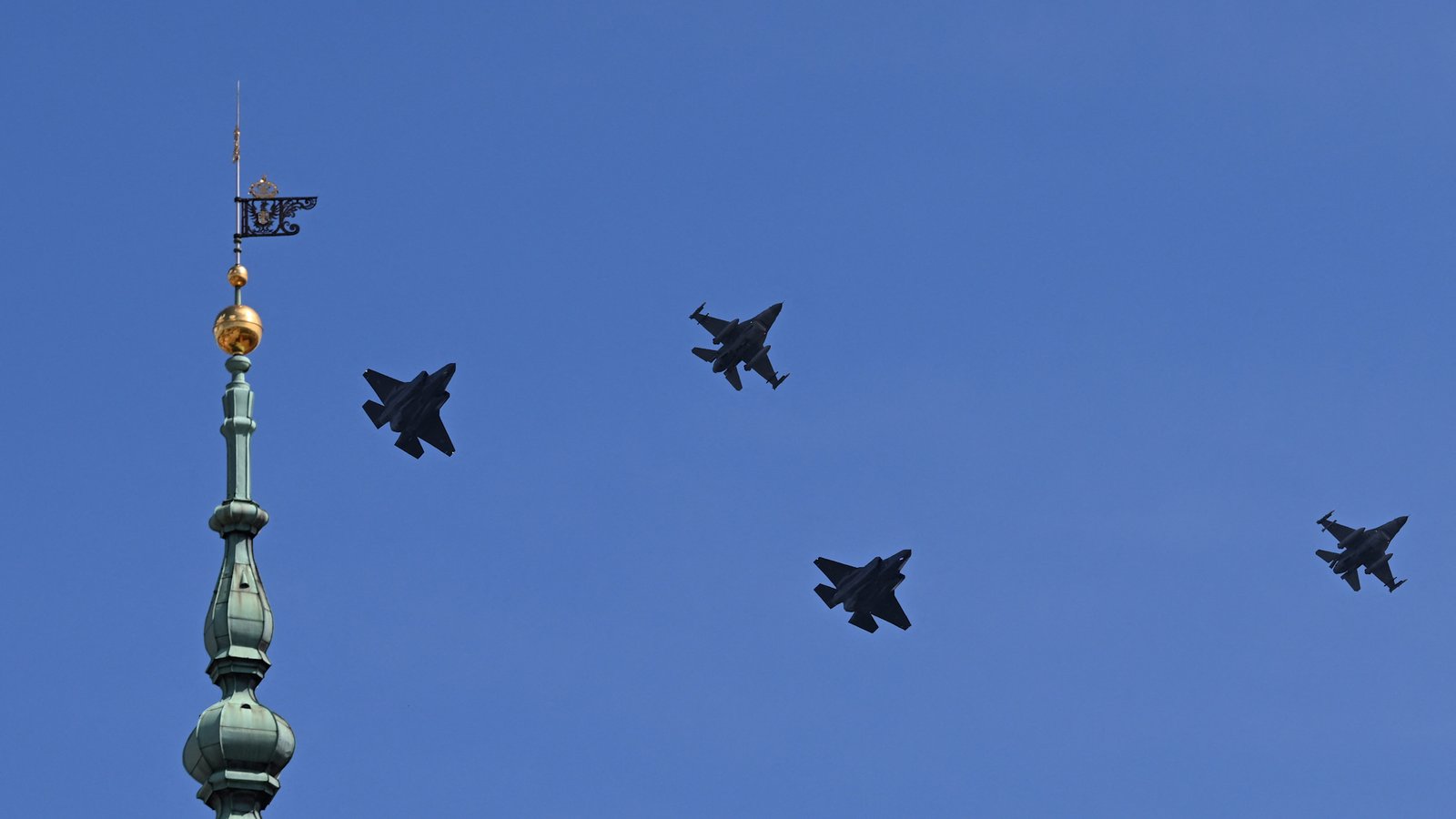
In a major pullback of America’s military commitment to Europe, the U.S. is preparing to withdraw some aircraft and warships it previously made available for NATO operations.
According to internal planning documents obtained by The New York Times, American fighter jet allocations — specifically the F-16 and F-15E platforms — will drop by a third, from roughly 150 to 100. The strategic rebalancing also eliminates all eight aerial refueling tankers from the theater and slashes the number of maritime reconnaissance planes from 26 to 15.
Why the cuts could strain NATO
Defense analysts warn the hardware shortfalls could heavily degrade the alliance’s intelligence gathering and long-range conventional deterrence. Beyond aircraft, Washington intends to withdraw a guided-missile submarine, an entire aircraft carrier strike group with its accompanying warships and one of two heavy bomber groups previously assigned to Europe’s defense.
The scale of the reduction shows Europe’s historical dependence on American hardware. A 2026 Statista analysis notes that the U.S. military’s inventory of 13,032 aircraft outnumbers the combined air fleets of every other NATO ally. Turkey is the next-largest contributor with 1,101 planes, ahead of France at 974 and Great Britain at 625.
What the NATO drawdown plan says
The details were circulated to member states in early June via a sensitive written document, segments of which were obtained by the Times, and subsequently verified by two high-ranking European officials. The Pentagon did not comment on the specific asset metrics, instead pointing to a general European Command brief about paring back continental defense commitments.
The new numbers replace a broader warning delivered by Pentagon consultant Alexander Velez-Green during a closed-door session in late May. Politico reported last month that while naval and air cuts were inevitable, specific inventories and official operational timelines had not yet been finalized.
Secretary of State Marco Rubio later confirmed the cuts directly to alliance leadership, noting that while Europe may not welcome the adjustments, they are fully aware of them.
Timeline appears to be moving faster
The timing of the withdrawals is still not clear, although U.S. sources indicate the logistics are moving fast. This marks a sudden shift from the open-ended transition framework European allies had been anticipating just weeks ago.
Alliance spokesperson Allison Hart acknowledged that NATO has maintained an unsustainable reliance on American defense infrastructure, but emphasized that independent Canadian and European military spending is rising.
Gen. Alexus G. Grynkewich, commander of U.S. European Command and NATO’s top military officer, echoed the sentiment, categorizing the historical reliance on American deployments as an unhealthy codependence.
“President Trump, Secretary Hegseth and others have been clear that this needs to change, and it will change,” Grynkewich said. “The potential reality of simultaneous conflict in multiple theaters demands it.”
Straining across five global theaters
An analysis by The Washington Post outlines the exact operational reality behind that global strain. Despite initial administration goals to narrow its strategic focus, the Pentagon has spent the last 18 months navigating simultaneous operations spanning five distinct regions:
- The Middle East: U.S. forces waged a fierce campaign against the Houthis in early 2025, deployed critical air defenses to shield Israel during a 12-day war with Iran in June, and are currently maintaining a resource-intensive naval blockade following weeks of high-intensity combat.
- The Americas: Between December 2025 and January 2026, the military executed a naval blockade of Venezuela, sending forces directly into Caracas to apprehend President Nicolás Maduro.
- Africa: The military has sustained active counterterrorism missions across the continent, executing some of the largest bombing raids in naval history within nations like Somalia and Nigeria.
- Europe: Washington remains heavily committed to routing scarce, finite armaments, including Patriot missile interceptors, to reinforce Ukraine against Russian forces.
- The Western Pacific: Amid these competing crises, the Pentagon is struggling to preserve its presence in East Asia and deter China’s rapidly expanding military buildup around Taiwan.
Round out your reading
- People are overdosing on GLP-1 injections. What does that look like?
- Researchers put chatbots in a simulation. Grok ended the world in 4 days.
- Fearing more e-bike injuries, Illinois looks to become 10th state to mandate registration, insurance.
- Why are young professionals facing such a tough job market? Hint: It’s not just AI.
- We’re building a new Straight Arrow. Help us shape our future by taking our survey.