

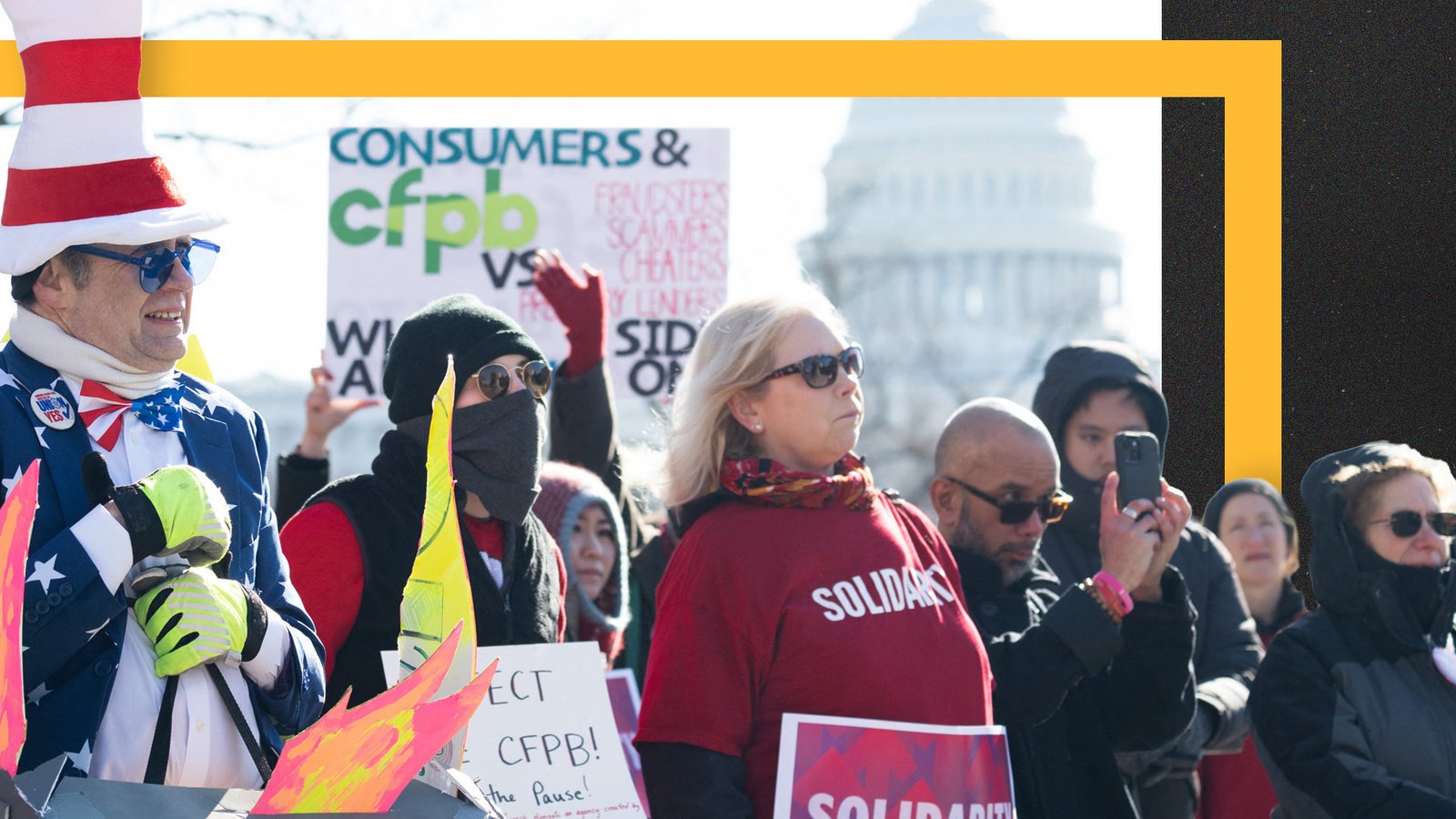
Kimberly Tynan’s career as a nonprofit housing attorney involves helping low-income Philadelphian’s secure housing loans and stave off foreclosures. Mortgage servicers — companies paid by banks to process loans — are among her most persistent foes.
Convincing servicers to address her clients’ issues has long been an uphill battle. For years, she had the Consumer Financial Protection Bureau at her back, making those battles easier. The government regulator quickly resolved disputes and recovered lost money, Tynan told Straight Arrow.
“The regulations [the CFPB] promulgated have just been world-changing for our clients,” she said.
All that changed last year when the second Trump administration fired the bureau’s director and cut its staff.
“We really miss having that resource,” Tynan said.
Consumer advocates credit the CFPB with recovering billions in overpayments and inappropriate fines or fees since its creation in 2010.
But now “the CFPB, for all intents and purposes, is dead,” said David Chami, an attorney for the nonprofit Consumer Justice.

How has the Consumer Financial Protection Bureau changed in recent years?
Since January 2025, the bureau has shed nearly a third of its staff and dropped dozens of lawsuits and enforcement actions. And consumer advocates told Straight Arrow rule changes have erected more barriers for consumers seeking financial relief.
The Bureau now requires consumers to submit credit score complaints to credit reporting agencies first and wait 45 days, and in April the CFPB finalized a rule exempting more lending institutions from reporting data to financial regulators.
READ MORE: How SNAP theft, ‘antiquated’ EBT cards feed global crime and starve victims
Biden-era director Rohit Chopra was fired and replaced with Treasury Secretary Russell Vought in early 2025.
A Senate Banking Committee report released in February concluded the bureau’s actions have cost consumers at least $19 billion since that dismissal.
The bulk of that money came from 22 dismissed enforcement actions that would have recovered $3.5 billion for consumers, and rescinded guidance on overdraft and credit card late fees that cost consumers $15 billion, the report said.
Long-time CFPB critics say the changes are long overdue, arguing the agency was far too aggressive under past leaders.
The April rule change “appropriately refocuses on core lenders, products and data points without imposing undue compliance costs that would make it harder for America’s banks to serve their customers and communities,” the American Bankers Association said in a statement.
But the attorneys working on behalf of consumers told Straight Arrow the American public has lost an effective way to hold companies accountable.

What does the CFPB do for everyday customers?
Mortgage servicing companies process mortgage payments. That means these companies are the ones that consumers must contact with problems, Tynan said. But, she said, because the servicers’ true customers are banks, borrowers aren’t a priority.
Having an aggressive regulator in the borrower’s corner is a big help, she said.
But now “we run up against a wall in dealing with servicers who are not complying with the law,” Tynan told Straight Arrow. “We can litigate, but that’s expensive and time consuming.”
Regulators overseeing financial institutions are weak or overwhelmed and enforcement often falls on private attorneys, Chami told Straight Arrow. But not everyone can afford a lawyer or wait years for a class action lawsuit to resolve.
“If there were laws in place that provided an incentive for private lawyers to represent consumers, I would say the CFPB isn’t that important,” he said.
The sums of money the bureau recovers for individuals, he added, are often too small to justify hiring an attorney.
The bureau also conducted research accessible to lawmakers and the public that could guide legislation and rulemaking by other agencies, said Eden Iscil, senior public policy manager at the National Consumer League.
“It really handled a large variety of duties,” he told Straight Arrow.
Hundreds of pages of research and consumer advice were scrubbed from the CFPB website earlier this year. Much of that content was archived before it was removed, but consumer advocates note that the bureau’s website was easier to search than an internet archive unaffiliated with the regulator.
“It’s substantially less available to the public,” former CFPB policy advisor Christine Hines told Straight Arrow.
A bureau spokesperson did not respond to multiple requests for comment.

Why was the Consumer Financial Protection Bureau created?
The CFPB arose from the aftermath of the 2008 financial crisis. The Bureau was given broad authority to issue interpretive rules and take legal action against companies accused of bilking consumers.
Previously, a dozen agencies handled consumer protection laws, said Hines, who is currently the associate director of consumer policy at Americans for Financial Reform.
“Congress designed the CFPB to bring it all under one roof,” she said.
One of the bureau’s most important duties was giving consumers a responsive outlet for legitimate complaints. Otherwise, Hines said, complaints to regulators or big corporations often “disappear into a black hole.”
READ MORE: Millions of Americans still live without running water. What it will take to plug the water gap
But corporate America complained the agency was too punitive and litigious.
They found a sympathetic ear in the first Trump administration, which replaced the agency’s first director with a more business-friendly leader.
The second Trump administration went further, promising to abolish the agency altogether. Courts have stymied those plans so far, but staff cuts were allowed to move forward.

What happens from here?
Among the bureau’s most prominent targets were banks like Wells Fargo, which is among the owners of Early Warning Services, parent company of payment network Zelle.
The CFPB sued Early Warning Services shortly before Trump’s inauguration, accusing it of allowing fraud to fester on Zelle.
The government agency’s case was buoyed by progressive lawmakers and consumers who testified before Congress about scammers bilking them out of money.
One such consumer, Maryland resident Anne Humphreys, told a Senate panel in 2024 that a scammer posing as her brother successfully convinced her he had been arrested and needed $3,500 to secure his immediate release. He encouraged her to send the money through Zelle.
Her bank, Wells Fargo, declined to refund her money and has since posted lengthy disclaimers warning about scams, declaring it is not responsible for lost money.
“It seems to me that somebody should be able to stand up for the people who were taken advantage of,” she said of the CFPB’s lawsuit.
Early Warning Services and Wells Fargo have consistently defended their protective measures and maintain that the vast majority of transactions on Zelle don’t involve fraud. In an emailed statement, an EWS spokesperson told Straight Arrow that fraudsters often initiate scams on social media and are known to use other payment platforms.
The lawsuit was “rushed out in the eleventh hour, was entirely meritless and a politically motivated attempt to improperly shift blame to Zelle for the actions of criminals,” the statement said. “The complaint inaccurately alleged Zelle’s fraud countermeasures were ineffective.”
The bureau’s new leadership dropped the lawsuit last year.
“That’s infuriating,” Humphreys said when a reporter told her the case was dismissed. “The powers that be must have leaned on them.”
Other dropped cases include a lawsuit against Comerica Bank alleging the financial institution harvested junk fees from older and disabled customers relying on social security. The bureau also sued Walmart and the workforce payment platform Branch Messenger alleging those companies opened deposit accounts for drivers without their consent and then charged them junk fees.
The financial industry and its advocates argue that the regulator was too focused on making an example of companies and applaud the bureau’s new approach.
The CFPB is still enforcing the rules, said Michael Emancipator, senior vice president and regulatory counsel for the Independent Community Bankers of America, citing an agreement between the CFPB and the rental payment company Bilt.
The agency announced on June 2 that Bilt agreed to reimburse a limited number of customers for improper fees. A news release repeatedly stressed that the agreement resulted from a “collaborative process.”
“This might be a new way of getting to the beneficial results,” Emancipator told Straight Arrow.
Under prior administrations “it seemed like they were just trying to win the case and prove the other side wrong,” Emancipator said. “It seems like this approach is less about proving one side wrong and more about making the customer whole.”
Round out your reading
- Could a common dietary supplement accelerate Alzheimer’s?
- NY AG Letitia James gets hundreds of taunts, racial slurs in ICE public reporting portal.
- As Musk becomes the first trillionaire, historian sees warning signs.
- An experimental weight loss drug is so effective, many Americans don’t care it’s not FDA approved.
- How search engine optimization reduced Simone Biles to an ‘NFL wife’.