

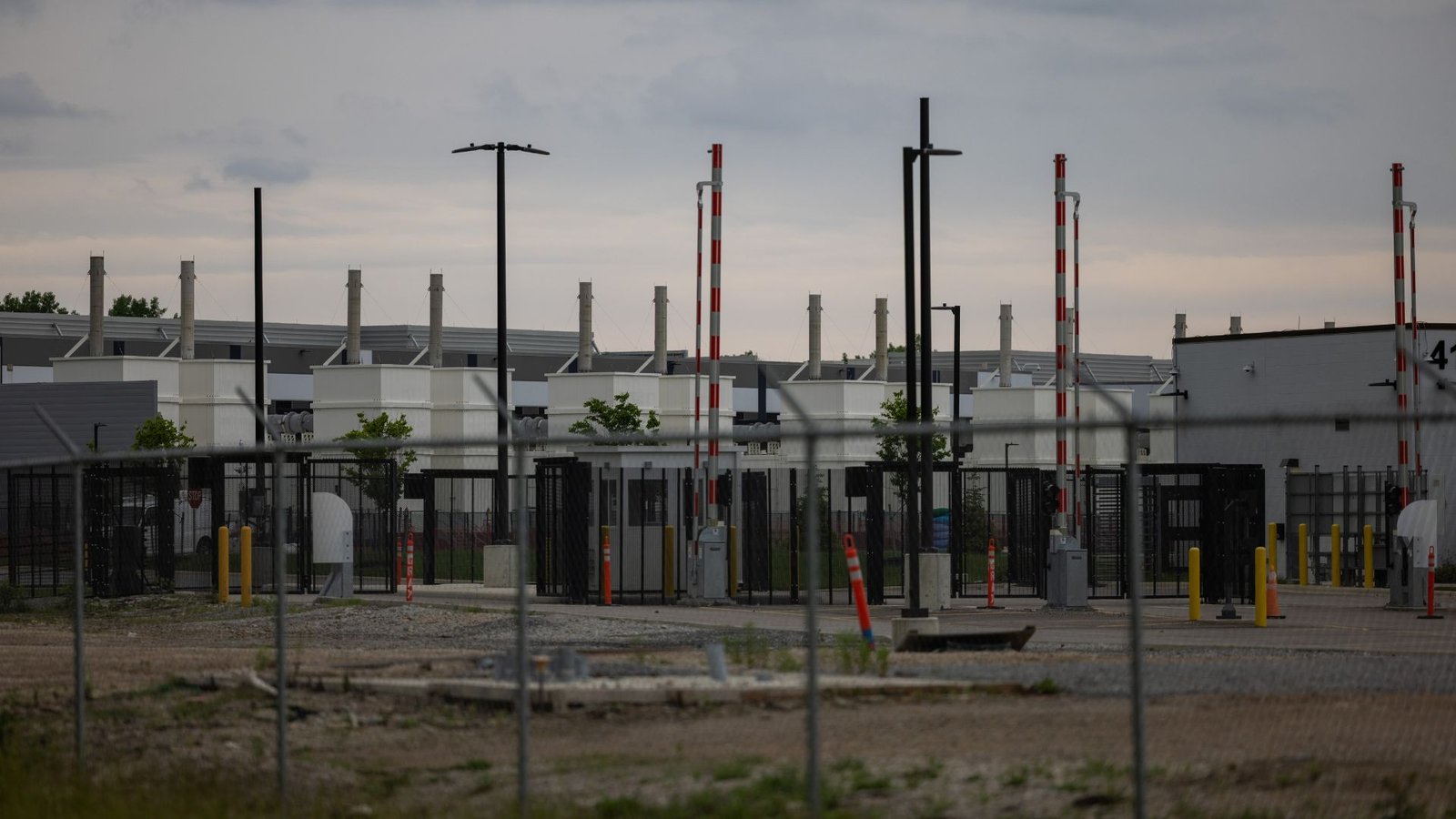
It doesn’t matter which political party a person says they belong to; if asked, there’s a good chance that person has a negative opinion of data centers, according to recent surveys. The feeling often stems from the potential environmental effects and the strain the facility might place on local infrastructure.
Since 2023, the Federal Data Center Enhancement Act has mandated standards for companies constructing data centers intended for federal usage, either fully or partially. But in September, that act is set to expire, and Wired reports that Congress is not working on a new law that would replace it.
The Biden-era policy mandates several requirements for data centers, including the uptime of the facility and the use of sustainable energy sources. The law also requires data centers to protect against power failures, physical damage, natural disasters and cyberattacks.
The Trump administration has not said if it plans to issue an executive order to supplement the upcoming absence of the FDCEA. The administration has been getting closer to artificial intelligence companies, with one notable exception, and has even released its own executive order on AI.
But it’s important to note that data centers don’t just help train AI models. The entire internet lives in data centers. More Americans go online every day than get behind the wheel — and every one of those connections runs through a data center.
Why does this matter now?
The expiration of the FDCEA comes as public opposition to data centers has reached new heights. More than 70% of Americans oppose data center projects in their communities, according to a recent Gallup poll, up from 47% just months earlier. The leading concern among Americans is energy and water use, a topic Straight Arrow has previously reported on.
The opposition has translated into real blockages. Communities have forced delays or cancellations on more than 75 projects worth an estimated $130 billion in just the first three months of 2026, according to Data Center Watch, a tracking group. Active opposition groups are also growing, with the number of groups more than doubling to over 800 across nearly every state.
At the same time, the federal government is accelerating in the opposite direction. An executive order President Donald Trump signed in July 2025 fast-tracked data center construction on federal land and stripped away the requirement that builders on federal property plan for water and energy sustainability. Private developers still face local zoning boards, town councils and state moratoriums — federal data center projects don’t.
The FDCEA’s expiration means they’ll now face reduced scrutiny within the government as well. This all comes as the Electric Power Research Institute estimates that data centers could use up to 17% of the U.S. electricity grid by 2030, about double what they use today.
Less visible but potentially more consequential is what the expiration means for security, since the FDCEA required agencies to report on security measures. As the Trump administration pushes agencies to adopt AI tools, more sensitive government data is flowing through more data centers. Less reporting means officials have less ability to verify that those facilities are actually protected.
“Visibility is a big part of security, and you’re stripping away a lot of tools that were used to make sure that it happens,” said Matt Triner, founder of Hunter Strategy, a Washington-based IT consulting firm.
What Congress is (and isn’t) doing about this
States have not been idle on the issue, with more than 300 bills introduced across 30 states this year alone, according to MultiState. Several federal proposals have also targeted data centers’ energy use, water consumption and environmental impact. But none have addressed what the FDCEA specifically covered: the standards and reporting requirements for federally run or leased facilities.
Sen. Jacky Rosen, D-Nev., originally sponsored the federal bill that would do that. She told Wired that her office is “looking at all options” to ensure Americans’ data is secure.
“Data centers across the country house critical and sensitive information, and we need to ensure they are protected from increased cyber threats and natural disasters,” Rosen told Wired.
This leaves a large gap in the country’s AI build-out. The federal government is simultaneously the largest employer in the country, the most powerful driver of data center demand, and will soon be the entity with the least public accountability for how those facilities are built. The expiration won’t stop data centers from going up, but it would remove the paper trail.
Round out your reading
- Could a common dietary supplement accelerate Alzheimer’s?
- NY AG Letitia James gets hundreds of taunts, racial slurs in ICE public reporting portal.
- As Musk becomes the first trillionaire, historian sees warning signs.
- An experimental weight loss drug is so effective, many Americans don’t care it’s not FDA approved.
- How search engine optimization reduced Simone Biles to an ‘NFL wife’.