

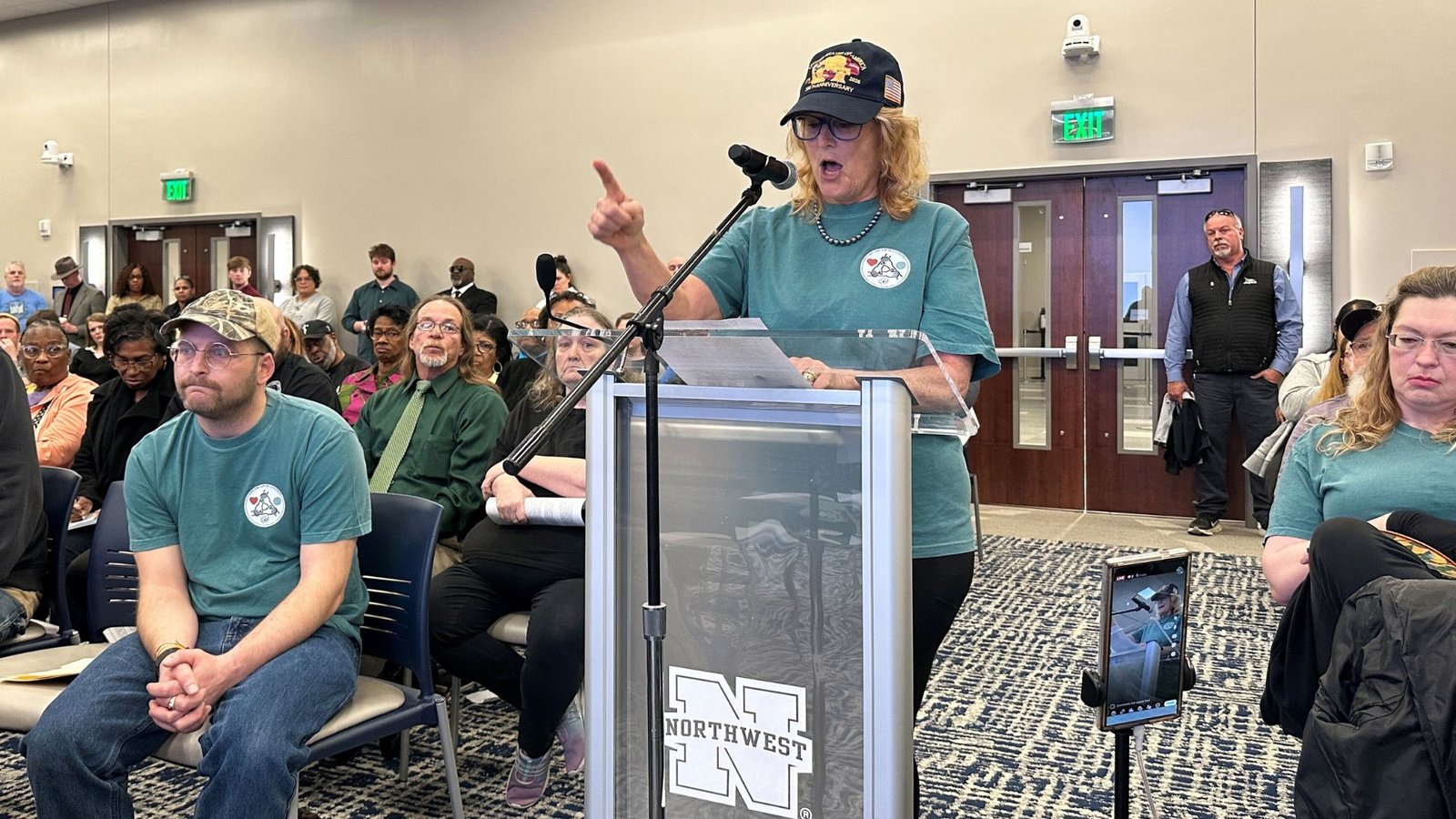
The town of Southaven, Mississippi, is in an uproar as dozens of unpermitted gas turbines run around the clock outside Elon Musk’s xAI data center, sending nitrogen oxides into the air, according to a lawsuit. Now, the Department of Justice is arguing that those turbines are too important to national security to stop.
The NAACP, which launched the lawsuit, says the turbines are illegally operating gas turbines to power its data centers in Southaven and Memphis. According to Mississippi Today, xAI began operating 18 mobile and temporary turbines in Southaven. Since then, the company has increased that number to nearly 60.
Residents complain that the noise from the facility is intolerable and disrupts their daily routines. They’ve also complained that the data center is causing them to lose sleep and has lowered their homes’ property value.
But the government, including Republican Gov. Tate Reeves, said the facility is essential to national defense and asked the court to dismiss the case.
“The state urges you to take immediate action to intervene and protect these vital state and national interests,” Reeves wrote in a letter to the court.
The government’s intervention isn’t an outlier. Over the last few months, the Trump administration has repeatedly stepped into the business of individual artificial intelligence companies.
Have other interventions happened before?
In late February, Anthropic was in the middle of negotiations with the Pentagon on a deal worth up to $200 million. But talks broke down after Anthropic asked the government for redlines that its software wouldn’t be used for autonomous weapons and spying on Americans.
The Pentagon wouldn’t give them that, and when talks collapsed, Trump posted on Truth Social, telling all federal agencies to immediately stop using Anthropic’s chatbot. Defense Secretary Pete Hegseth followed that up by labeling Anthropic a supply chain risk, essentially blacklisting the company from doing business with any Pentagon-connected entity.
Hours after the decisions, OpenAI CEO Sam Altman said his company had reached a deal with the Department of Defense to deploy its AI models on classified government networks, potentially replacing Anthropic’s models. Altman also told staff that he had secured the Pentagon’s agreement to “red lines” that Anthropic had previously asked the government to adopt. The Pentagon did respond to a request for comment from NPR.
But the government actually never stopped using Anthropic’s software, according to reports. Claude remained in use by more than 100,000 users on top-secret government networks after Trump’s order. The government even reportedly used the chatbot for strikes on Iran.
A similar trade played out with Nvidia, though the currency was cash and not compliance. In August 2025, Trump agreed to grant Nvidia export licenses for its H20 chips to China on the condition that the company pay 15% of its revenue to the U.S. government. Trump expanded the order to allow Nvidia to sell its more advanced H200 chips at a 25% cut, with similar deals for Intel and AMD.
Legal scholars at Lawfare have said this move may be unconstitutional because only Congress can levy an export fee, meaning companies or states in the supply chain could sue.
Who pays for this?
In the case of the Southaven data center, the residents are paying the most immediate bill. The lawsuit describes the noise from the data center as a high-pitched squeal and a low-frequency rumble, calling it “pervasive and inescapable.” One resident even told the Tennessee Lookout that “It seems to me that we are being very thoroughly thrown under the bus.”
The Nvidia deal is more complicated. If courts do find the chip arrangement to be an unauthorized tax, the government could face a problem it already faced once. In February, the Supreme Court ruled that a separate set of Trump administration tariffs exceeded the administration’s authority. That decision left about $160 billion in collected revenue subject to disputed refund claims.
Not all AI companies are benefiting from the intervention
Weeks before the Pentagon designated Anthropic a security risk, Defense Secretary Pete Hegseth announced the Pentagon would adopt xAI’s Grok while criticizing “woke AI,” a comment Semafor reported was aimed at Anthropic. White House AI adviser David Sacks and other officials had raised similar accusations against the company for months.
Separately, Microsoft, which is OpenAI’s largest financial backer and cloud-computing partner, remains under a federal antitrust investigation. The government is examining whether the company illegally bundles AI tools with its Azure platform to restrict competitors. The Federal Trade Commission opened the investigation in the final days of the Biden administration. Trump’s FTC Chair Andrew Ferguson has continued it, issuing new investigative demands to Microsoft’s competitors in February.
What’s next?
Six days before the DOJ’s Mississippi filing, the same company priced the largest IPO in history. SpaceX, which formally acquired xAI as a subsidiary in February, raised $75 billion on June 11 at a $1.75 trillion valuation. It’s the first of three AI-related IPOs expected this year. OpenAI and Anthropic have both filed paperwork with the SEC to go public.
None of the legal questions raised by this year’s deals have been resolved. Nvidia’s revenue-sharing arrangement with the government still faces a constitutional challenge. Plus, Anthropic’s fight with the Pentagon remains in court, after a federal judge ruled in March that its blacklisting was likely unlawful retaliation, a decision the government is still appealing.
Round out your reading
- Could a common dietary supplement accelerate Alzheimer’s?
- NY AG Letitia James gets hundreds of taunts, racial slurs in ICE public reporting portal.
- As Musk becomes the first trillionaire, historian sees warning signs.
- An experimental weight loss drug is so effective, many Americans don’t care it’s not FDA approved.
- How search engine optimization reduced Simone Biles to an ‘NFL wife’.