

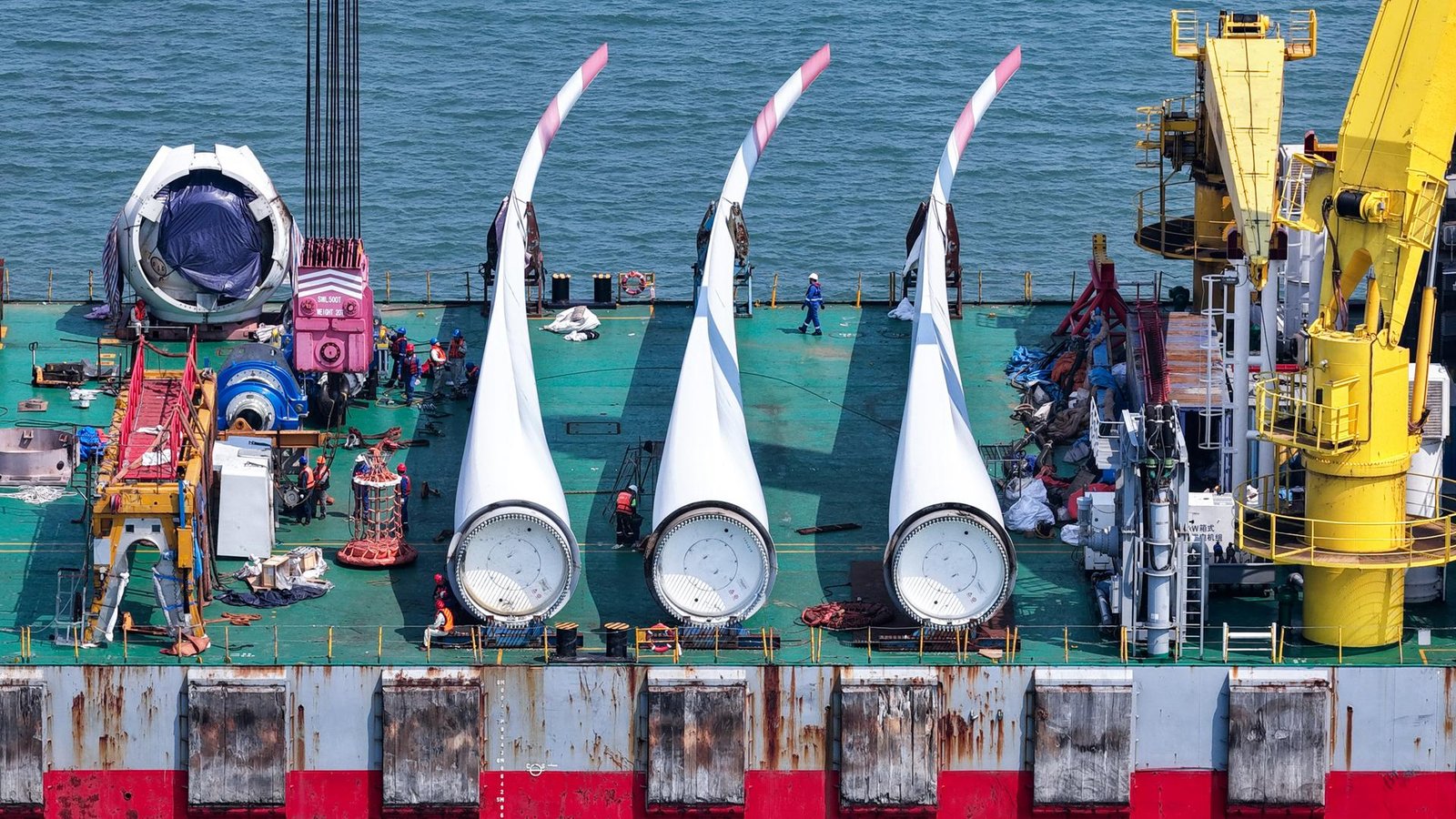
The U.S. government will pay Invenergy $765 million to abandon its plans to build offshore wind farms off the coasts of California, New York and Maine. The deal marks the fourth time the Trump administration has paid to prevent development of an offshore wind area while seeking to redirect investment to oil and gas.
The administration’s push to re-allocate energy investment has faced court challenges and heightened the debate over what’s driving increased electricity prices.
In March, the Interior Department announced a $928 million payment to France-based TotalEnergies for the company to relinquish two offshore leases on the Atlantic coast. As part of the deal, the French company would invest that money back into U.S. oil and gas production and the expansion of a liquefied natural gas (LNG) export terminal in Texas.
Two more deals came in April. A company backed by the private equity giant BlackRock, Bluepoint Wind, accepted $765 million to shift funding from offshore wind leases to LNG. California-based Golden State Wind gave up its offshore wind lease on California’s Central Coast for $120 million. The Interior Department said Golden State would invest in other energy infrastructure, though the exact type was not specified.
The total amount paid to private industry to walk away from offshore wind projects now sits at more than $2.5 billion.
What is the Trump administration saying?
The $765 million deal with Chicago-based power company Invenergy will see the company invest the money into natural gas-fired power plants in Iowa, Indiana, Kansas, Missouri and Wisconsin, according to the Interior Department. Specific details of those investments were not disclosed in the announcement, but the Interior Department also said Invenergy will use the funds to develop geothermal power sources across the Western U.S.
In April, Invenergy announced a 918-megawatt natural gas power plant in Indiana. The company is also developing a 324-megawatt plant in Wisconsin. However, both of these projects were already underway before the Interior Department deal was unveiled.
Interior Secretary Doug Burgum said offshore wind is too costly and would require taxpayer subsidies. “Companies are shifting investment back toward dependable, secure energy infrastructure that can power our economy and lower utility costs,” Burgum said in a press release.
Why are offshore wind lease deals controversial?
The impact on electricity bills is highly disputed. Critics of the Trump administration’s approach have argued that offshore wind development can help keep electricity prices low and improve grid reliability. Seven states are already challenging the TotalEnergies deal in court, arguing that the originally planned offshore wind farms would have powered 1.3 million homes.
The latest deal has already drawn pushback from the renewable energy industry.
“Replacing coastal offshore wind with geothermal or natural gas infrastructure in another region does nothing to address rising ratepayer affordability concerns, reliability challenges or potential gaps in power supply in the Northeast and mid-Atlantic,” Hillary Bright, executive director of the offshore wind group Turn Forward, said in a statement.
Shifting investments from wind energy to LNG exports has been especially contentious because sending gas overseas competes with the domestic market, creating upward pressure on electricity bills. The severity of that trend is a subject of debate, but even the U.S. government has acknowledged LNG exports as a factor in elevated natural gas prices.
“Higher natural gas prices in 2025 and 2026 are the result of strong export growth that persistently outpaces U.S. natural gas production,” the U.S. Energy Information Administration wrote in a short-term energy outlook report last year.
Round out your reading
- Could a common dietary supplement accelerate Alzheimer’s?
- NY AG Letitia James gets hundreds of taunts, racial slurs in ICE public reporting portal.
- As Musk becomes the first trillionaire, historian sees warning signs.
- An experimental weight loss drug is so effective, many Americans don’t care it’s not FDA approved.
- How search engine optimization reduced Simone Biles to an ‘NFL wife’.