

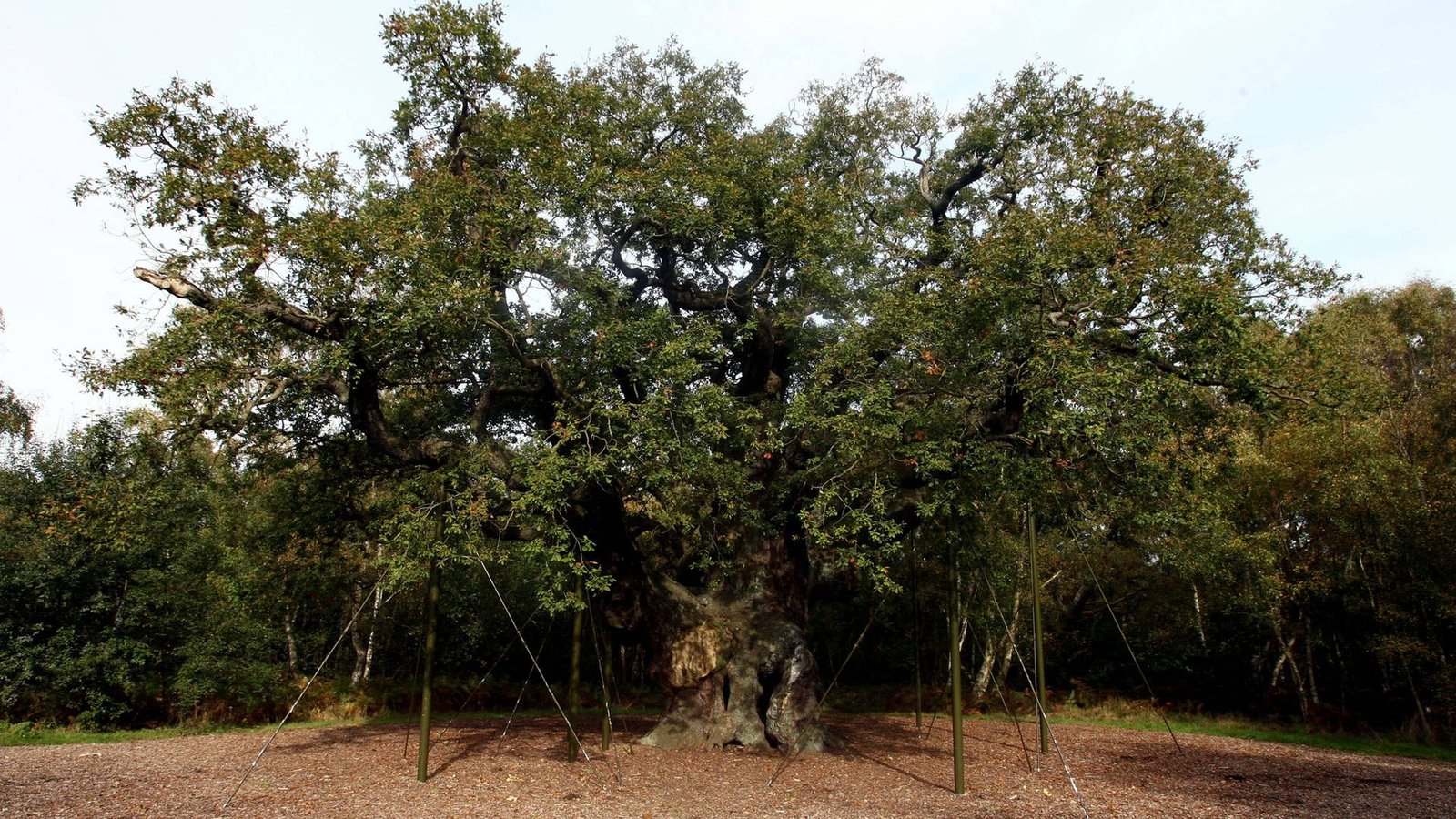
First, it was Molly Malone. Then it was the gravesite of Dobby, the house elf from “Harry Potter.” And now a tree integral to the story of Robin Hood — the latest iconic site that’s been damaged or permanently altered by tourists.
Whether intentional or not, human beings’ interest in visiting these sites could be causing irreparable harm, and we’re seeing it, as recently as this week.
The death of Robin Hood’s tree
On Thursday, officials announced that the 1,200-year-old Major Oak, linked to the legend of Robin Hood, has died. The Royal Society for the Protection of Birds (RSPB) said the tree was, quite possibly, loved to death.
In this instance, it wasn’t ignorance or malicious intent that caused damage and death; rather, it was simply human visitation.
The RSPB says Sherwood Forest in Nottinghamshire, England, where the tree lived, has been under threat for years. Several other times, officials have declared the tree dead, only to change course and confirm it was still alive.

Now, they say, it’s certain. The tree didn’t produce leaves this year, and RSPB is calling it “heartbreaking for everyone.”
And while officials can’t say definitively what killed the tree, human footprints apparently played a significant role. For centuries, visitors have compacted the soil around the tree, making it difficult for rainwater to reach its roots.
That lack of water, climate change and other factors likely contributed to its downfall and death.
But with its death, it does not disappear.
“The Major Oak will continue to stand at the heart of Sherwood as a natural monument for visitors to come and see, living on in the legend of Robin Hood and continuing to provide as much support to the forest’s ecosystem in death as in life,” the RSPB said.
A Harry Potter site is damaging the environment
Robin Hood, widely considered legendary folklore, is not the only fictional character to have an iconic site that tourists like to visit.
Dobby the house elf, featured in several of the Harry Potter books and films, has one of his own at Freshwater West Beach in Pembrokeshire. The beach is where Dobby’s (spoiler alert) death scene was filmed.
Since the movie where Dobby dies, “Harry Potter and the Deathly Hallows Part 1,” came out, fans have returned to the site to place stones, crosses and even socks in the spot where he died.
For non-Potterheads, house elves like Dobby could only be freed if their master gave them an article of clothing. So, early in the Harry Potter series, Harry helps Dobby be freed by tricking his master into giving Dobby a sock; hence, fans leave socks at his burial site.

But in 2022, the U.K. conservation organization National Trust released a survey asking for opinions on whether the memorial should stay on the beach, which is part of a conservation area, or if it should be removed or relocated.
In the end, the group decided to leave the memorial in place but told fans they can no longer leave items at the site. “Items like socks, trinkets, and paint chips from painted pebbles could enter the marine environment and food chain and put wildlife at risk,” the National Trust said.
So while the site itself isn’t being damaged, like that of Robin Hood’s tree, the site itself is causing damage.
The story of Molly Malone — and the damage to her site
Much like the tree in Sherwood Forest, a statue in Dublin, Ireland, is being damaged by visitors who insist on touching it.
Since 1988, there’s been a statue in Dublin paying tribute to the woman who sold shellfish on the streets of the Irish capital. It represents the city’s working people.
However, in recent years, many in the area and across the globe have demanded visitors give Molly Malone more respect.
For decades now, when tourists visit her statue, they place their hands on her chest for “good luck”, leaving the area discolored. Officials say the action has caused thousands of euros in damage, and even sparked a “Leave Molly mALONE” movement, from people who say she’s being harassed.

Since then, officials have taken steps to protect the statue, including placing guards near the statue to talk to people about not touching her and placing flower beds around the base of the statue, making it harder to get close.
Victor Noir’s ‘fertility power’
Similar to Molly, there’s a sculpture in France depicting 19th-century journalist Victor Noir that has been damaged by tourists who have repeatedly touched specific parts of his likeness for decades.
Located in Paris, the sculpture is part of a long-standing superstition regarding fertility. Many believe that women who kiss Noir’s lips, leave a flower in his upturned hat and touch the bulge on his pants will have enhanced fertility, improved sex lives or will find a husband within a year.
But those actions have led to discoloration on the sculpture and left some questioning whether they are harmless cultural folklore or disrespectful vandalism.

In 2004, authorities placed a fence around the grave with a warning sign against the actions. But that sparked outrage among tourists and locals, who protested and tore the fence down.
Still, the debate over whether it is a harmless tradition or vandalism continues today.
This, combined with damage to other historic sites, may leave some wondering when tourism becomes too much, and whether the visitors are worth the damage.
And much to the dismay of historians and some tourists, many of the world’s most beautiful places are also being marred by too many visitors. This includes Stonehenge in England, Machu Picchu, Mount Everest and the Taj Mahal.
Round out your reading
- Could a common dietary supplement accelerate Alzheimer’s?
- NY AG Letitia James gets hundreds of taunts, racial slurs in ICE public reporting portal.
- As Musk becomes the first trillionaire, historian sees warning signs.
- An experimental weight loss drug is so effective, many Americans don’t care it’s not FDA approved.
- How search engine optimization reduced Simone Biles to an ‘NFL wife’.