

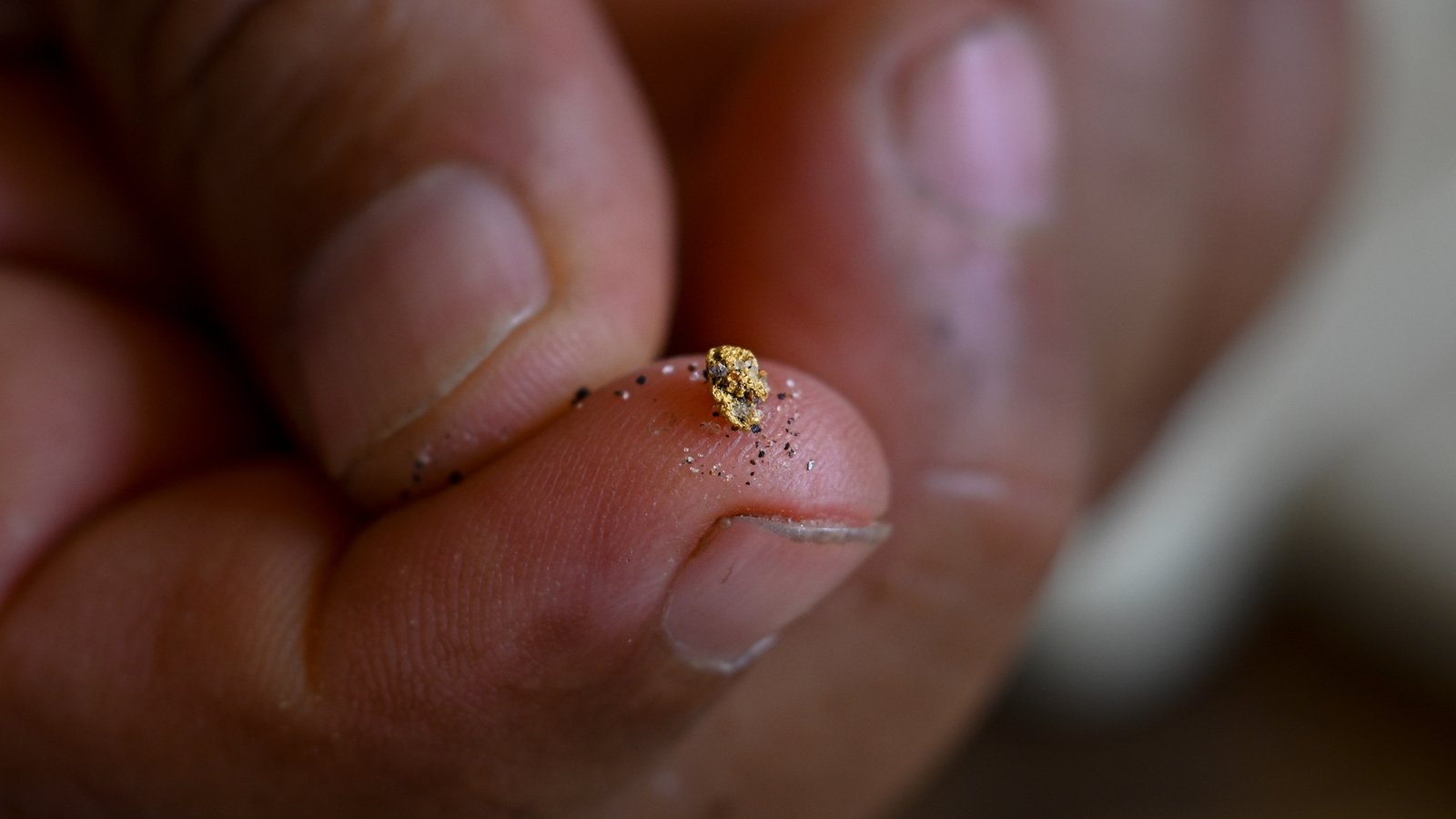
The U.S. is backing a Venezuelan military campaign aimed at wresting control of a gold-rich region from criminal groups that have long dominated the area’s mining economy.
The Wall Street Journal reported that Venezuela’s interim government is targeting gangs operating in the country’s southern mining belt while simultaneously trying to open the region to American and Western investment.
U.S. officials told The Journal that Washington is providing intelligence, technology and military support for the effort. Reuters separately reported that Venezuelan troops have deployed near Las Claritas in southern Bolivar state, a major hub for illegal gold mining.
Why the gold mining region matters
The operation combines two priorities: expanding security cooperation between Washington and Caracas and creating conditions for investment in one of South America’s largest untapped mineral regions.

The area contains significant deposits of gold, diamonds and coltan. The Center for Strategic and International Studies says decades of weak governance, corruption and criminal activity have prevented Venezuela from fully developing those resources.
Reuters reports that organized crime groups and armed factions control much of the mining activity across the region. The Journal also cited reports that elements of Venezuela’s military have historically collected payments from groups operating the mines.
The campaign’s first major target was Héctor Guerrero, a founder of the Tren de Aragua gang. President Donald Trump announced last week that Guerrero had been killed in a U.S. airstrike.
Defense Secretary Pete Hegseth later confirmed U.S. involvement, saying American forces were operating in Venezuela at the “invitation” of the government.
“We were able to identify where he was and kill him, just like we would kill al Qaeda or ISIS,” Hegseth said.
Residents in mining communities report helicopters overhead, troops conducting door-to-door searches and military raids targeting suspected gang activity. Reuters also reported accounts of explosions, gunfire and drones operating over the area.

Human rights group Provea warned that military operations could increase the risk of arbitrary detentions and other abuses.
Investment remains the goal
The Journal reports that Interim President Delcy Rodríguez’s government privately told Trump administration officials and mining executives in March that foreign companies entering the region would be protected.

Since then, Venezuela has approved a new mining law designed to attract outside investment, while the Trump administration has eased some restrictions on Venezuelan gold transactions and pursued preliminary investment discussions with American companies.
Whether major Western companies move in remains uncertain.
Analysts at the Center for Strategic and International Studies say investors will likely want stronger security guarantees, clearer legal protections and confidence that future sanctions or criminal activity will not threaten their investments.
Even so, the operation represents a remarkable shift. Countries that spent years at odds are now working together to secure one of Venezuela’s most valuable regions.
Round out your reading
- Could a common dietary supplement accelerate Alzheimer’s?
- NY AG Letitia James gets hundreds of taunts, racial slurs in ICE public reporting portal.
- As Musk becomes the first trillionaire, historian sees warning signs.
- An experimental weight loss drug is so effective, many Americans don’t care it’s not FDA approved.
- How search engine optimization reduced Simone Biles to an ‘NFL wife’.