

Since President Donald Trump returned to office, questions have come to light regarding the administration’s and the president’s roles in appointing top prosecutors across the country.
His appointments and the time they have spent in their roles have sparked tension between the president and the courts.
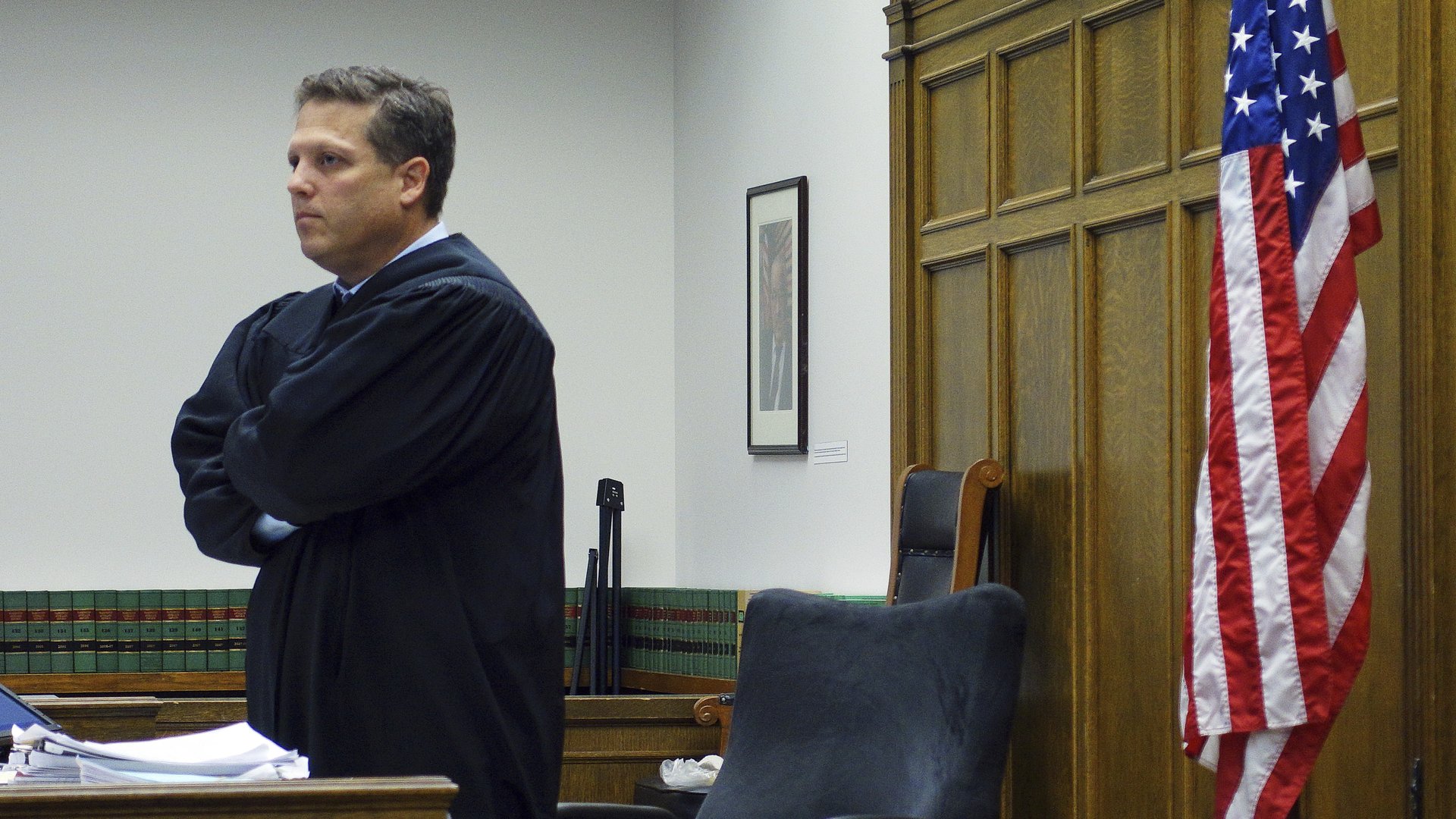
Those tensions reignited on Wednesday, when Trump fired the new top U.S. prosecutor in Seattle less than an hour after federal judges in the district approved his appointment.
Seattle’s top prosecutor — for less than an hour
Roger Rogoff was unanimously appointed U.S. Attorney for the Western District of Washington State just before 8 a.m. at the U.S. courthouse in Seattle. He was appointed to replace Charles Neil Floyd, whom former Attorney General Pam Bondi and Trump had appointed as interim.
His interim term, however, ended in February.
Immediately after Rogoff’s appointment, he told ABC News he went to the U.S. Attorney’s Office and asked to meet with Floyd.
However, while waiting in the lobby, he said he received an email from the Trump administration informing him he’d been removed.
In a statement on X, the acting attorney general addressed the firing, saying the Western District “abandoned the time-honored process of consultation with the administration.”
Now, Rogoff says he’s consulting with other lawyers about suing the administration over his firing.
The hiring and firing process of US top prosecutors
This is not the first time the hiring and firing process for top prosecutors across the U.S. has created tensions within the Justice Department. But to understand what’s happening, let’s first look at how the process works.
As it stands, federal law allows the president and attorney general to nominate and appoint U.S. attorneys. They can serve, in an interim role, for up to 120 days before needing Senate confirmation. After the 120-day interim appointment expires, the federal district court may appoint a U.S. attorney to serve until the president nominates and the Senate confirms a permanent replacement.
So, in this case, Trump and Bondi appointed Floyd; his interim appointment expired, and the judges of the U.S. District Court for the Western District of Washington unanimously appointed Rogoff.
The administration then removed Rogoff from the position, asserting the president has the authority to do so.
Where the debate and controversy lie
The debate lies in what happens now. Trump’s pick has exceeded the 120-day limit, so his continued service in the role could be seen as unlawful. And yet, the DOJ says Floyd has taken back leadership.
This isn’t the first time the president has taken steps to ensure his own picks stay in their roles, either. Two other Trump appointees exceeded the 120-day limit, drawing lawsuits.
Earlier this year, courts ruled that both Alina Habba and Lindsey Halligan were serving in their roles unlawfully after the 120-day limit was reached. Both prosecutors stepped down from their roles following the rulings.
In Halligan’s ruling, the court even noted that something like what happened to Rogoff could happen in that case: attorneys could pick an appointment, and Trump could fire them.
Should Rogoff file a lawsuit over his firing, the case could become one of the first to directly test whether a president can remove a U.S. attorney appointed by federal judges after an interim appointment expires.
Round out your reading
- With more prison space than prisoners, correctional facilities are shutting down.
- ‘Game changer’: New cancer treatment turns major surgery into an outpatient procedure.
- Viewers overwhelmingly support ‘The View’s’ fight against the FCC. Will that matter?
- Why an ICE shooting in Houston isn’t leading to mass protests.
- Milwaukee detective is the latest officer charged with misusing Flock cameras.