

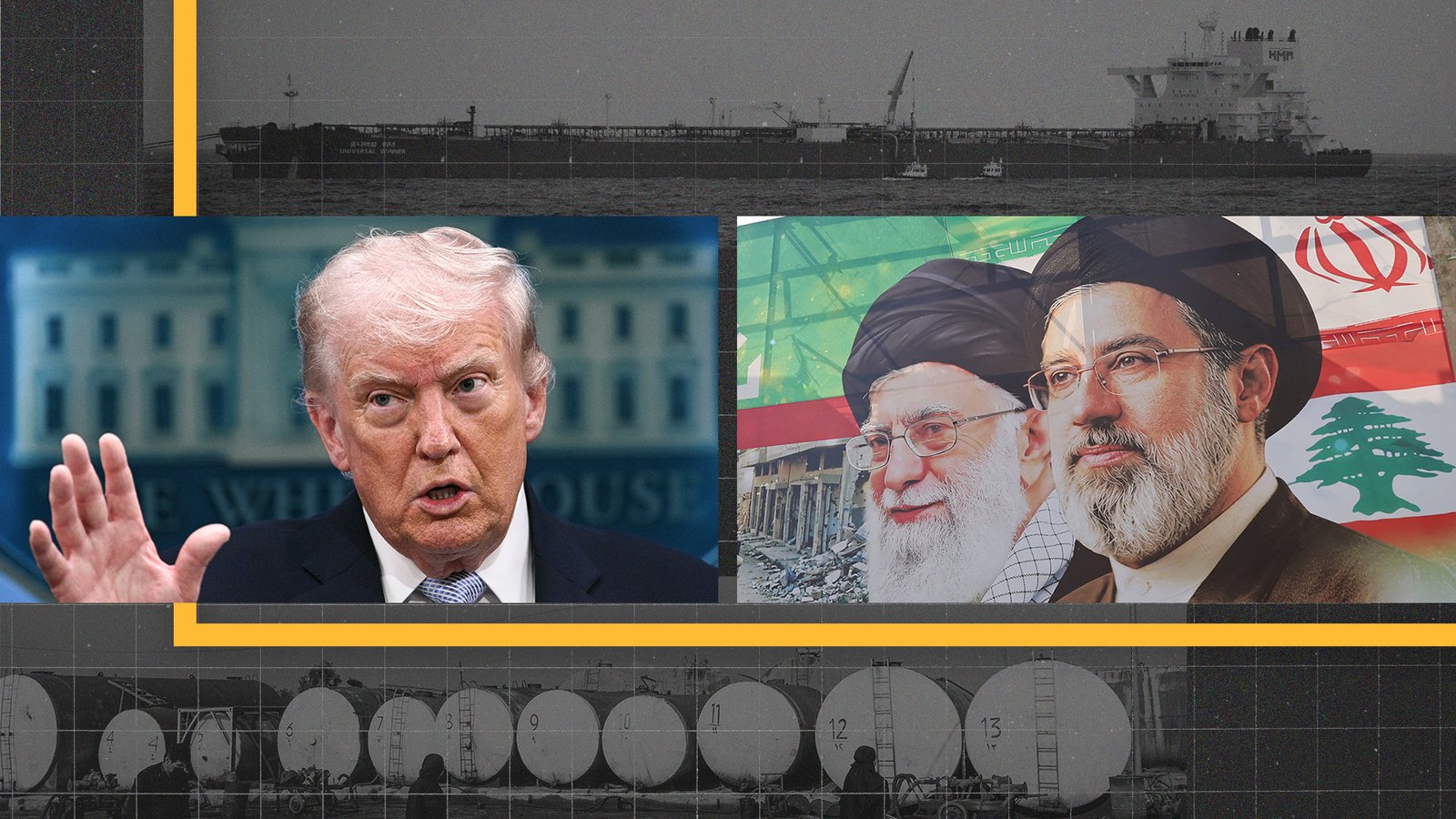
With the possibility of peace at hand, oil prices fell to their lowest point Thursday since the war with Iran ramped up at the start of March. The cycle of White House remarks, media coverage and price swings has repeated through the course of the Iran war, but under the surface, market data has often told a different story.
The U.S. and Iran formally signed a memorandum of understanding late Wednesday that starts a 60-day ceasefire and lays the groundwork for a long-term peace. A key part of the agreement includes Iran immediately opening the Strait of Hormuz.
In the hours following both parties’ signing the deal, shipping traffic through the Strait of Hormuz picked up, though it remains far below pre-war levels. A Straight Arrow analysis of Marine Traffic data identified at least six fuel tankers and seven other commercial vessels transiting the Strait on June 18.
The past three and a half months have shifted the global oil market from an excess of supply to a historic shortage. Americans have felt squeezed at the pump as fuel prices became the main driver of inflation. Global oil markets translate directly to the gasoline pump, with each price swing having a knock-on effect as peace looks closer or further away.
What are the oil market fundamentals?
The U.S. crude oil price, West Texas Intermediate (WTI), is down to $73 per barrel, while the global benchmark Brent is trading just under $77 per barrel as of Thursday morning.
But before the deal was signed, the oil market was full of warnings. The almost complete closure of the Strait of Hormuz had taken 12 million barrels of daily oil supply offline.
To make up for lost supply, the White House tapped the U.S. Strategic Petroleum Reserve, which this week fell to 340 million barrels — its lowest level since 1983. The critical oil storage juncture in Cushing, Oklahoma, is also running dangerously low. With a capacity of 75 million barrels, Cushing’s tanks typically store at least 40 million barrels, but are currently holding about half that amount.
In an interview that occurred hours before leaders signed the U.S.-Iran agreement, Patrick De Haan, head of petroleum analysis at GasBuddy, told Straight Arrow, “right now the fundamentals are being discounted for the ‘what if’ surrounding this deal.”
De Haan has been a fixture of media coverage surrounding rising gas prices and the Strait of Hormuz. He expressed hope that the deal will hold and end the uncertainty that has hovered over oil markets since the first bombs fell.
Each week, De Haan said, has been a “constant back and forth, this constant drama over whether the Strait of Hormuz will open.”
Prices swing on peace talks and war bluster
When the U.S. and Israel launched strikes on Iran on Feb. 28, Brent crude was trading near $72 a barrel; within two weeks, as Iran declared the Strait of Hormuz closed and began attacking transiting vessels, it had crossed $100 for the first time since 2022. That price spike was fueled by a rapidly expanding post-COVID-19 demand and Russia’s invasion of Ukraine.
Prices soared in late March following escalating Truth Social ultimatums issued by President Donald Trump, including a threat to strikes on power plants and bridges. By March 30, Brent closed at more than $118 per barrel.
Barely an hour before Trump’s April 7 bombing deadline, Pakistani Prime Minister Shehbaz Sharif announced a two-week ceasefire and Brent plunged by more than $15 from the previous day’s open.
The relief was short-lived: Iran’s Foreign Minister briefly declared the Strait fully open on April 17, only for the U.S. Navy to seize an Iranian vessel hours later and Iran to re-impose control. Brent prices went from around $90 on April 17 to a peak of more than $122 during trading on April 28.
Prices have largely trended downward since then, but experts warn not to expect smooth sailing as ships look to exit the Strait of Hormuz.
What are the risks in the next 60 days?
For consumers at the pump, energy economist Ed Hirs, a fellow at the University of Houston, said not to expect a return to pre-war pricing anytime this year.
It’s unknown exactly how many mines Iran may have laid in the Strait of Hormuz. Before the war, U.S. intelligence estimated that Iran would be capable of laying 5,000 mines across the Strait, according to the New York Times.
The insurance agencies and global shipping companies are also the ones bearing the risk of crossing the Strait. One of the major insurers, Lloyd’s List, reported that some policy underwriters would lower the premiums they charge shipping companies, but most are taking a “wait and see stance.”
Then there’s the deal itself, which does not include Israel or Lebanon as parties, and is only the start of a more comprehensive negotiation.
“There are a number of potentially compounding vectors here that we need to pay attention to,” Hirs said. “There’s so many things left unsaid and left unaddressed in the [memorandum of understanding].”