

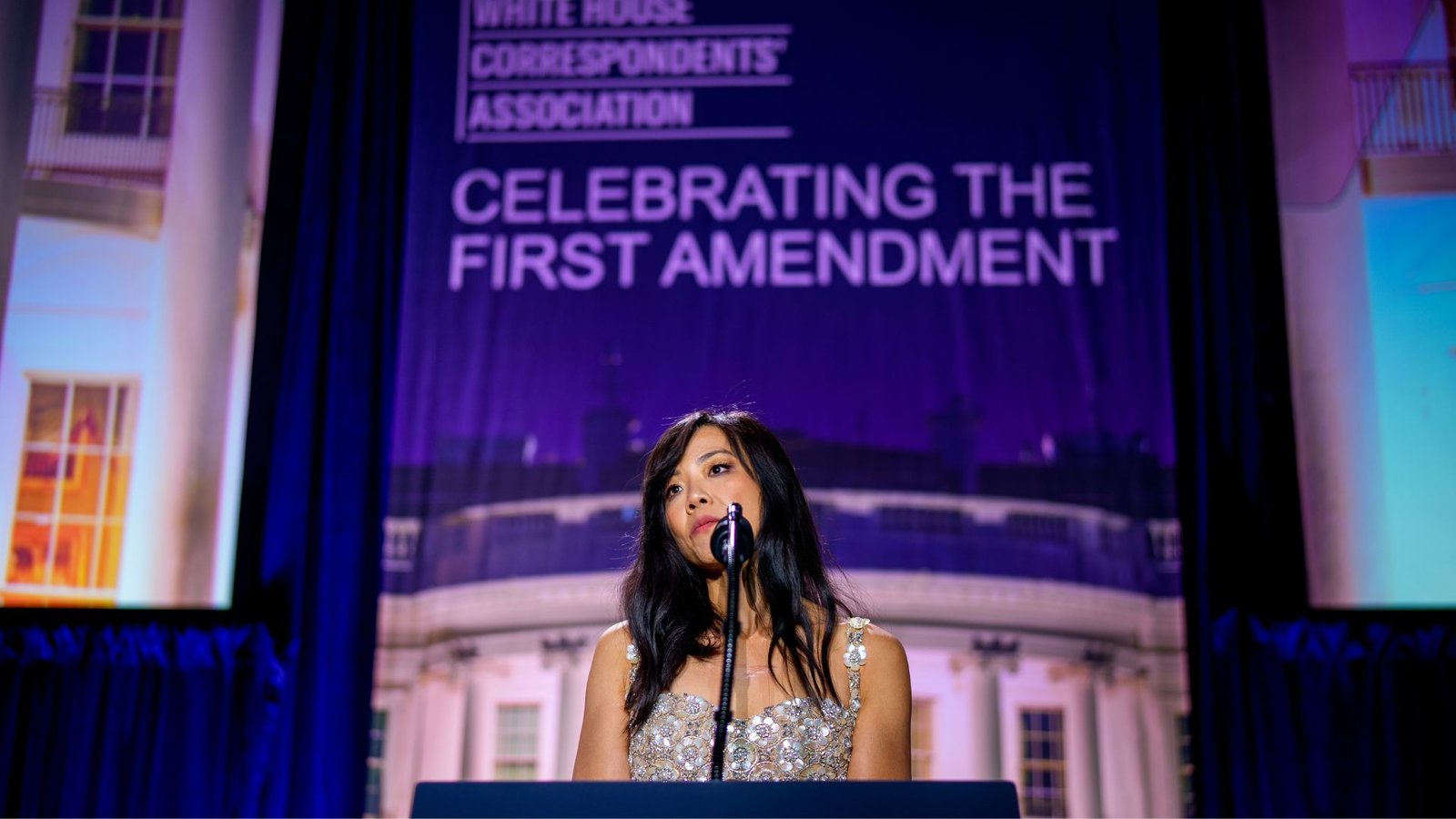
After eight months of planning, Saturday night’s White House correspondents’ dinner was going exactly how White House Correspondents’ Association President Weijia Jiang had hoped.
But just 20 minutes into the event, the evening shifted from calm to chaotic after shots rang out just outside the ballroom where it was taking place. Attendees hid under their tables, the president and vice president were whisked away, and the rest of the crowd was left confused as armed security secured the scene.
The months of planning, checking and preparing were ruined, but there may be another opportunity in less than a month, according to the White House. Following the shooting, President Donald Trump said there would be another dinner in just 30 days.
Is 30 days enough time to plan another dinner?
While security is the most important part of any event featuring top government officials, it’s not the only component. Hundreds of corporate executives, diplomats and celebrities travel to Washington to attend the event, according to Axios. Jiang, who is also a CBS News’ senior White House correspondent, wrote that she spent eight months planning the dinner.
“Trump insists we are having the dinner again in 30 days,” Jiang wrote. “Let’s see.”
But those are only the guests. Hosting the dinner also requires planning with the kitchen staff for the thousands of three-course dinners they are preparing, the music selection with the band, and the entertainment, who are likely booked with less than a month out.
Then there’s the security, which FBI Director Kash Patel said would be done “entirely differently“ following the incident.
“You heard the president say we would do this again in short order, 30 days or so,” Patel told Fox News. “Security posture will be different, I’ll be working with the FBI [and the] police department, to assist in security and provide input.”
While no one can say for certain that an event will take place, it’s easy to see how difficult it would be to plan it on such short notice, especially given the top-of-mind security issues. Straight Arrow has emailed the U.S. Secret Service and is waiting for a response.
What’s the latest on the planning?
Chief of Staff Susie Wiles is expected to convene a meeting with the White House operations team, Secret Service and Department of Homeland Security early this week to discuss “protocol and practices” for major events involving the president, Politico reported. While the publication did not say whether the meeting would cover the rescheduling of the correspondents’ dinner, it did say it would cover the events planned for America 250.
“The meeting will discuss the processes and procedures that worked to stop Saturday’s attempt, while exploring additional options to ensure all relevant components are doing everything possible to secure the many major events planned for President Trump in the months ahead as he gears up to celebrate America 250,” the official told Politico.
The incident led some to wonder whether the administration was using a designated survivor for the event, prompting questions at Monday’s White House press briefing.
“It’s definitely a good question, and it’s one that will be raised,” press secretary Karoline Leavitt said when asked if the administration should’ve had both the president and the vice president together during the event. “I can assure you the president intends to attend the event. I don’t want to rule in or out the vice president’s attendance, but certainly, that’s a conversation that will take place.”
A designated survivor is a government official who stays behind during large events, such as a joint meeting of Congress, in the event of a mass-casualty incident. The most recent event was Trump’s State of the Union, where the administration designated Veterans Affairs Secretary Doug Collins as the survivor.
While Trump said the new correspondents’ dinner would happen in 30 days, the administration has not announced an official date. But journalists like Jiang believe that preserving tradition and maintaining the press’s relationship with the White House are crucial to America’s democracy.
“It is important to acknowledge that a tense relationship between the press and the government is not a sign that things are not working,” Jiang told C-SPAN a week before the event. “It is a sign that things are working exactly the way the founders wanted. We are not the friend of the government. We are not the enemy of the government.”
Round out your reading
- Scientists unearth new evidence on how the Grand Canyon was shaped.
- Why the Army is adding a second fitness test for combat.
- Illegal midwives, growing demand: The fight over home birth in America.
- 40 years after Chernobyl, the U.S. pushes nuclear power once again.
- We’re building a new Straight Arrow. Help us shape our future by taking our survey.