

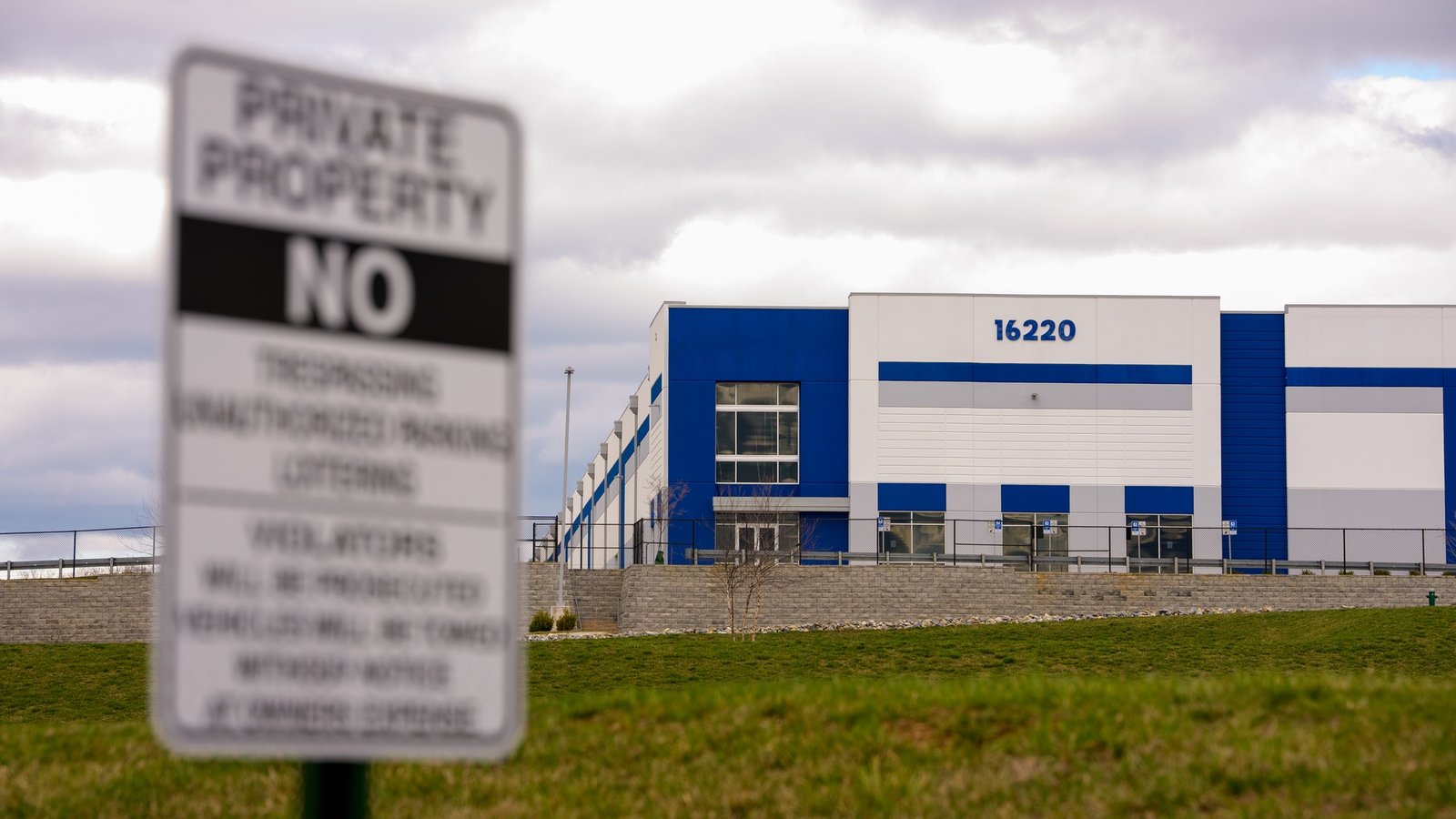
Local governments sued the U.S. Department of Homeland Security (DHS), citing allegations it failed to adhere to a federal environmental review law. A judge’s order agreeing with such appeared to have a domino effect on DHS as officials scramble to commission site surveys.
A court order has reverberated through DHS, as The New York Times learned the department and ICE are now commissioning site plan reviews for at least two warehouses, according to documents the publication obtained. Those reviews could take several months to complete.
Already, court papers show DHS conducted an environmental review for a warehouse site in Romulus, Michigan, back in March. The warehouse is less than four miles away from the Detroit Metro International Airport. The review noted the surrounding area will face no negative environmental impacts from the proposed 1,000-person detention center.
“The Project would not increase the facility’s design capacity, operational population, or building footprint and consists of security, operational, and infrastructure improvements located entirely within previously developed and disturbed areas,” ICE said in court papers. “No new expansion areas, offsite improvements, or new utility corridors are proposed.”
Throughout the nation, ICE has used the “no detrimental effect” designation to justify plans to construct such a facility. Documents Straight Arrow discovered showed ICE used the phrase for the New Hampshire proposed facility, basing it on site assessments of electric, water and fire protection systems. Gov. Kelly Ayotte, a Republican, said in February that DHS scrapped plans after speaking with former DHS Secretary Kristi Noem.
A spokesperson with DHS told Straight Arrow in an email that the department is reviewing agency policies and proposals during Secretary Markwayne Mullin’s transition.
“As Secretary Mullin said in his confirmation hearing: ‘I will work with the community leaders and make sure that we are delivering for the American people what the President set out…” according to the statement.
The court order is one of several avenues local officials have used to combat DHS’s sprawling detention plan. Straight Arrow has examined detention plans since January, when federal officials were caught touring a site in Kansas City, Missouri. Litigating against the federal agency has been costly for cities, as one reported racking up more than $1 million in taxpayer-funded legal fees.
Leavenworth, Kansas, Mayor Nancy Bauder previously told Straight Arrow the lawsuit was a necessary tool to enforce permit rules. Bauder added that without enforcement, others could do the same thing.
“That’s not right,” she said previously. “It’s our law, and they need to follow our law.”
Federal judge halts ICE facility in Maryland
The federal court order halting construction at a planned ICE facility in Washington County, Maryland, centered on allegations that the National Environmental Policy Act wasn’t followed. According to the Environmental Protection Agency (EPA), the law mandates all federal agencies consider the impacts of federal actions on surrounding habitats. The EPA noted “federal actions” is broad and can include land management changes, highway construction and building construction.
“Had DHS done so,” a judge wrote, “it likely would have found that the rapid transformation of a cargo-processing facility with four toilets and two water fountains into a temporary residence and workplace for hundreds, if not thousands, would jeopardize the health and safety of the surrounding ecosystem in myriad ways, most notably through the likely over-taxing of the sewer system.”
The judge allowed DHS to install security equipment and continue interior renovations relating to office space, according to court papers.
The order was issued in a lawsuit Maryland Attorney General Anthony Brown filed in February, alleging the Trump administration wasn’t adhering to the environmental review law.
An ICE spokesperson claimed in an email to Straight Arrow the allegations aren’t about the environment but to stop Trump’s plans. The spokesperson said ICE complies with federal laws when acquiring properties.
“ICE carefully evaluated the use of existing facilities to help minimize environmental impacts, including potential impacts to protected species, sensitive natural resources, and valued cultural resources,” the spokesperson said.
Court says Florida operates Everglades facility
DHS has convinced at least one court that it did not have to follow environmental survey laws.
The majority of the 11th Circuit Court of Appeals three-judge panel ruled in the department’s favor, overturning a U.S. District Court judge’s injunction that temporarily closed the facility — referred to as Alligator Alcatraz for the swamp creatures that inhabit the region. The Associated Press reported on April 21 that, since Florida has not yet received reimbursement from the Trump Administration for the facility, it’s not federally run or operated.
Chief Judge William Pryor wrote the leading opinion, saying that the Friends of the Everglades, Center for Biological Diversity and the Miccosukee Tribe of Indians failed to prove the federal government is responsible for the facility’s operations. He wrote that Florida uses state law enforcement and the 287(G) agreements to cooperate with ICE on immigration enforcement.
“The environmentalists insist that immigration enforcement is the ‘purpose for which the facility was built,’” Pryor wrote in his opinion. “And ‘immigration enforcement is exclusively a federal power.’ But states have sovereign power to choose to assist federal law enforcement.”
Judge Nancy Abudu dissented, writing that the absence of a formal federal agreement doesn’t mean DHS has no control over the facility. She wrote that the leading opinion minimized the department’s responsibility and role in immigration detention and mischaracterized a U.S. District Court judge’s injunction.
“The agreement between Florida, DHS, and ICE is not an exercise in cooperative federalism; it is a clear and classic delegation of federal authority,” Abudu wrote.