

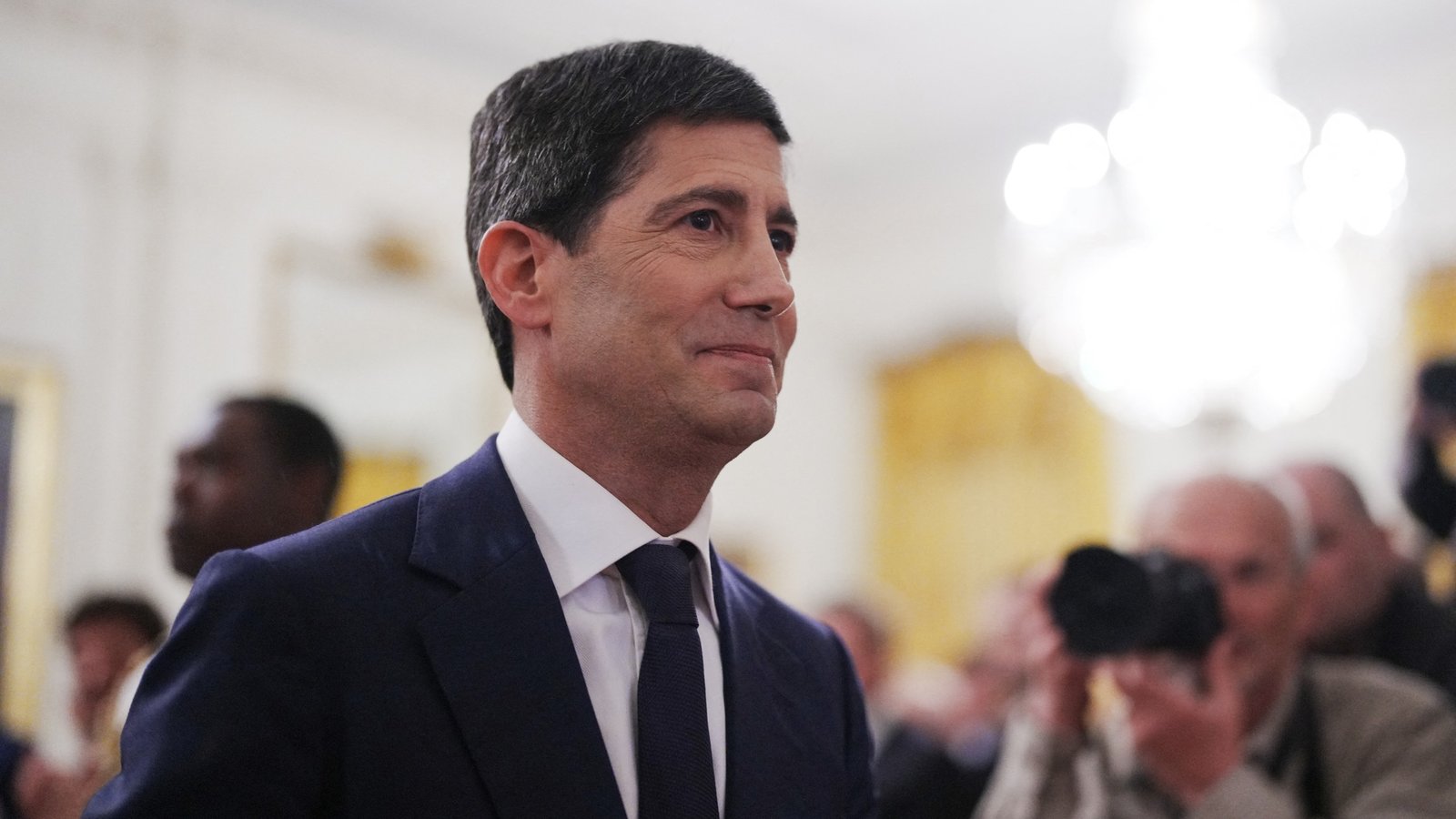
The Federal Reserve left its key interest rate unchanged Wednesday, holding borrowing costs steady as policymakers weighed rising inflation against signs that the U.S. economy is losing momentum.
But in a sharp reversal, nine of the 19 Fed officials signaled that there could be at least one interest rate hike before the end of 2026, up from none in March. The Fed’s new chairman, Kevin Warsh, did not submit a projection.
In a news conference after presiding over his first meeting, Warsh said “the central bank will deliver price stability.”
He also announced that he is forming new task forces to examine how the Fed communicates, its data sources and what it includes in its quarterly economic projections.
As widely expected, the central bank kept its benchmark federal funds rate — what banks charge each other for short-term loans — in a range of 3.5% to 3.75%.
This means that costs for everything from mortgages to car loans to business loans will likely remain high. But lowering interest rates would likely send annual U.S. inflation, which rose to 4.2% in May, even higher above the Fed’s target of 2%.
The Fed’s decision was approved by a unanimous vote.
Will the Fed raise rates in the months ahead?
Wednesday’s announcement signaled a growing willingness of central bankers to raise rates, a move many economists believe may be warranted.
But Warsh himself was tight-lipped about whether he anticipates a rate increase in the coming months.
That kind of reticence was expected from the Trump-appointed Fed chair who took office in late May.
“We know that Warsh does not want to follow the standard Fed practice of the last couple of decades of giving people in the markets a lot of guidance about where interest rates might be going,” said Jon Hilsenrath, senior advisor at the financial services firm StoneX.
Still, Wednesday’s announcements moved the market, said Steve Sosnick, chief strategist at Interactive Brokers.
Before this week, the markets had priced in an 80% chance that the Fed will raise rates by December, he told Straight Arrow. But now “they’re pricing in 100% chance of a hike by October.”
Sosnick said the shift marks a sharp reversal from the months before the Iran war, when markets expected two rate cuts in 2026 and gave roughly even odds to a third.
Both Hilsenrath and Sosnick said the big question is whether Warsh will be a “hawk,” more inclined to raise interest rates to bring down inflation, or a “dove,” more inclined to lower or keep interest rates steady to keep unemployment in check.
On Wednesday, Hilsenrath said, Warsh sounded more hawkish than dovish.
That could bring consternation from President Donald Trump, who has made no secret of his preference for lower interest rates.
A growing number of economists are advocating for an increase in interest rates in the coming months to contain inflation.
In a survey published on Monday by Hilsenrath and Duke University, 17 of 32 former Fed officials and staff said an increase would likely be appropriate in 2026, while 14 said no increase would be appropriate.
“It’s possible that this economy is overheating,” Hilsenrath said, “and if the Fed is late to respond, it could make it harder to get inflation down.”
Hilsenrath also warned that if the Fed keeps interest rates too low for too long, “in addition to pushing up consumer prices, it could also push up asset prices, including stocks.”
The stock market is already doing very well, he said, but that boom could turn into a bubble, and a bubble can burst.
Round out your reading
- Could a common dietary supplement accelerate Alzheimer’s?
- NY AG Letitia James gets hundreds of taunts, racial slurs in ICE public reporting portal.
- As Musk becomes the first trillionaire, historian sees warning signs.
- An experimental weight loss drug is so effective, many Americans don’t care it’s not FDA approved.
- How search engine optimization reduced Simone Biles to an ‘NFL wife’.