

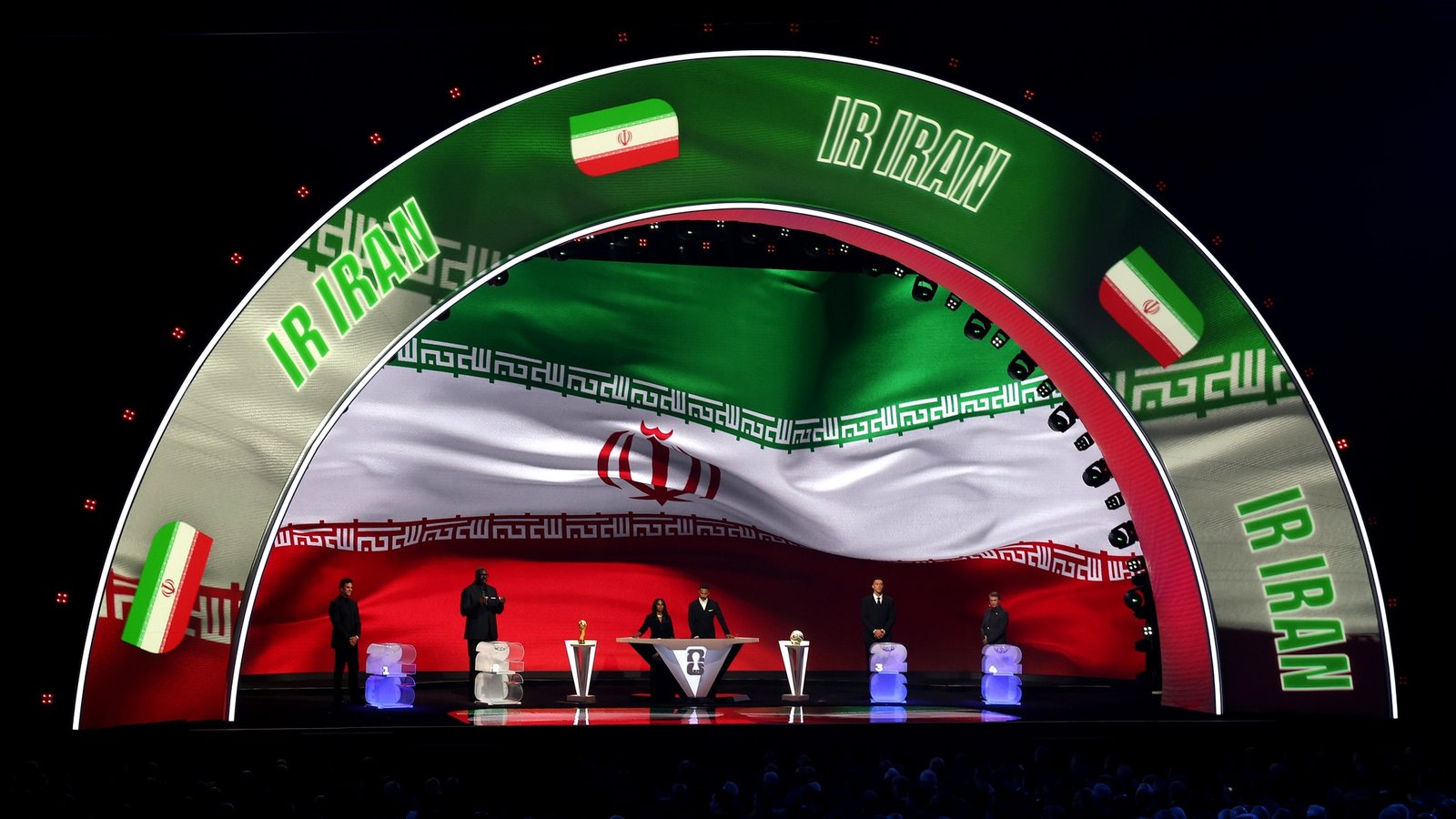
FIFA’s president reiterated at the organization’s annual meeting that Iran will be participating in this year’s World Cup in North America.
“Let me start at the outset. Of course, Iran will be participating at the FIFA World Cup 2026. And of course Iran will play in the United States of America,” Gianni Infantino, FIFA’s president, said. “And the reason for that is very simple: we have to unite. It is my responsibility, our responsibility.”
The rest of the world isn’t so sure. Iran’s ability to take the pitch in two of the three host countries remains unclear – and Iran might not be the only country struggling to field a team in the U.S.
What happened in Canada?
Canada, one of the World Cup’s host countries, along with the U.S. and Mexico, denied entry to three Iranian Football Federation officials, including organization President Mehdi Taj, as they attempted to travel to FIFA’s annual meeting in Vancouver. The three allegedly had valid visas for travel, but because of what Iranian officials called “inappropriate behavior of immigration officials,” they were denied entry to the country.
Canadian officials initially called the denial of entry “unintentional.” But Canada’s immigration minister later said agents acted correctly because of the officials’ ties to Iran’s Islamic Revolutionary Guard Corps (IRGC), which Canada considers a terrorist organization. Taj is a former member of the IRGC.
“While we cannot comment on individual cases due to privacy laws, the government has been clear and consistent: IRGC officials are inadmissible to Canada and have no place in our country,” Taous Ait, Canadian Immigration Minister Lena Diab’s press secretary, told ESPN.
Two other Iranian Football Federation officials were allowed to enter Canada but did not attend FIFA’s Congress in solidarity with those who were not allowed in, according to Reuters.
Immigration problems on two fronts for Iran
The Iranian officials’ problems entering Canada were just the latest hurdle before the team travels to North America for the tournament. Iran previously asked FIFA to change its schedule so it would not have to play any matches in the U.S. after President Donald Trump ordered strikes beginning Feb. 28. FIFA denied Iran’s request; all three of Iran’s group stage matches are slated to take place in the U.S.
Iran is one of 39 countries – and one of four participating in the World Cup – currently subject to the Trump administration’s most recent travel ban. In March, Trump said Iranian players – and athletes from other participating countries – would be given waivers to travel to the U.S., but cautioned Iranian athletes against doing so.
“The Iran National Soccer Team is welcome to The World Cup, but I really don’t believe it is appropriate that they be there, for their own life and safety,” Trump wrote on Truth Social.
As of December, seven players on Iran’s roster – including captain Mehdi Taremi – served in the IRGC as part of their mandatory military service. Iranian soccer officials said they’d be ready with replacements if those players were denied entry.
Secretary of State Marco Rubio reiterated last week that Iranian players would be allowed in the country, but members of the team’s support staff may be denied entry like officials were in Canada.
“The problem with Iran would be not their athletes,” Rubio said. “It would be some of the other people they would want to bring with them, some of whom have ties to the IRGC. We may not be able to let them in, but not the athletes themselves.”
Trump echoed Rubio’s support for Iranian players Thursday after Infantino’s remarks.
“Well if Gianni said it,I’m okay,” Trump told reporters. “You know what? Let them play.”
Trump and Infantino reportedly have a close relationship. Infantino awarded Trump the inaugural FIFA Peace Prize last December after the president failed to win the Nobel Peace Prize he said he deserved.
At this point, both Canadian and U.S. officials said they will review visa applications for delegation members and necessary support staff on a case-by-case basis.
Who qualifies as ‘necessary?’
The definition of necessary support staff is kept fairly vague and will likely limit who can travel with players from Iran, Haiti, Côte d’Ivoire and Senegal – countries currently subject to the U.S. travel ban.
Typically, support staff would include medical doctors, physical therapists, equipment managers, communications staff, security and nutritionists. However, neither of the Trump administration’s proclamations providing exemptions for the World Cup specifies which members of that support staff would be allowed to enter the U.S.
The proclamations also allow for players’ immediate family members to travel, but do not specify if that includes siblings or adult children, for example. The secretary of state’s office has the final say on who can enter and who will be denied come tournament time, according to the order.
Barriers to entry for multiple nations
Of the other 44 countries participating in the World Cup not subject to travel bans, there’s another barrier to entry: the “Visa Bond Pilot Program.” It currently applies to 50 countries, five of which – Algeria, Cape Verde, Côte d’Ivoire, Senegal and Tunisia – qualified for the World Cup.

Unbiased. Straight Facts.TM
The United States has immigration restrictions in place on seven of 48 countries that qualified for the 2026 World Cup.

The program requires anyone traveling from those countries to the U.S. on a business or tourist visa – a B-1 or B-2 visa – to hand over up to $15,000 in bond payments before entering the U.S. There’s no language outlined in the program that would provide a clear path for exceptions for athletes playing this summer. Instead, it’s up to individual employees in consulates.
“Consular officers will determine whether a waiver would advance a significant national interest or humanitarian interest based on the applicant’s purpose of travel and employment,” program documents said.
For countries that do not have large budgets for their soccer programs, $15,000 per person traveling for the tournament is a major financial burden, even if that money would be returned once the team leaves the U.S.
FIFA is also working with the State Department, according to The Athletic, to ensure that countries playing in matches in two countries – like Côte d’Ivoire, Senegal and Tunisia – would be guaranteed multiple-entry visas so they’re able to easily travel between the U.S., Canada and Mexico during the tournament.
Côte d’Ivoire is a prime candidate for multiple-entry visas, playing its first and third games in the U.S. and second game in Canada. If its team members were only granted single-entry visas, they could get stuck in Toronto between matches, putting their tournament in jeopardy.
Senegal, however, is in a trickier spot. It plays its final group stage game in Canada, so the State Department might hesitate to grant multiple entry visas because right now, they’re not scheduled to play another match in the U.S. That changes if Senegal makes the knockout round. The U.S. is hosting 26 of 31 knockout matches. If those players are only granted single-entry visas, their tournament also would be in jeopardy.
World Cup matches are scheduled to begin June 11 in Mexico City.