

Oil prices hit a record high on Thursday as President Donald Trump considers extending his military blockade of Iranian ships and ports.
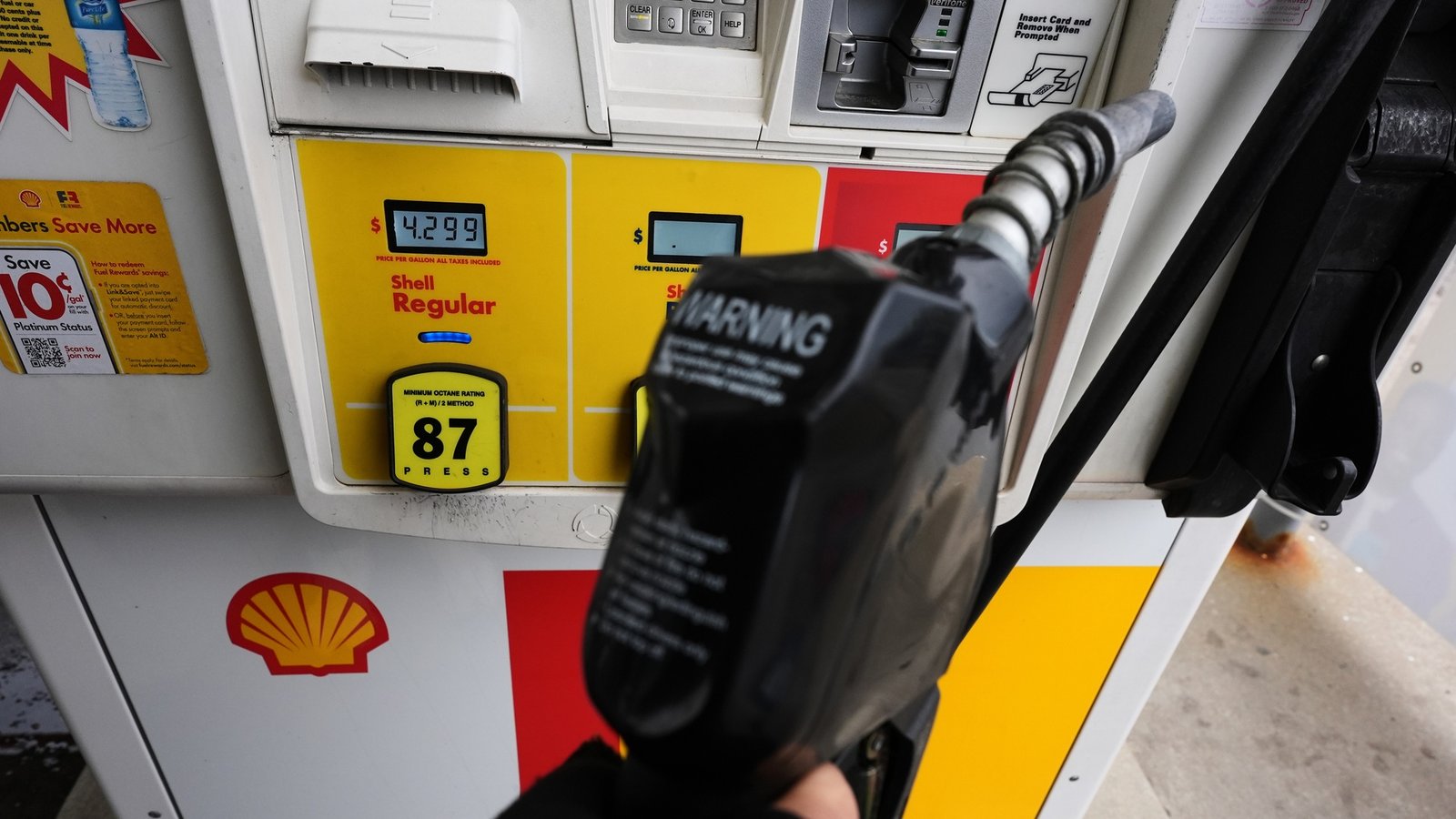
Brent crude topped $125 per barrel briefly Thursday morning before settling back down to less than $120. And here in the U.S., the national average for gas has climbed to about $4.30 a gallon, the highest in nearly four years.
This comes as Trump has warned Iran it “better get smart soon.”
Trump mulls next moves
According to NBC News, Trump’s national security team presented multiple options to him this week as Iran continues to disrupt traffic through the Strait of Hormuz. Iran has said it will not reopen the strait until the U.S. ends the blockade.
But the president is holding his line, saying the blockade will stay in place until Iran agrees to a deal addressing its nuclear program.
“Well, the blockade is genius, okay?” Trump told reporters on Wednesday. “The blockade has been 100% foolproof. It shows how good our Navy is, I can tell you that.”
He added, “We’re not going to let Iran have a nuclear weapon and we’ve knocked out their navy, we’ve knocked out their air force. We’ve knocked out their anti-aircraft. Everything, apparatus, everything they have, their radar. They have very little left. And they have some missiles, a small percentage. They have a small percentage of missile making facilities. We’ve knocked out about 80% of them, the rest could come very quickly, if we don’t make a deal.”
Iran responds
Iran is now warning it “will not tolerate” the blockade.
“If the blockade continues, Iran will respond,” Mohsen Rezaei, the senior military adviser to Iranian Supreme Leader Mojtaba Khamenei, said on state-run TV Thursday.
Iran’s President Masoud Pezeshkian also warned that the U.S.’ blockade is “doomed to failure.”
“Any attempt to impose a naval blockade and restrictions is contrary to international law and against the interests of the nations of the region and global peace and stability, and is doomed to failure,” Pezeshkian said, according to Mehr News Agency.
Aircraft carrier heading home
Meanwhile, the USS Gerald R. Ford is heading home after a record deployment of more than 300 days. American officials said it will leave the region in the coming days and is expected to return to its home port in Virginia by mid-May, according to The Washington Post.

It comes after the USS George H.W. Bush arrived in the region last week. Its arrival put a total of three American aircraft carriers in the Middle East, a number not seen since 2003. The USS Abraham Lincoln has also been in the region since January.
Trump considers pulling US troops out of Germany
There are new tensions with one of the U.S.’ European allies. Trump is threatening to pull U.S. troops out of Germany amid a feud with Chancellor Friedrich Merz over the war with Iran.
Earlier this week, Merz said the U.S. is being “humiliated” by Iran and accused the U.S. of having “no strategy” in the war.

On Wednesday, Merz had said his personal relationship with Trump is “as good as ever,” but he “had doubts from the very beginning about what was started there with the war in Iran.”
“The United States is studying and reviewing the possible reduction of troops in Germany, with a determination to be made over the next short period of time,” Trump said in a social media post Wednesday evening.
Round out your reading
- Scientists unearth new evidence on how the Grand Canyon was shaped.
- Why the Army is adding a second fitness test for combat.
- Illegal midwives, growing demand: The fight over home birth in America.
- 40 years after Chernobyl, the U.S. pushes nuclear power once again.
- We’re building a new Straight Arrow. Help us shape our future by taking our survey.