

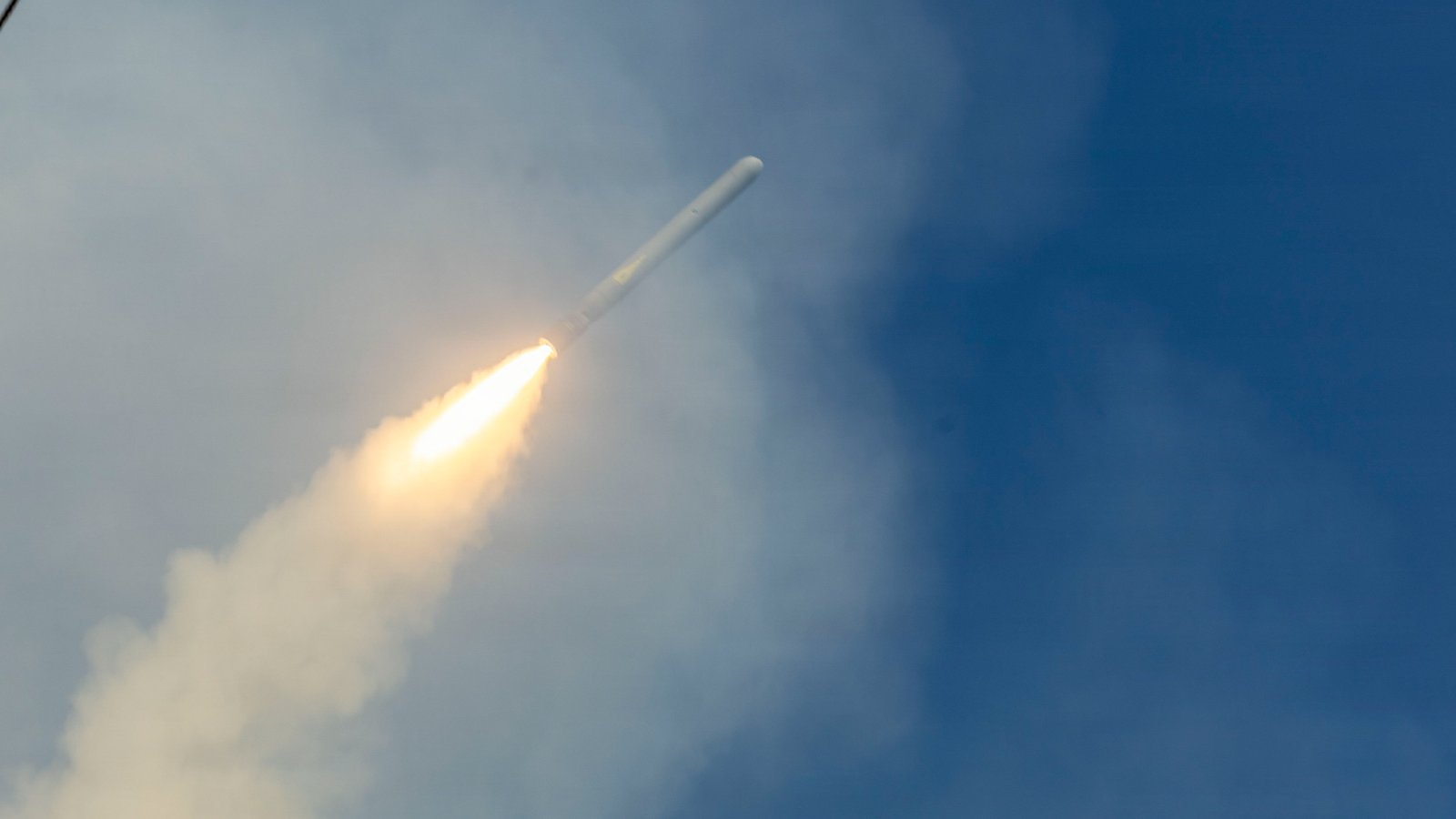
The Pentagon is pushing defense contractors to develop cheaper missiles that can be built faster and in greater numbers as the military looks for ways to replenish expensive weapons more quickly, according to a new report.
The Wall Street Journal reports the Pentagon is turning to nontraditional contracting methods and pressing defense companies to cut development timelines and costs. The push for cheaper missiles comes even as Defense Secretary Pete Hegseth rejects claims that the United States faces a munitions stockpile crisis.
Appearing on CBS’s “Face the Nation” Sunday, Hegseth rejected the notion of a munitions stockpile crisis, calling it a “manufactured story that the media wants to peddle.”
The stockpile debate
At the center of the debate is whether the U.S. can replenish expensive precision munitions quickly enough after months of combat operations against Iran.

While Hegseth said Sunday that stockpiles remain “great” and “only getting stronger,” he testified before a Senate panel on April 30 that replenishing the stockpile could take “months and years,” depending on the weapon system. When pressed on those comments on CBS, Hegseth said he had “speculated some munitions take more time than others” and added, “we’ve got lots of them.”
The Journal reports the U.S. has fired more than 1,000 Tomahawk missiles during the war with Iran, at a cost exceeding $2.5 billion.
Compounding the issue, the Center for Strategic and International Studies estimates that defense contractor RTX requires at least a year to build each Tomahawk.
Pentagon shifts toward lower-cost weapons
To address those bottlenecks, the military is pursuing lower-cost weapons that can be produced in larger numbers.
The Army’s Low-Cost Containerized Missiles program aims to buy thousands of lower-cost weapons that can be transported by vehicle and launched from containerized systems. The program requires each missile to cost less than $500,000.
Another Army project has asked companies to develop air-defense missiles that cost less than $250,000 each.
By comparison, Lockheed Martin’s Patriot interceptors cost roughly $4 million each and take more than two years to produce.

Hegseth told CBS the administration is “ripping through the Pentagon bureaucracy” to force industry to move faster and said the U.S. is “open to co-production wherever we can.”
Adding options, not replacing existing weapons
The Journal reports that the newer programs are meant to add production capacity and options, not quickly replace the advanced missiles supplied by companies such as RTX and Lockheed Martin. Instead, the objective is to establish alternative manufacturing streams today to broaden operational choices down the road.
CoAspire, Anduril Industries, Leidos Holdings and Kongsberg Gruppen subsidiary Zone 5 are competing to build lower-cost missiles for the Army, which is seeking more than 10,000 missiles by 2030.
Leidos aims to deliver 3,000 containerized cruise missiles over the next three years, a target it plans to reach by modifying one of its existing weapons with limited additions, including a booster rocket.
Doug Denneny, the founder of CoAspire, told the Journal that the company’s Ghost missile will start flight testing this year and that CoAspire is relying on 3D-printed components and commercially available parts to reduce delays.
Todd Harrison, a defense expert at the American Enterprise Institute, said the goal is not to replace top-tier weapons, but to create larger inventories of lower-cost precision munitions.
“The idea is precision-guided weapons that you can field and use on a massive scale,” he said. “They don’t need to be perfect.”
Round out your reading
- Could a common dietary supplement accelerate Alzheimer’s?
- NY AG Letitia James gets hundreds of taunts, racial slurs in ICE public reporting portal.
- As Musk becomes the first trillionaire, historian sees warning signs.
- An experimental weight loss drug is so effective, many Americans don’t care it’s not FDA approved.
- How search engine optimization reduced Simone Biles to an ‘NFL wife’.