

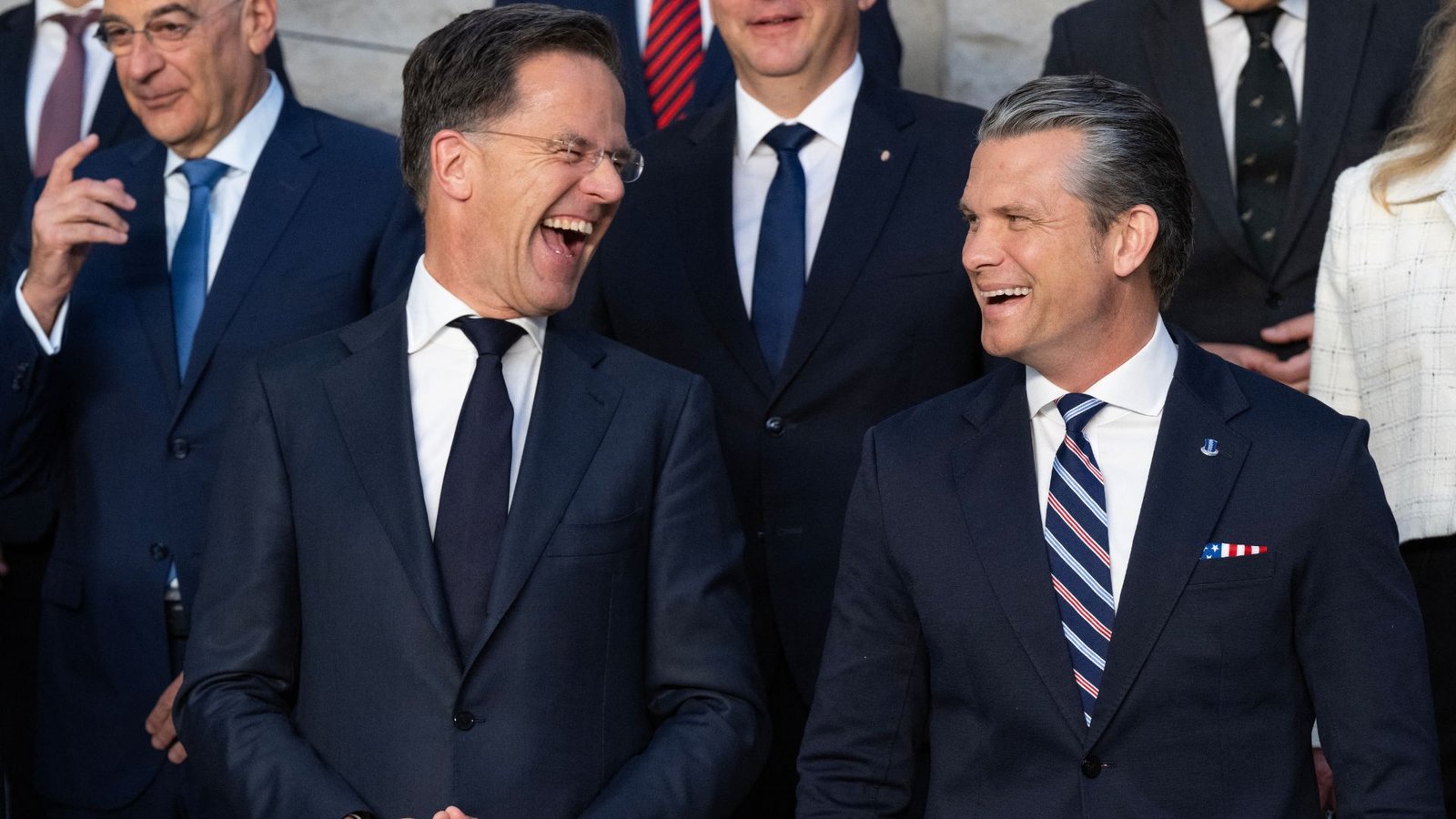
Defense Secretary Pete Hegseth is envisioning a “NATO 3.0” after what he said was a “shameful” reaction by European member nations to America’s war in Iran.
During a NATO conference on Thursday, Hegseth said the Pentagon would conduct a six-month review of American forces in Europe — shocking European leaders, who have historically had a strong relationship with the U.S.
“This will be a real review,” Hegseth said, according to The Associated Press. “It will be designed to ensure that NATO is moving fast and irreversibly toward Europe leading, stepping up to take primary responsibility for the defense of Europe. It’s a review that some countries will fail and others will pass with flying colors.”
Some of what Hegseth wants is already happening. The Pentagon has pulled thousands of troops from Germany and Poland, while quietly cutting the warships, refueling planes and surveillance aircraft it had pledged to NATO in a crisis. But what’s not decided is how far the Defense Department will go. That’s what this six-month review will figure out.
Why does Hegseth want a NATO 3.0?
In his speech, Hegseth criticized European allies for not providing the U.S. access to bases in Europe to launch attacks on Iran, the AP reported.
“These allies, they put America’s sons and daughters, our sons and daughters, at risk by denying them the predictable access, basing and overflight that never should have been in question at all,” he said. The review would also assess whether the U.S. has full access and overflight “when we need it.”
He also criticized European leaders whom he said prioritized social issues over security.
“Instead of tanks and fighters and air defenses, the focus has been on gender equity and climate change and defense austerity,” he said. “Europe’s borders flew wide open, welfare states expanded, defense budgets cratered, along with Europe’s belief in itself and its civilization.”
But these assertions failed to accurately reflect the current reality of European defense policy. European and Canadian leaders have launched efforts to boost defense spending and expand their armed forces. The AP reports that NATO Secretary-General Mark Rutte said on Thursday that the alliance spent $90 billion more on defense in 2025 than in 2024, a 20% increase.
While several European nations welcomed a significant influx of migrants over a decade ago, many have since implemented stricter border regulations.
What would Hegseth’s NATO look like?
Weeks before Hegseth’s speech, the U.S. said it would no longer provide as much military support if any NATO member came under attack. The exact plans remained classified but the shift centers on the NATO Force Model, which lists the forces that allies could activate during a war or other major crisis.
At the time, Rutte declined to comment on the U.S. drawdown. But he characterized this shift as a logical progression intended to diminish the alliance’s significant reliance on U.S. military power.
“We know that adjustments will take place, the U.S. has to pivot toward, for example, Asia,” Rutte said. “This will take place over time, in a structured way.”
The Trump administration’s announcement followed a series of recent U.S. military decisions in Europe. In early May, the White House announced it would pull 5,000 service members from Germany, followed weeks later by another announcement that it would remove 4,000 troops from Poland.
Because European militaries currently possess no comparable capabilities, the removal of a specialized long-range missile contingent from bases in Germany has caused significant concern.
The withdrawal would include a reduction of F-16 and F-15E fighter jets, a reduction of P-8 Poseidon reconnaissance aircraft and warships it provides for NATO operations, according to The Hill. This raised additional concerns among European leaders over air mobility and intelligence, surveillance and reconnaissance, or ISR.
One area that wouldn’t change is America’s European nuclear arsenal, according to the AP. Hegseth said he had no plans of withdrawing America’s nuclear weapons, which are a critical NATO deterrence. NATO’s Nuclear Planning Group issued its first statement in nearly two decades after Hegseth’s comments.
The group said it “recalled that the strategic nuclear forces of the Alliance remain the supreme guarantee of Allied security and underpin NATO’s extended deterrence architecture.” It said that it will continue to enhance NATO’s nuclear deterrence mission by “modernizing NATO’s nuclear capabilities, strengthening its nuclear planning capacity, and adapting to achieve its security interests.”
Hegseth’s remarks drew negative reactions from NATO officials, but Rutte downplayed the impact of the U.S. decision. He said that the NATO Force Model is just “a planning tool” and not a reflection of what would happen if a NATO country were attacked.
“If war breaks out, we will all max out what we need to do to make sure we can fight the war,” Rutte said, according to the AP. “In the planning phase, it is important to know what we can count on. What is in theory there.”
Who benefits from a new NATO?
The Trump administration said that it needs to be able to plan for two simultaneous conflicts and wants more military resources available to combat China, if necessary.
In February, Pentagon official Elbridge Colby spoke to NATO about the reprioritization, saying the U.S. had to focus on China and could no longer support additional forces in Europe. Scaling back conventional forces in Europe would allow Washington to redeploy high-end naval and air forces to the Indo-Pacific.
“We are grappling forthrightly with the fact that the Indo-Pacific is now a central arena of geopolitics, one with fundamental implications for American security, economic vitality, and technological leadership,” Elbridge said.
Round out your reading
- Could a common dietary supplement accelerate Alzheimer’s?
- NY AG Letitia James gets hundreds of taunts, racial slurs in ICE public reporting portal.
- As Musk becomes the first trillionaire, historian sees warning signs.
- An experimental weight loss drug is so effective, many Americans don’t care it’s not FDA approved.
- How search engine optimization reduced Simone Biles to an ‘NFL wife’.