

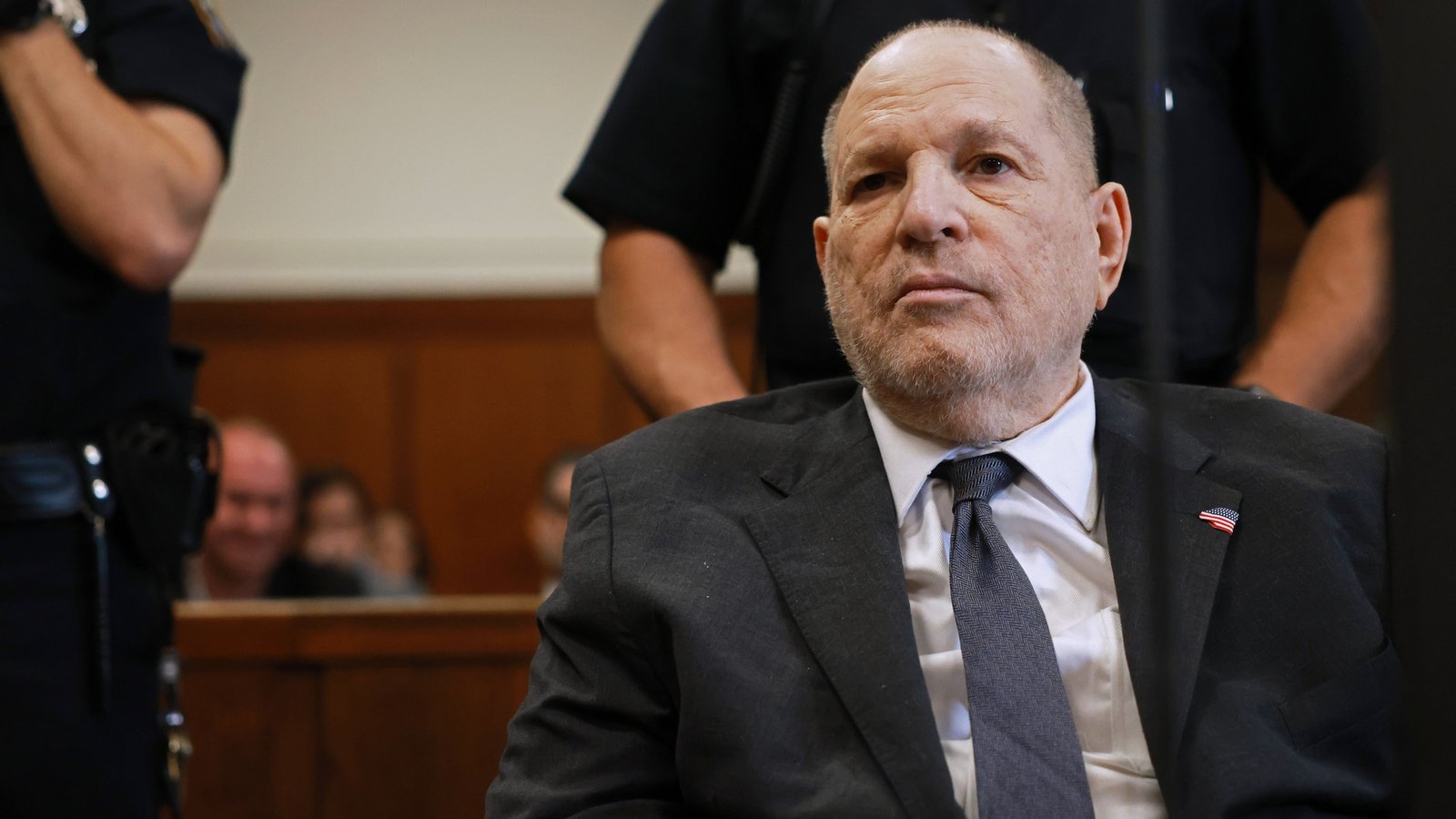
NEW YORK — The legal saga of Harvey Weinstein, the disgraced Hollywood mogul whose sexual misconduct sparked the global #MeToo movement, is entering yet another chapter.
Jury selection begins Tuesday in downtown Manhattan for Weinstein’s third trial on charges that he raped aspiring actress Jessica Mann in 2013. A jury found him guilty of the assault in 2020, but an appeals court overturned the conviction, ruling that the trial judge had erred by allowing testimony from women who were not part of the formal charges.
Jurors failed to reach a verdict during a retrial in 2025, and now prosecutors are bringing the case back to court once again.
The charge carries a maximum sentence of four years in prison if Weinstein, 74, is again convicted. He was also sentenced to 16 years on another rape conviction in California.
Public attention to Weinstein’s legal status has waned in recent years. But the cases against him — and the larger #MeToo movement that forced a reckoning for sexual misconduct by powerful men — inspired new laws that reduce secrecy around civil cases, weaken arbitration over abuse claims, and give survivors more time and space to file sexual abuse lawsuits.
#MeToo’s legal impact
At both the federal and state levels, the Weinstein case resulted in a shift from secrecy to accountability in how the law views sexual misconduct claims.
Congress passed the Ending Forced Arbitration of Sexual Assault and Sexual Harrasment Act, barring employers from forcing employees into private arbitration for claims tied to sexual abuse and harassment.
Another new federal law, the Speak Out Act, limits the use of nondisclosure agreements. Weinstein used NDAs to keep his victims silent, hiding the toxic workplace environment he oversaw for years.
Both laws are important because they allow workplace disputes to be held inside courtrooms, rather than behind closed doors in arbitration.
States such as California also passed new laws in response to Weinstein’s abuse.
“Perhaps the most significant legacy of the Weinstein era is the evolution of California vicarious liability entertainment laws,” Los Angeles law firm Makarem & Associates said. “‘Vicarious liability’ is the legal principle that an employer is responsible for the actions of its employees performed within the scope of their employment.”
In the past, a film studio could claim that it was not responsible for sexual assault by a producer by saying the assault was an “independent act” outside the scope of the producer’s job duties. This could shield a studio from being sued. That changed with the new California law.
The state also enacted the Justice for Survivors of Sexual Assault Act, which created a two-year window for sexual assault survivors to file civil lawsuits — cases previously blocked by a statute of limitations. Another new California law, the Expanded Professional Relationships Act, says directors and producers, as well as investors, may be held liable for sexual harassment, even if it occurs before an official employment relationship is established.
Other states — including Arizona, Colorado, Hawaii, Illinois, Louisiana, Maine, Maryland, Nevada, New Jersey, New Mexico, New York, Oregon, Tennessee, Utah, Vermont, Virginia and Washington — have also passed laws that help create more transparency in sexual misconduct claims in the workplace.
Why Weinstein’s cases stretched so many years
Even if Weinstein is acquitted of raping Mann, he still could spend the rest of his life behind bars.
He is currently being held on New York’s infamous Rikers Island. Meanwhile, he is appealing his California conviction and the 16-year sentence there.
And he was convicted a second time in New York last year of sexually assaulting Miriam Haley, a former “Project Runway” production assistant, in 2006.
For his third rape New York rape trial, Weinstein has brought on a new team of lawyers, all veterans of high-profile cases. They include Jacob Kaplan, who also represents Luigi Mangione in the killing of a health insurance executive, and Marc Agnifilo and Teny Geragos, who represented music mogul Sean “Diddy” Combs, who was convicted last year on federal prostitution-related charges.