

Need help finding places to hike? Want to share your dinner or blog about your latest trip and live in Illinois? Your social media use could contribute to at least $600,000 in revenue for Illinois, but it comes at a cost.
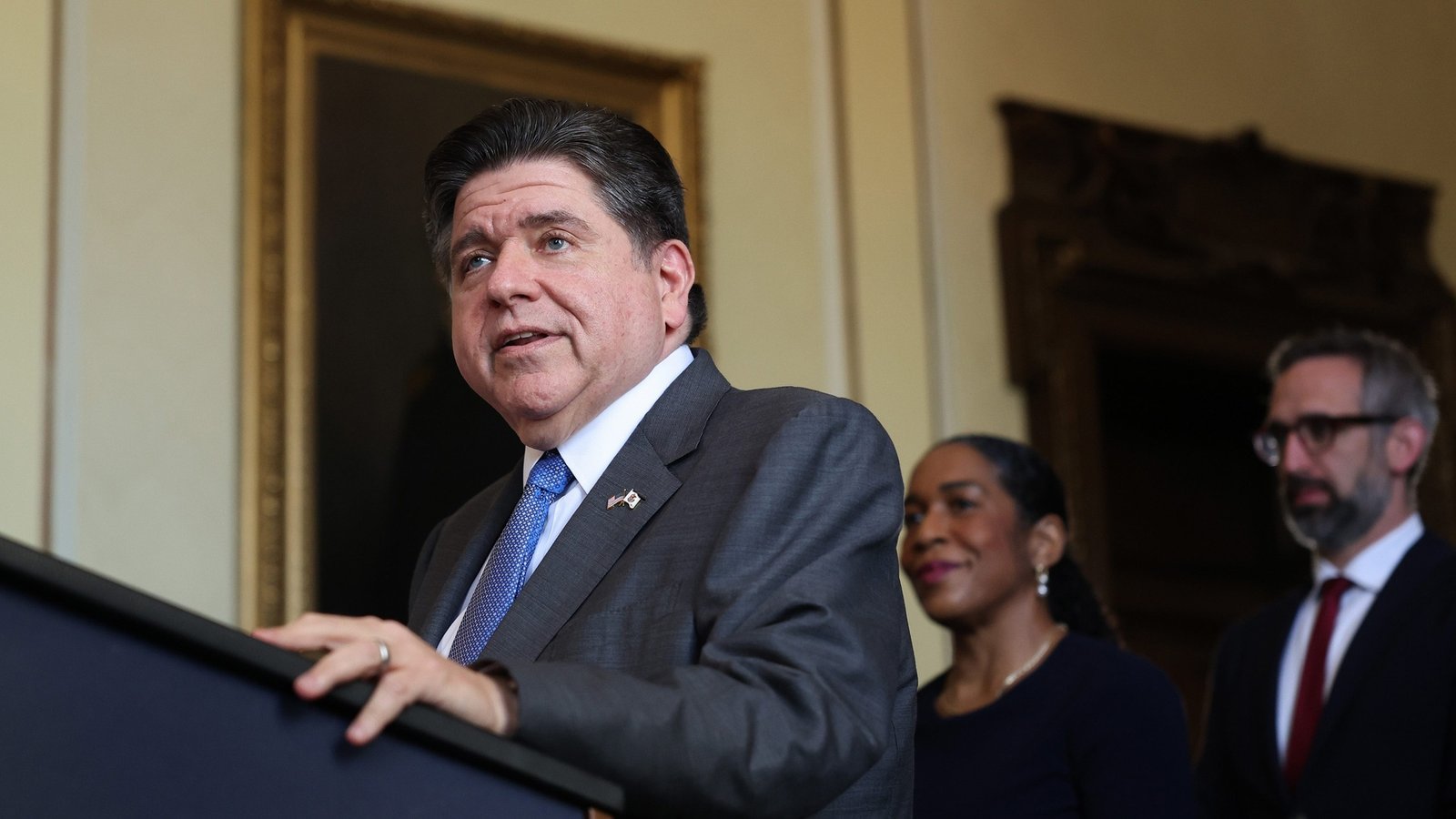
Illinois Gov. JB Pritzker signed legislation Tuesday that’s caused a stir online to tax social media companies with more than 100,000 users in Illinois. The plan isn’t capped, allowing the state to levy more taxes if a company exceeds 1 million Illinoisans, according to the legislation.
“Our social media platform fee requires tech giants to pay for the mental health and educational degradation that they’ve caused our children,” Pritzker said during a Tuesday press conference on the state budget.
The structure is:
- Platforms with more than 100,000 users but fewer than 500,000 will pay $0.10 per user per month. So, a company with 200,000 users would pay $20,000 per month.
- Platforms with more than 500,000 users but fewer than 1 million will pay $40,000, plus an additional $0.25 per user per month.
- Platforms with more than 1 million users pay $165,000, plus an additional $0.50 per user per month.
“If a social media platform fails or refuses to pay the monthly fee to the Secretary of State, there shall be added to the fee an amount equal to 100% of the unpaid fee and any penalties each month until the fee is paid,” according to the legislation.
As structured, the law could generate $200 million in annual revenue for the state. Pritzker’s office shared a fact sheet on the levies in response to Straight Arrow’s request for comment.
The law takes effect on Jan. 1 and will be collected each month. It requires social media sites to submit a report to the Illinois Secretary of State that includes an average number of users based in Illinois. Companies are barred from passing off the taxes to users.
Groups like the Tax Foundation and the libertarian Foundation for Individual Rights and Expression called the law confusing, and opined it would face a court challenge after the U.S. Supreme Court ruled that taxes on speech are unconstitutional, and that the government cannot censor platforms as they are vehicles for the First Amendment.
“The proposal’s biggest hurdle is the decades of case law that have squarely labeled this kind of tax as exactly what it is: a regulation of speech,” FIRE Legislative Analyst Tyler Tone wrote in a June 12 post.
The new law has yet to see any formal legal challenges as of Thursday. NetChoice, a trade association comprised of social media and internet giants, urged Pritzker to veto the tax, adding that it has a pending lawsuit against Chicago officials over a similar law.
Law relies on loose definition of ‘social media’
Social media companies are loosely defined in the law, affecting non-traditional platforms such as fitness applications like AllTrails and Strava that have social components. A platform is excluded if it’s a nonprofit organization.
“‘Social media platform’ means a website or internet medium that: (1) permits a person to become a registered user, establish an account, or create a profile for the purpose of allowing users to create, share, and view user-generated content through that account or profile; (2) enables one or more users to generate content that can be viewed by other users of the medium; and (3) primarily serves as a medium for users to interact with content generated by other users of the medium,” according to the legislation.
FIRE added that it could stretch beyond fitness apps and include content-sharing websites like Substack, GitHub, Letterboxd and others. It could form a hole in the websites’ budgets.
That’s the case for AllTrails, which Shoshana Weissmann, a digital director and policy advisor at the Abundance Institute, wrote on X. She said AllTrails had an estimated $100 million in revenue. If it were to be taxed, it could be forced to pay the state nearly $8 million a year.
Adam Thierer, senior fellow at the R Street Institute, previously told Straight Arrow that the taxes are discriminatory and suggests it’s OK for the government to tax platforms it doesn’t like.
“There is the potential there for litigation costs to exceed the worth of this effort,” he said.
Round out your reading
- Could a common dietary supplement accelerate Alzheimer’s?
- NY AG Letitia James gets hundreds of taunts, racial slurs in ICE public reporting portal.
- As Musk becomes the first trillionaire, historian sees warning signs.
- An experimental weight loss drug is so effective, many Americans don’t care it’s not FDA approved.
- How search engine optimization reduced Simone Biles to an ‘NFL wife’.