

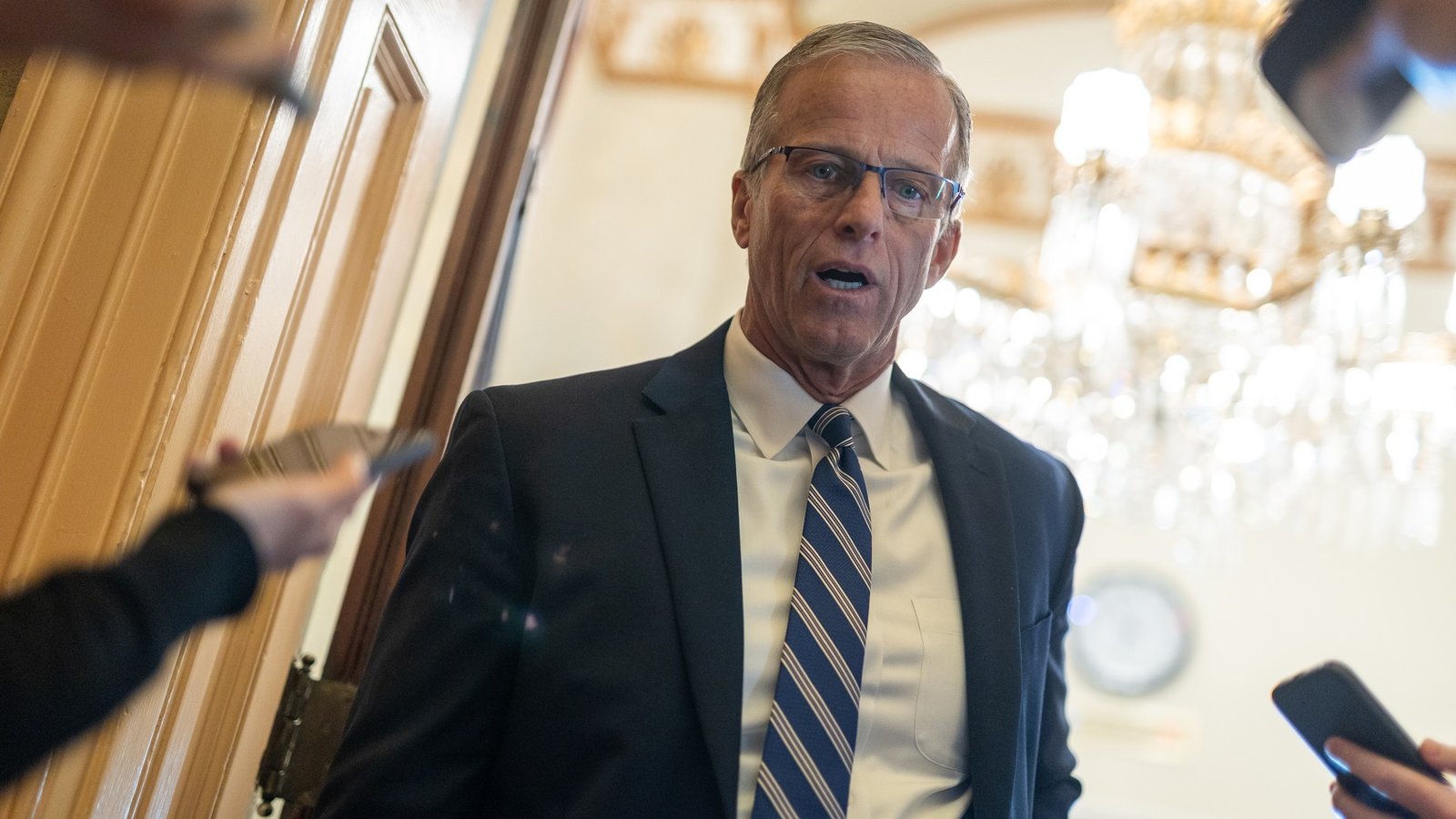
The U.S. Senate passed a $70 billion bill to fund President Donald Trump’s immigration enforcement efforts early Friday morning, after days of backlash over the president’s “anti-weaponization” fund threatened to derail the bill.
After nearly 18 hours of votes on amendments, senators approved the $70 billion package just before 5 a.m. Friday morning in a 52-to-47 vote.
The bill would give $38.5 billion to ICE and more than $26 billion to CBP. An additional $5 billion would be set aside for dispresal at Homeland Security Secretary Markwayne Mullin’s discretion.
Alaska Sen. Lisa Murkowski was the only Republican to vote no. She raised concerns about funding federal agencies for three years through the budget reconciliation process, circumventing the regular appropriations process.

The bill is now headed to House Speaker Mike Johnson, R-La., who has already said he plans to pass it next week.
‘Anti-weaponization’ fund a sticking point
Much of the overnight drama centered on President Donald Trump’s controversial $1.776 billion “anti-weaponization” fund, with both Democrats and some Republicans trying — and failing — to add language that would have permanently blocked it.
Trump had set a June 1 deadline to pass the bill, but the announcement of the fund derailed that effort and was met with widespread pushback. Earlier this week, Acting Attorney General Todd Blanche said he was scrapping the plan.
Republicans also cleared a major hurdle in voting down an amendment proposed by Sen. Bill Cassidy, R-La. It would have redirected payments from the settlement for Trump allies who claim they were politically persecuted to members of law enforcement injured during the Jan. 6, 2021, Capitol riot.

Other amendments voted down
Republicans also had to scrap language that would set aside $1 billion in Secret Service funding, part of which could go toward Trump’s controversial White House ballroom project.
Senators also rejected a proposal from Sen. Mark Warner, D-Va., that would stop housing official Bill Pulte from serving as acting director of national intelligence by prohibiting a Senate-confirmed leader of a federal agency or department from serving simultaneously in the DNI role, according to Politico.
They also fended off several attempts by Democrats and some Republicans to put guardrails on ICE and CBP, like requiring federal officers to clearly identify themselves and needing a warrant from a judge before they can enter people’s homes without consent.
Round out your reading
- Plea bargains keep America’s courts running. Guilt or innocence barely matters.
- Trump says the media isn’t covering one of his biggest accomplishments. We checked.
- Mike Lindell denied MyPillow was hacked. Its private data is now online.
- Red meat allergy rises with ticks as HHS targets Lyme disease, alpha-gal syndrome.
- We’re building a new Straight Arrow. Help us shape our future by taking our survey.