

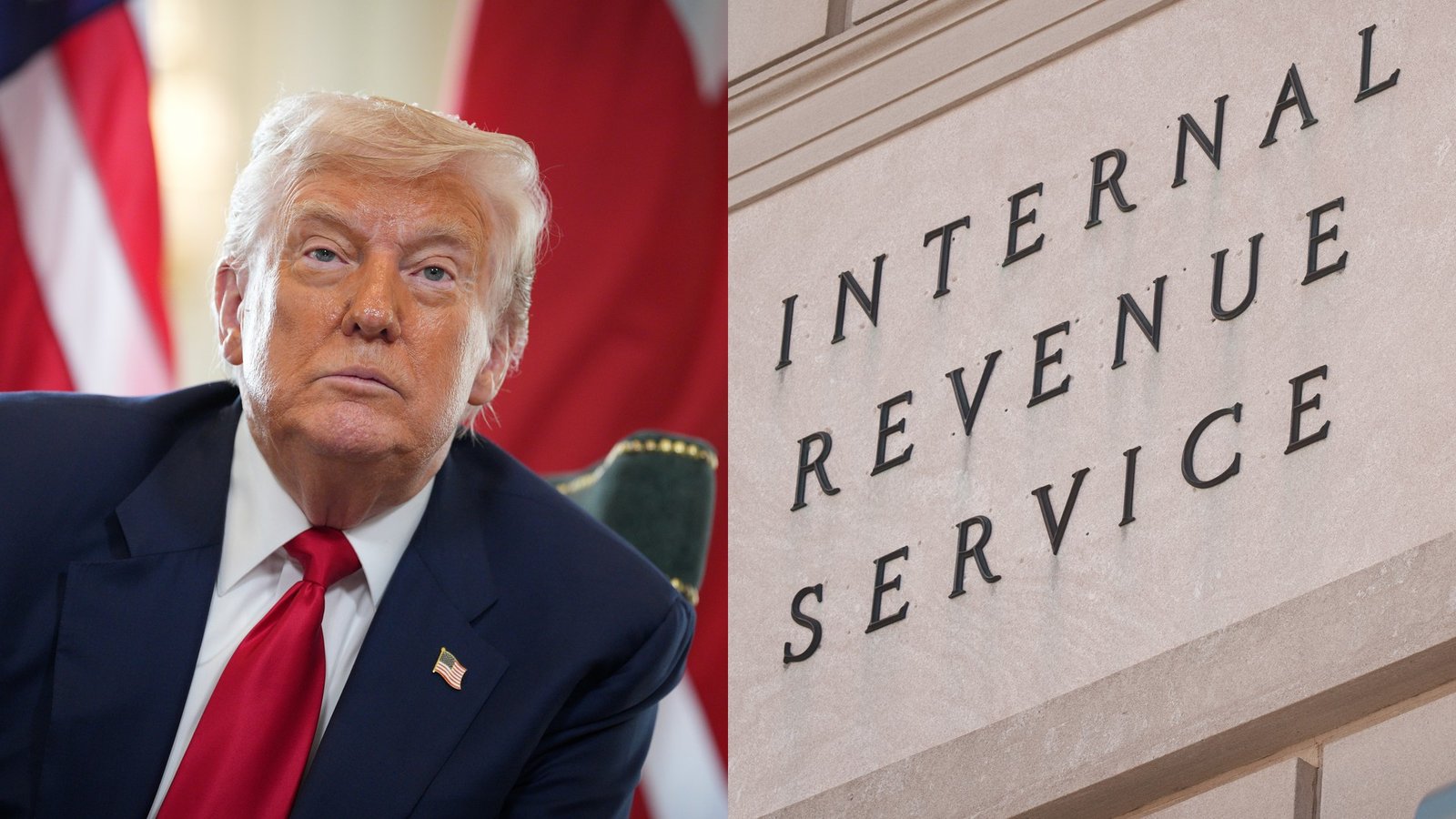
When President Donald Trump sued his own government, seeking billions from the Internal Revenue Service, retired federal judge John Jones III thought the case smelled of collusion.
“Because of the obvious: It’s the president against the executive agencies that he controls,” Jones, appointed 24 years ago to the U.S. District Court in the Middle District of Pennsylvania by President George W. Bush, told Straight Arrow.
Then he saw the settlement that Trump reached with his Justice Department. The IRS would be forbidden from forcing Trump, his family and his business to pay back taxes. And the government would create a $1.776 billion “anti-weaponization fund” that would compensate Trump’s supporters who claim they were persecuted under previous administrations — possibly including those who attacked the U.S. Capitol on Jan. 6, 2021.
“I just remember my initial reaction was incredulity,” Jones said. “Even as outrageous as some of the things that this administration has done, it was just striking to me.”
Soon, Jones joined nearly three dozen other former federal judges who urged the judge overseeing the case to reject the settlement. Their filing argued that the settlement was corrupt because both parties were ultimately controlled by the same person.
Their request helped lead U.S. District Judge Kathleen to reopen the president’s lawsuit — effectively wiping out the settlement between Trump and the Trump administration.
The administration had defended the settlement, including the anti-weaponization fund. The Justice Department initially denounced the reopening of the case, saying it would not “allow the policy preferences of judges to interfere with our efforts to provide restitution to victims of lawfare.”
But Jones and his fellow former judges see the outcome differently.
“My retired colleagues and I, in effect, I think saved a largely dormant Republican-led Senate and Congress from the peril that awaits them back in their district from people who clearly oppose this,” Jones, now the president of Dickinson College in Pennsylvania, said. “It’s obviously fallen dead in the court of public opinion.”
The former judges may not be finished.
‘An inside play’
Jones belongs to a bipartisan group of retired judges called the Article III Coalition. The group was founded, Jones told Straight Arrow, to push back against what the judges believe “is a very false narrative that elections cannot be fairly conducted in the United States.”
He said the judges — who filed an amicus, or “friend of the court” brief — were in a unique position to understand what happened in the IRS lawsuit and how the trial judge, Williams, was handed a fraudulent settlement.
“There was a preliminary indication that there was a fraud perpetrated on the court,” he said, “in that she was not advised of any of the settlement terms, and it appears at least at face value that they were deliberately withheld from her.”
A civil case should not be controlled by the same person on both sides.
“It’s collusive,” he said. “If she had thrown out the case, you can’t settle a case that’s been thrown out. … They settled the case, before she could.”
“The fraud in this case is potentially not advising the judge that in effect the suit was filed for an improper purpose,” Jones said. “It was just filed as a vehicle to facilitate what I would call an inside play, a settlement that had already been discussed, and one that involved no defense whatsoever.”
The timing was also remarkable. The Justice Department announced the settlement two days before Williams had ordered government lawyers to file briefs about the potential collusion.
He said the lawsuit’s merits were debatable in the first place.
Neither Trump nor his family could show damages caused by the leak of his tax documents by an IRS contract worker, Jones said. In addition, he said, the statute of limitations appeared to have expired.
But the settlement gave immunity to the president and his family.
“I don’t know of anything in the annals of jurisprudence … this brazen or endeavored by a sitting United States president,” Jones said. “This is clearly unprecedented.”
‘A lot of scrutiny’
On Monday, the Justice Department announced it would abide by another judge’s ruling that prevented it from going forward with the anti-weaponization fund.
Jones isn’t sure that was the end of the effort to compensate Trump’s supporters.
“My best guess is that they will try and find a way to find recompense for people like the Jan. 6 protesters and other folks,” he said. “But I don’t know if they’ll do it in such a public way. I think they’d like to open the door to those claims. Unfortunately for them, I think there will be a lot of scrutiny.”
Among those watching will be retired federal judges like Jones.
“More than ever before, over the last year and half, we’re seeing what used to be siloed, isolated retired federal judges now communicating with each other,” he said. “You’ll probably see more amicus filings like this.”
Round out your reading
- Plea bargains keep America’s courts running. Guilt or innocence barely matters.
- Trump says the media isn’t covering one of his biggest accomplishments. We checked.
- Mike Lindell denied MyPillow was hacked. Its private data is now online.
- Red meat allergy rises with ticks as HHS targets Lyme disease, alpha-gal syndrome.
- We’re building a new Straight Arrow. Help us shape our future by taking our survey.