

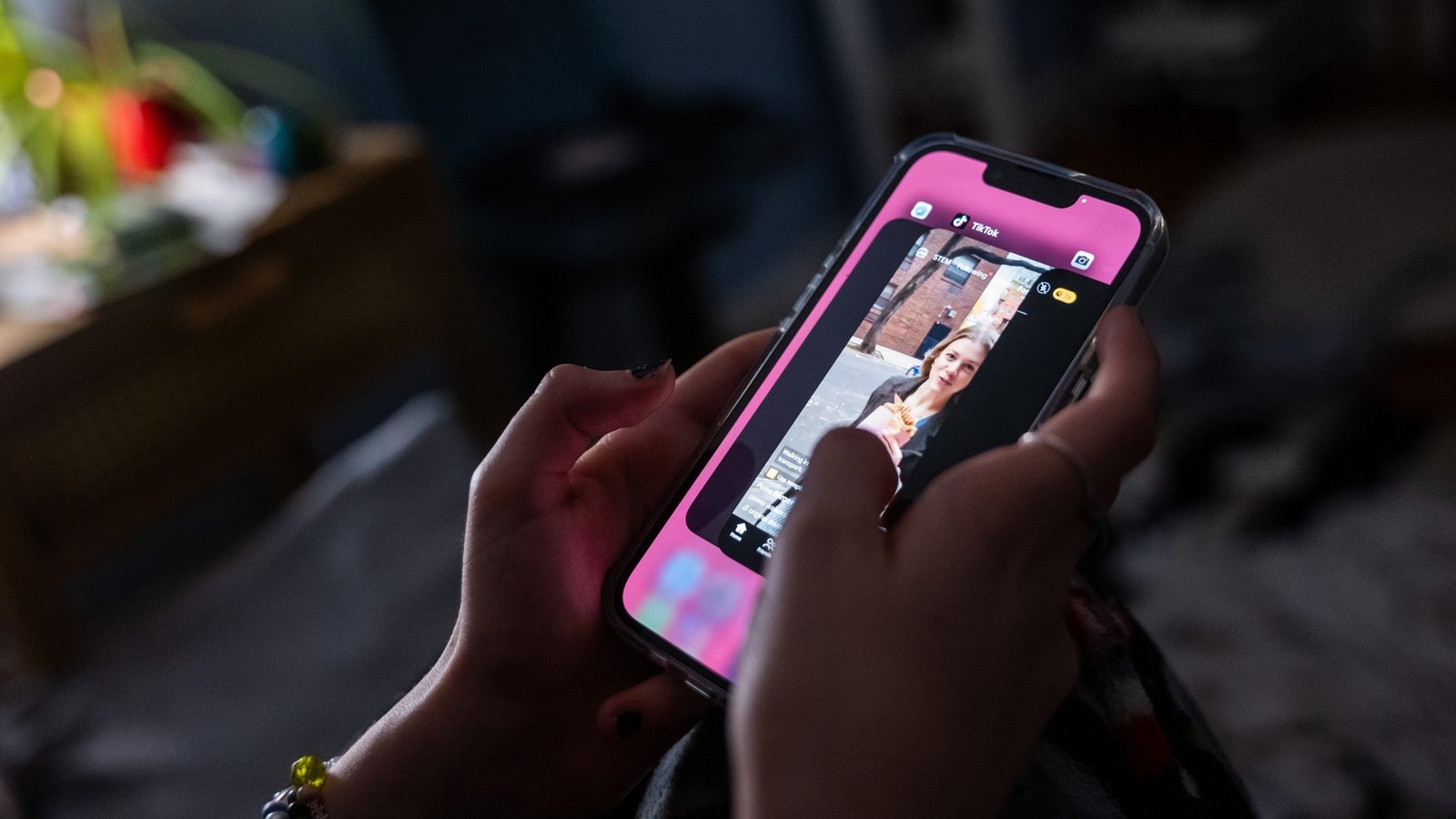
Social media influencers have garnered thousands of views on posts on how to defraud the federal government. As it turns out, the federal government was paying attention.
U.S. Sen. Joni Ernst, R-Iowa, said the trend is becoming a problem and coined the users as “fraud-fluencers.” Some of those behind the social media posts have already seen jail time for it.
The senator released a hodgepodge of posts and accounts to Straight Arrow that she claimed are actively trying to scam the government. She said they’re costing taxpayers money — something that’s caught the attention of the U.S. Government Accountability Office. Ernst chairs the Senate Department of Government Efficiency caucus.
“These crafty creators are putting the “con” in “content” by streaming their scheming,” Ernst wrote on X on June 5. “Copycats be warned, this trend is about to end … in the federal pen.”
@theyknokoya Bc one thing fasho I love what I get just for myself
foooood tooo high. #fyp #viral #fyppp

She claimed the fraudulent activity wasn’t targeted at one single agency, but rather that it was widespread, targeting the U.S. Small Business Administration, the IRS, unemployment insurance and public benefits.
The U.S. Government Accountability Office didn’t immediately respond to Straight Arrow’s request for comment.
It’s not immediately known what the scope of GAO’s investigation is or if it’ll issue legal actions. The agency said on Jan. 14 that the federal government loses “hundreds of billions of dollars annually” to fraud.
“Scammers I’ve deemed ‘fraud-fluencers’ are putting the ‘con’ in online content and flooding their followers’ feeds with step-by-step guides on how to exploit government programs and steal your hard-earned taxpayer dollars,” Ernst said in a statement to Straight Arrow.
Which accounts have gotten federal attention?
Ernst’s office shared with Straight Arrow a list of accounts and their videos the senator has uncovered, calling them fraud-fluencers. Ernst posted those accounts on X.
One account was Leonel Moreno on Instagram. There, he told viewers in Spanish how to claim squatters’ rights in unoccupied homes in Ohio. He was not arrested for fraud, but for failing to report to a U.S. Immigration and Customs Enforcement office for his alternatives to detention program, according to The Columbus Dispatch in 2024. His family arrived in the U.S. in 2022.
One couple amassed 2.45 million subscribers on YouTube, and admitted in a February 2020 video that they got arrested for stealing thousands of dollars of Social Security Administration funds from more than 1,400 people without their knowledge, the Justice Department said in 2019. The couple behind the Behold Eva and Her Minions channel, Billy Altidor and Evanie Louis, served their prison sentences for pleading guilty to identity theft and theft of government funds, according to the DOJ. They both pleaded guilty in 2019.
Just last year, Koya Unek posted a TikTok video where she encouraged her followers to lie on food assistance applications to receive more funds. A month later, she revealed to her followers that she was under investigation for fraud and ordered to repay $35,000 in stolen funds. She said in a later video that she was briefly jailed for it.
“If these fraud-fluencers want to be famous, I’m happy to make their wish come true by sharing their posts with the investigators at GAO,” Ernst said. “We’ve got to ratio the folks running these rackets and make their next profile pic a mugshot.”
Widescale fraud in pandemic assistance
The Small Business Administration has come under fire since former President Joe Biden’s administration due to the high rate of fraud tied to its two pandemic assistance loans meant to help businesses struggling with the economic effects of the COVID-19 pandemic.
The loans came from the Paycheck Protection Program and the Economic Injury Disaster Loan, both of which have since closed for applications.
The Associated Press said in a 2023 report that wrongdoers were able to exploit the SBA’s lax self-certification parameters to prove the loan applications were true. The publication added that a since-closed provision in the CARES Act prevented the SBA from inspecting tax return transcripts, which could have helped weed out fraud.

Biden signed legislation in August 2022 to extend the statute of limitations on the SBA’s programs from 5 years to 10.
It wasn’t the only agency fighting pandemic-related fraud as the Departments of Labor, Housing and Urban Development, Health and Human Services, Agriculture, Treasury and Education dealt with scams relating to their assistance programs.
The House Oversight Committee said on June 11 that the House passed a package of bills designed to prevent, detect, protect and prosecute fraud in government programs.
“For decades, fraud has run rampant in bloated government programs,” U.S. Rep. Andy Biggs, R-Ariz., said in the release. “American taxpayers work extremely hard for their money, and they deserve to know that government agencies are committed to wisely stewarding their dollars — not allowing the funds to be stolen by fraudulent entities, especially in times of emergency or crisis.”
Round out your reading
- Could a common dietary supplement accelerate Alzheimer’s?
- NY AG Letitia James gets hundreds of taunts, racial slurs in ICE public reporting portal.
- As Musk becomes the first trillionaire, historian sees warning signs.
- An experimental weight loss drug is so effective, many Americans don’t care it’s not FDA approved.
- How search engine optimization reduced Simone Biles to an ‘NFL wife’.