

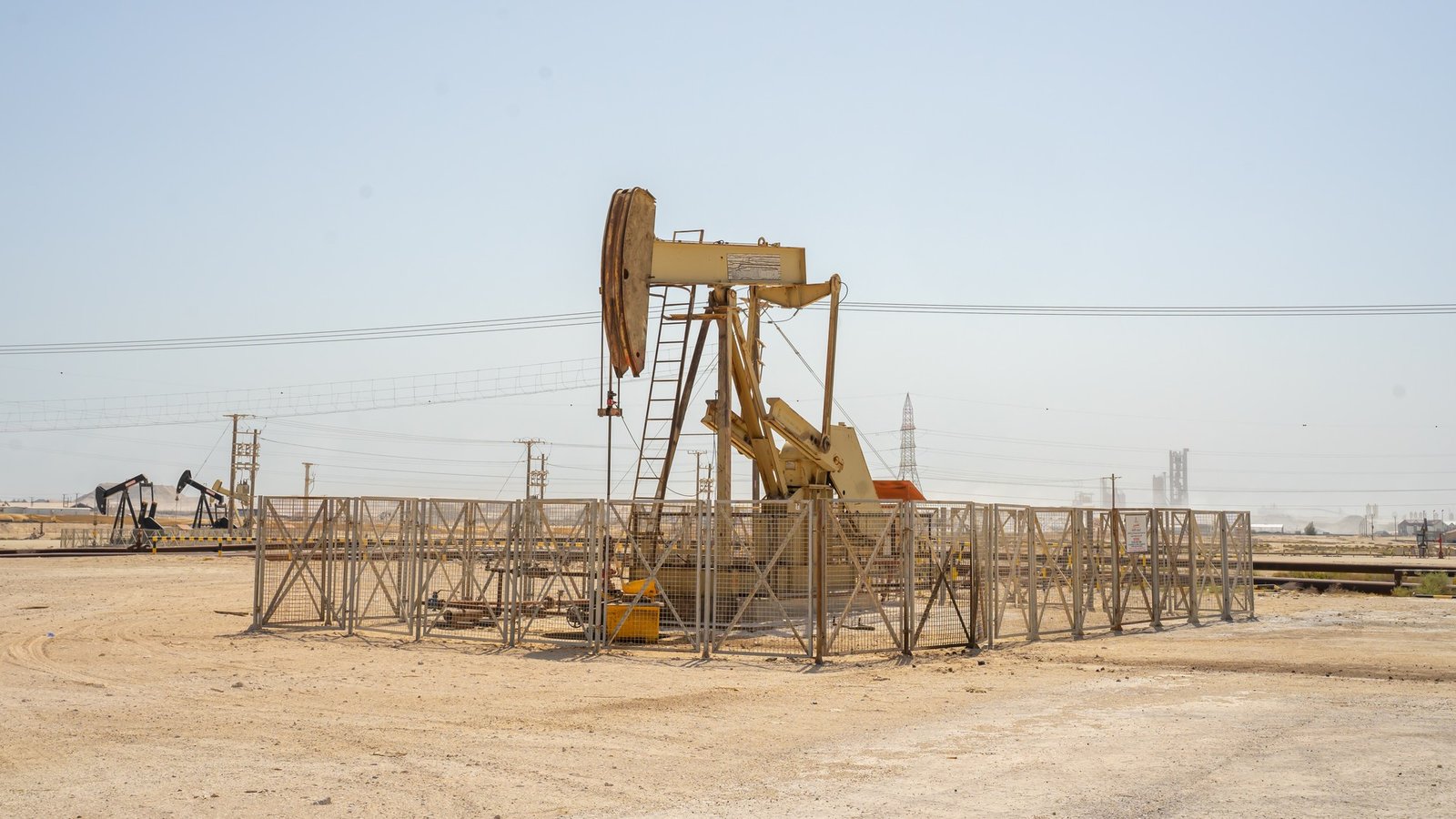
The United Arab Emirates’ exit from the oil pricing cartel OPEC becomes official on Friday. The move, announced on Tuesday, is the culmination of years of tension, and it comes as the war in Iran enters its third month, leaving the future of oil in a deeply uncertain place.
The now 11-member OPEC bloc has historically exerted control on the global economy by either expanding or holding back oil production. Its members include Saudi Arabia, Iran, other Gulf states, Venezuela and several African countries. The UAE’s decision to leave after nearly 60 years of membership reflects frustration with production quotas and a calculated wager that the window for maximizing oil revenues is closing fast.
Why now?
For years, the UAE’s relationship with Saudi Arabia, OPEC’s dominant force, has been increasingly strained. The two countries have backed opposing forces in Yemen, and they compete economically for tourism and regional investment between Riyadh and Abu Dhabi.
The UAE’s departure from OPEC was “discussed behind closed doors for several years,” according to an article by William Weschler, senior director of Middle East programs at the Atlantic Council.
The Iran war turned an inevitable decision into an urgent one.
“The war suddenly made job one for the UAE: ‘Take the money and run,'” Steve Hanke, a professor of applied economics at Johns Hopkins University who served on the UAE’s Financial Advisory Council, told Fortune.
The UAE has invested billions of dollars to grow its production capacity from 3 million barrels a day to a target of 5 million by 2027. But under OPEC’s quota system, it was allowed to produce no more than 3.2 million barrels per day. Although not all forecasts agree, many projections of global oil demand have shown a plateau in the 2030s, which gives the UAE motivation to maximize its oil profits sooner rather than later.
During the war, Iran has repeatedly attacked the UAE, while simultaneously choking off the Strait of Hormuz, through which most of the Emirates’ oil exports flow. When the strait eventually reopens, the UAE — freed from OPEC’s production ceiling — will be positioned to rapidly ramp up exports.
What does a smaller OPEC mean?
The UAE was second only to Saudi Arabia in terms of spare production capacity — the idle output that can be brought online quickly to respond to supply shocks and stabilize prices. Its departure “removes one of the core pillars underpinning OPEC’s ability to manage the market,” leaving the cartel “structurally weaker,” Jorge León, head of geopolitical analysis at Rystad Energy, told CNBC.
The exit is exposing fractures that go beyond one country’s frustrations. Iraq and Kazakhstan have historically exceeded their quotas, while Iran, Libya and Venezuela have been exempt from them entirely — fueling resentment among members that have played by the rules. Some experts see the UAE’s exit as an event that could trigger a larger fracture in OPEC and possibly more departures.
Other non-OPEC regions are also in ascendance. The U.S. is a top oil producer, and it’s now exercising control over Venezuela. And from Guyana to Greenland, the oil industry’s footprint is growing, as companies look for new supply outside the Gulf states, further diminishing OPEC’s influence.
“World markets both in oil and economies are teetering right now because of the unpredictability of the Strait of Hormuz,” said Robert Price, CEO of Greenland Energy Company, a Texas-based company with rights to drill 70% of a major oil basin in Greenland. The company plans to drill its first wells in October.
“We might be a solution not only to U.S. energy security but also European energy security,” Price told Straight Arrow.
Round out your reading
- Scientists unearth new evidence on how the Grand Canyon was shaped.
- Why the Army is adding a second fitness test for combat.
- Illegal midwives, growing demand: The fight over home birth in America.
- 40 years after Chernobyl, the U.S. pushes nuclear power once again.
- We’re building a new Straight Arrow. Help us shape our future by taking our survey.