

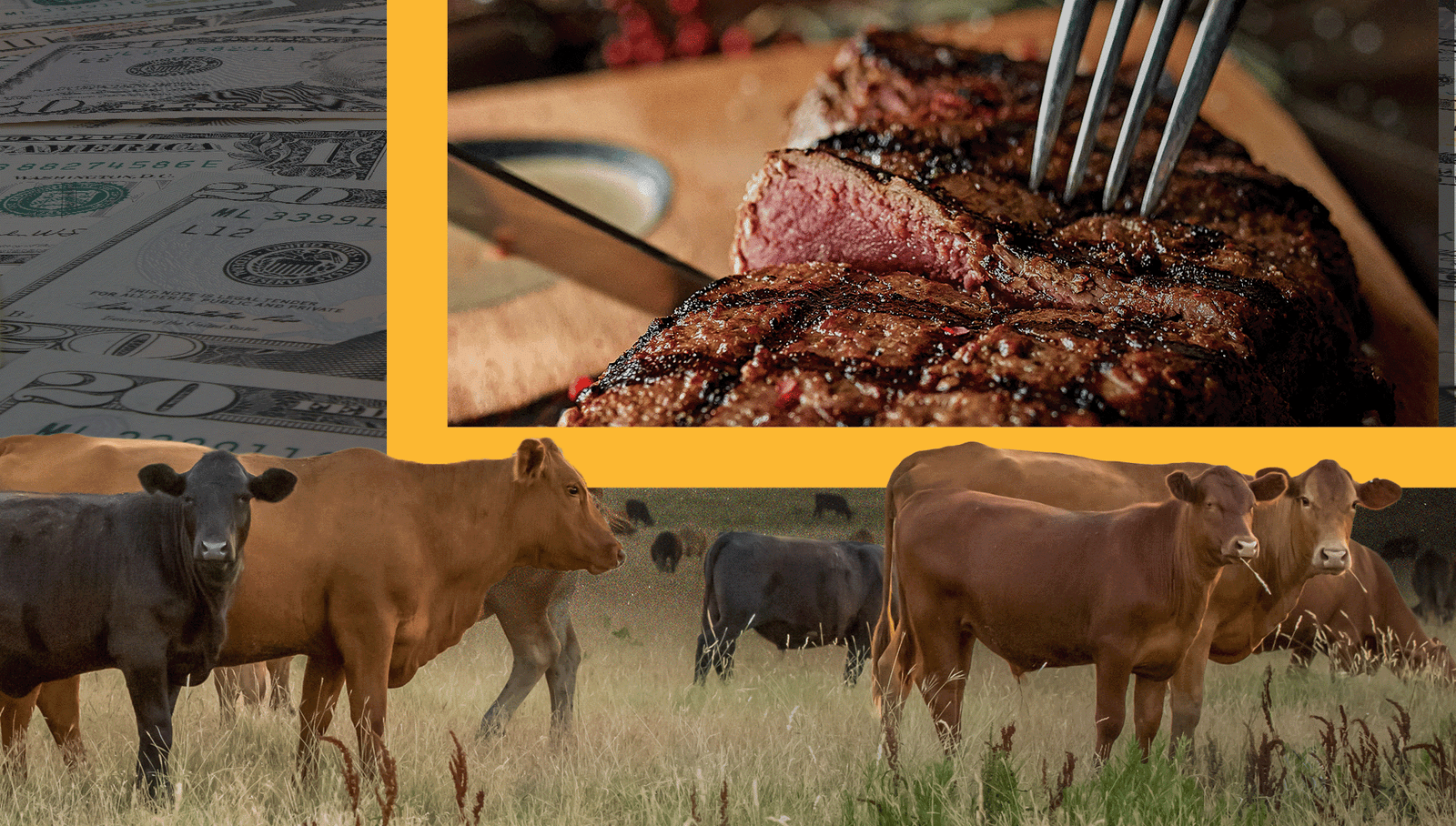
Food inflation is finally easing — but not in the meat aisle. Beef prices surged 15% over the past year and are poised to keep climbing, according to the U.S. Department of Agriculture.
Rising prices haven’t curbed Americans’ appetite for steaks and burgers, at least not yet. But shoppers want to know who, or what, is really driving the spike.

Why is beef in short supply?
The U.S. cattle herd is shrinking, with inventory now at its lowest level in roughly 70 years, according to the USDA.
American ranchers have faced punishing conditions in recent years: persistent drought, cattle diseases and soaring operating costs for everything from fertilizer and feed to land. As a result, many have liquidated or downsized their herds.
“This is a hard business in the best of times,” said Ethan Lane, a lobbyist for the National Cattlemen’s Beef Association. “Producers can do everything right, but still get derailed by outside forces.”
Even if prices stay high, rebuilding the herd will take time. Raising cattle is a complex, multi-year effort, not a switch producers can flip. Analysts estimate it could take a decade to reverse this shortage.

Are meat processors driving up beef prices?
Cattle supply is only part of the story. What happens after the animals leave the ranch also affects pricing.
Currently, the “Big Four”’ meat packers — Tyson Foods, Cargill, JBS and National Beef Packing Company — control 85% of the U.S. beef processing market, up from just 36% in 1980, according to federal data.
That level of consolidation has drawn scrutiny.
“I have asked the DOJ to immediately begin an investigation into the Meat Packing Companies who are driving up the price of Beef…” President Donald Trump posted on Truth Social in November, accusing these companies of price fixing and manipulation.
A spokesperson for Cargill told Straight Arrow News that meatpackers don’t set beef prices. Tyson Foods, JBS and National Beef did not respond to SAN’s requests for comment.
Industry groups claim the beef processing business is heavily regulated and transparent and point out that processors have also suffered major losses from the cattle shortage.
Beef facilities are costly to operate, said Sarah Little, a spokesperson for the Meat Institute, which represents meat processors. For example, “it is expensive to chill a room the size of a Home Depot, regardless of how much is produced.”
Shortages are hitting packers of all sizes. “There aren’t enough cattle for the hooks that are available, so you’ve got processors around the country running at 50 or 60% capacity,” said Lane.
Last month, Tyson Foods permanently closed a major beef plant in Lexington, Nebraska that employed about 3,200 workers.
Meanwhile, ranchers are collecting record prices for their cattle. Leverage has shifted from processor to producer, a reversal from years past “when the packers were making pretty large margins, and our producers were getting absolutely hosed,” Lane said.

Why is market consolidation a concern?
Critics argue that concentration in processing can raise prices and leave consumers exposed when disruptions hit.
“Too much consolidation creates a fragile food system,” said Sara Andrews, co-founder of The Grange, a company working to decentralize beef processing. “We learned during COVID that when processing is limited to a few, large facilities that we end up with empty supermarket shelves.”
Andrews advocates for a more distributed processing system in which cattle can be packed and sold closer to where it’s raised.
Across the country, “a consumer might live across from a pasture with cattle, but when they walk into the grocery store, the beef might be from Brazil or Argentina or New Zealand or Kansas,” Andrews said.
Even in Montana, where cows outnumber people, the vast majority of beef consumed in the state is grown or processed outside it.
The market power of the Big Four has led to predatory pricing that can shut out smaller players, said Mihail Kennedy, a Montana rancher and meat processor.

Beef is still king of the plate
Despite higher prices and supply chain disruptions, demand has held up.
“As the price of meat has risen, consumers’ willingness to pay has also risen,” said Little.
Americans appear to be consuming more meat than ever. Self-declared meat eaters rose from 78% in 2020 to 85% in 2025, according to the Kansas State Meat Demand Monitor. Self-declared vegetarians and vegans fell from 14% to 7% over the same period.
This trend could be bolstered by new federal Dietary Guidelines that encourage Americans to eat more lean proteins and whole, nutrient-dense foods like beef. (Several experts involved in drafting these guidelines disclosed financial ties to the beef industry.)
Beef may not be as American as apple pie, but ranching and cattle production still hold a deep connection to the American story.
“It’s a deeply held part of our national culture,” Lane said. “Beef is the king of the dinner plate. Nothing satiates like a good steak or good burger.”
Consumers appear to agree, even when they have to pay more for it.