

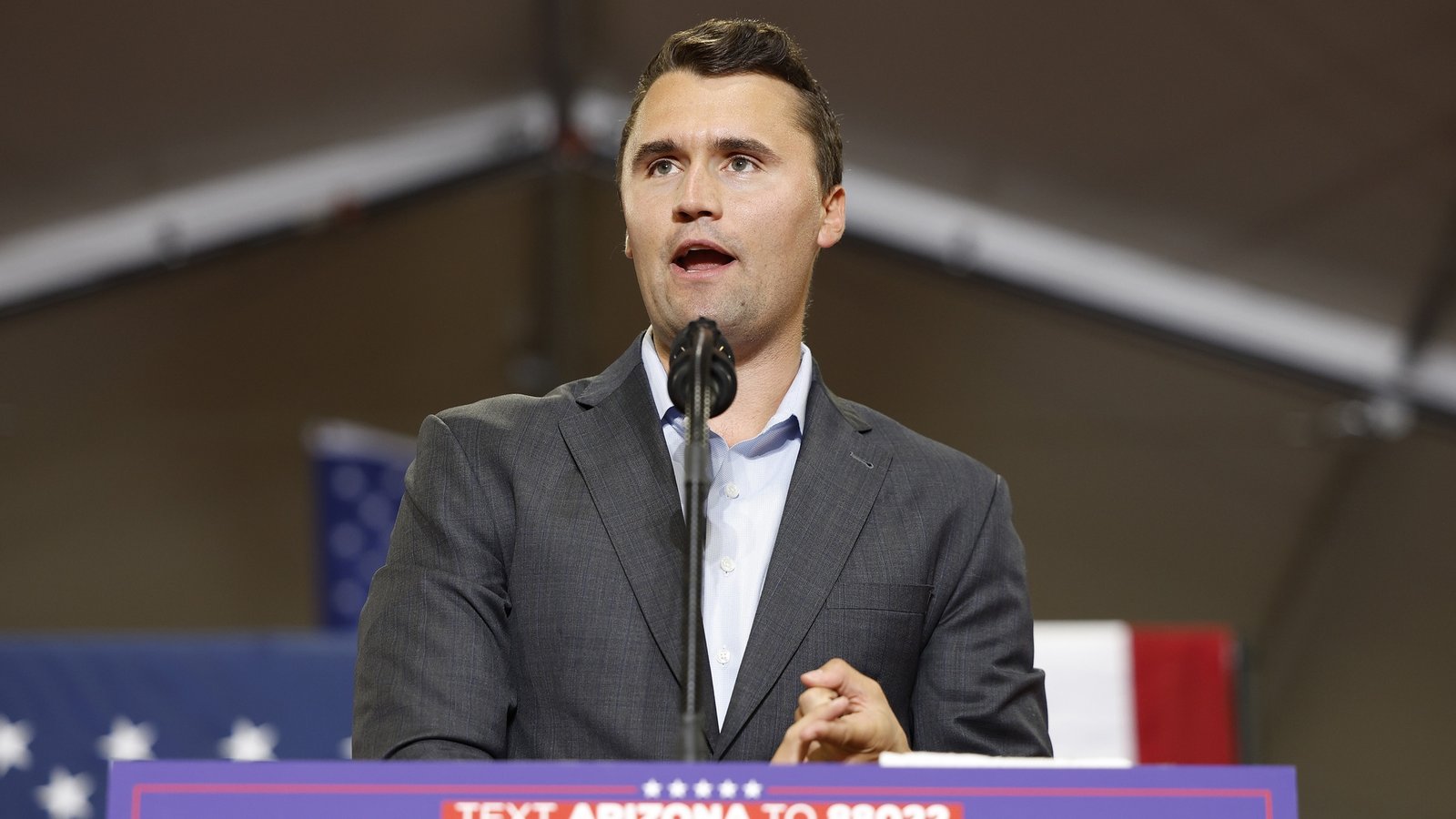
Efforts to memorialize the late conservative activist Charlie Kirk are proving that party lines don’t disappear, even in death. Republican lawmakers across multiple states have introduced legislation honoring Kirk, and while some bills have passed, others are hitting political roadblocks.
Kirk was the founder of Turning Point USA, a nonprofit advocating for conservative politics on high school and college campuses. He was shot and killed during an event at Utah Valley University on Sept. 10, 2025.
Since his death, legislators have filed legislation looking to memorialize Kirk in states such as Arizona, Minnesota and Oklahoma. Some seek to establish monuments or public spaces honoring Kirk, while others take a more activist approach.
Georgia’s latest legislation
Just this week, the Georgia General Assembly approved a bill that would make it illegal for public schools to deny access to school grounds and facilities for student meetings based on political content or ideology.
It would still allow the school to restrict meetings that could disrupt education or infringe on other students’ rights. It would essentially ensure groups aren’t being banned from meeting solely on the basis of their ideology.
The bill is titled “True Patriotism and Universal Student Access Act” — giving it the same acronym as Kirk’s Turning Point USA (TPUSA).
The bill is awaiting the signature of Georgia Gov. Brian Kemp, a Republican.
Democrats who objected to the bill said they support student free speech. However, they opposed Kirk’s criticism of the LGBTQ community, immigrants, and the Black population, public radio station WABE reported.
Other bills honoring Kirk
In some states, however, bills venerating Kirk have hit roadblocks.
In Arizona, Democratic Gov. Katie Hobbs vetoed a bill that would have renamed State Route 202 in Phoenix after Kirk. Hobbs released a statement denouncing Kirk’s killing and saying she would continue working to bring people together. But she said the bill “falls short of that standard by inserting politics into a function of government that should remain nonpartisan.”
Arizona lawmakers criticized Hobbs’ veto. State Senate President Warren Petersen, a Republican, saying the governor broke “a long-standing Arizona tradition of recognizing impact over politics.”
In Oklahoma, state Sen. Shane Jett introduced two pieces of legislation. One would declare Kirk’s birthday, Oct. 14, as “Charlie Kirk Free Speech Day.” The other would require public colleges and universities in the state to establish a “dedicated square or plaza” in Kirk’s memory.
Lawmakers introduced similar legislation in Tennessee. But a proposal to require public universities to establish memorial plazas honoring Kirk stalled last month when legislators expressed concerns about the $18 million price tag.
Minnesota lawmakers are looking to appropriate funds for a statue commemorating Kirk’s life. The bill would allocate $25,000 to the Board of Regents at the University of Minnesota, where the statue would be placed.
That legislation, however, received some hesitation from a university regent, who said erecting a statue of Kirk could be seen as “disrespectful.” The regent cited Kirk’s disdain for higher education when making the comments.
Kirk memorials on a federal level
Despite a lack of movement for some state proposals, Kirk has been widely memorialized on a federal level. President Donald Trump posthumously awarded Kirk the Presidential Medal of Freedom on what would have been his 32nd birthday.
The president declared Oct. 14, 2025, the National Day of Remembrance for Charlie Kirk. He also honored Kirk during his State of the Union address, which Kirk’s wife attended.