

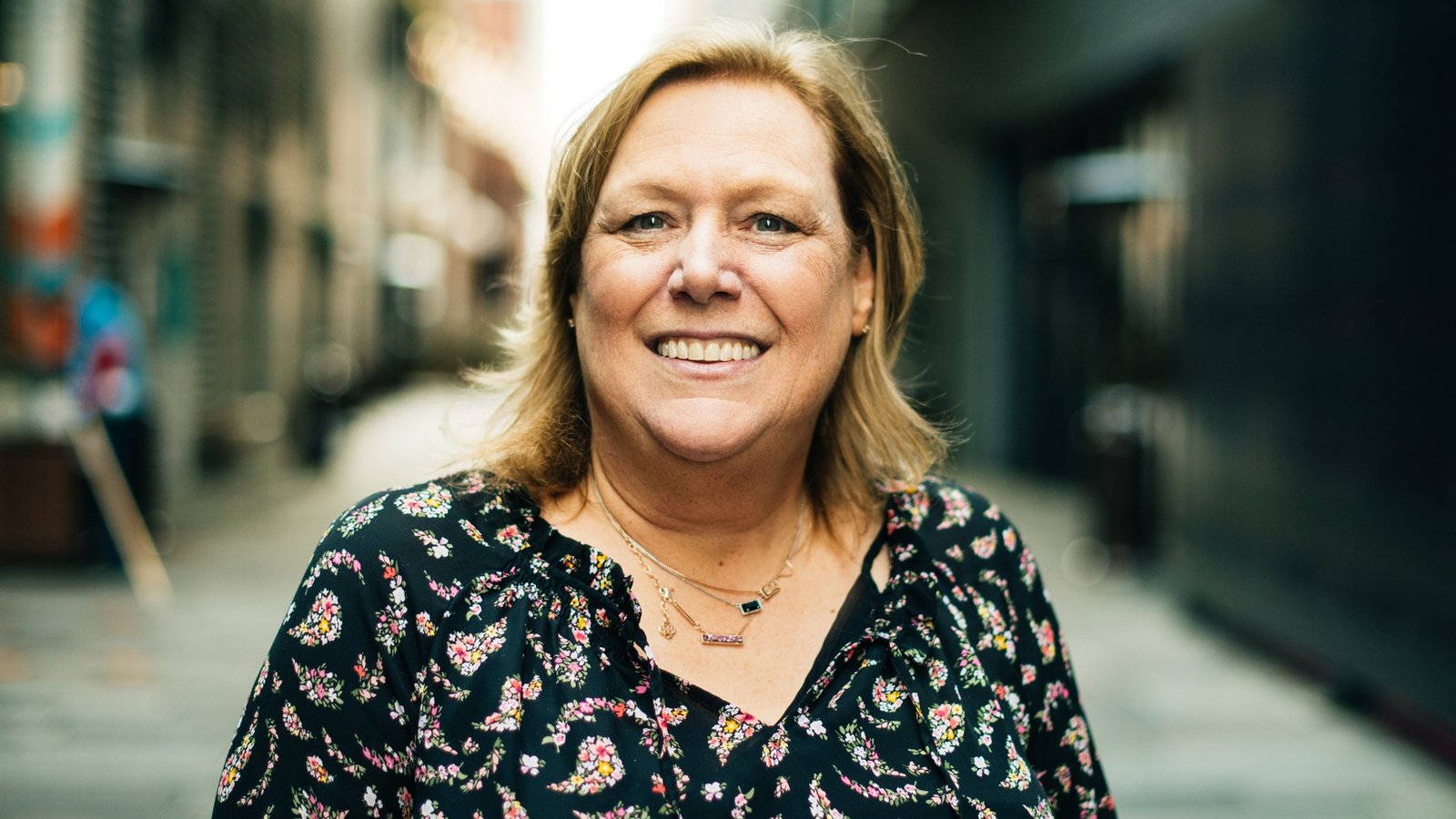
Pam Capecci woke in the middle of the night unable to speak. She went downstairs, and neither she nor her sister realized at first that she was having a stroke. At the hospital, doctors quickly confirmed the diagnosis and told her the stroke had damaged the part of her brain that controls speech, resulting in aphasia.
Aphasia is a language disorder that can affect speaking, reading, writing and understanding language, often after a stroke. According to the National Aphasia Association, about 38% of people who have a stroke experience aphasia at the time of the stroke, and roughly 2 million people in the United States are living with the condition. June is recognized as Aphasia Awareness Month.
Capecci, who lives in the Chicago area, said she was determined not to let the stroke define her. At the time, she worked in a communication-heavy leadership role and needed to return to Zoom calls, meetings and professional writing. She went back part-time after four months and resumed full-time work at six months.
“I did not want my stroke to define me,” Capecci said. “You can communicate, but you communicate differently.”
She described aphasia as a constant translation process: knowing what she wants to say but having to work to get the words out. Everyday tasks such as filling out forms or writing emails can take extra concentration, and fatigue can make communication more difficult. Even so, she said the improvement has been dramatic. In the days immediately after her stroke, she said, she could not produce even a single word.
Michelle Armour, founder of the Northwestern Medicine Aphasia Center at Marianjoy, said recovery varies widely depending on the severity and location of a stroke. Capecci’s progress shows what can happen when therapy is closely tied to real-life goals. When Capecci joined the program, Armour said, one of her main priorities was getting back to work, so sessions focused on practical communication tasks such as professional emails and job-related conversations.
“Everyone recovers in a different fashion,” Armour said. “Some people have amazing recoveries, like Pam has had, and some people are left with more challenges communicating.”


The center offers small-group sessions led by speech-language pathologists, along with individual services and an intensive comprehensive aphasia program. For Capecci, the group sessions became essential. She said the weekly meetings gave her a place to practice conversation with people who understood the condition firsthand and supported milestones such as her return to work. She now plans vacations around the schedule because she does not want to miss group.
Armour said that ongoing support matters because aphasia often does not fully disappear, even as people continue to improve. Research over the years has shown that people with aphasia can keep making gains long after the initial stroke if they continue practicing language in functional, social settings, she said.
Both women said awareness remains a major challenge. Aphasia is more common than many people realize, yet many Americans still do not recognize the term or know how to communicate with someone who has it. Capecci said that is why she volunteered to share her story publicly.
“I want to do everything in my power to get the word out,” Capecci said.
Round out your reading
- Tennessee officials will pay $835,000 for jailing man over Charlie Kirk meme.
- Why the immune system turns on women more often than men.
- More than 340 newspapers block the Wayback Machine. What that means for the future of the internet.
- Why Rep. Cohen filed articles of impeachment against Supreme Court Justice John Roberts.
- We’re building a new Straight Arrow. Help us shape our future by taking our survey.