

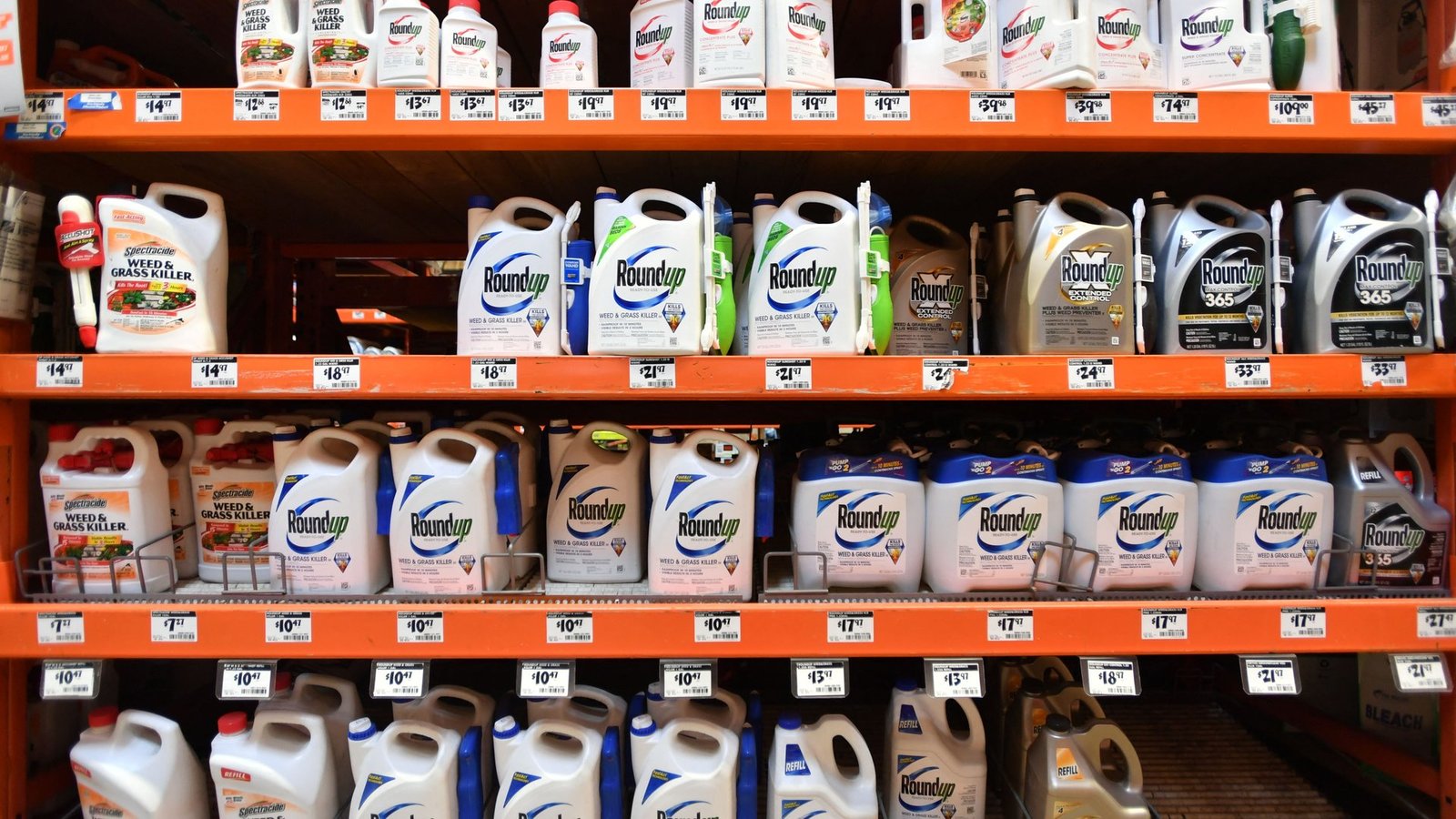
The politics of pesticides and the Make America Healthy Again movement collide Monday as the Supreme Court hears arguments in a case surrounding Roundup pesticide products.
The nation’s top court is set to rule in June on whether or not Americans can bring lawsuits against Bayer — the maker of Roundup, the brand name for glyphosate — for causing cancer.
How the case got to the Supreme Court
The Supreme Court case and Monday’s arguments stem from a 2018 landmark lawsuit involving a San Francisco school groundskeeper who was diagnosed with terminal non-Hodgkin lymphoma after using Roundup for years.
He said he once was drenched in the pesticide when his sprayer broke. After that, he began seeing lesions and rashes all over his body and was diagnosed with cancer. He sued the company, saying it caused his illness, and settled for $289 million in 2018.
After numerous appeals, the settlement was lowered to $20.4 million, but kickstarted what would become a series of lawsuits against Bayer.
Now, the company is trying to block similar lawsuits. It maintains that Roundup is safe, citing the Environmental Protection Agency’s conclusion from 2020 that glyphosate is “not likely to be carcinogenic to humans.”
“It is time for the U.S. legal system to establish that companies should not be punished under state laws for complying with federal warning label requirements,” Bayer CEO Bill Anderson said earlier this year.
Glyphosate and the MAHA movement
It’s a landmark case that many health influencers, and even politicians, have been fighting for. Glyphosate is a long-used pesticide, but people in the MAHA movement have argued the product should be banned.
In 2015, the International Agency for Research on Cancer (IARC) classified glyphosate as “probably carcinogenic to humans.” The classification means there’s limited evidence of cancer in humans, but sufficient evidence in animals.
However, the EPA concluded that the chemical is “not likely to be carcinogenic to humans,” raising further questions about how risky it is to humans.
Kennedy, who created the MAHA movement, previously labeled the chemical “one of the likely culprits in America’s chronic disease epidemic.”
Since then, the chemical has become highly political, sparking tension between traditional conservatives and the MAHA voters.
It’s even an issue with bipartisan efforts. Rep. Thomas Massie, R-Ky., and Sen. Cory Booker, D-N.J., were both expected to speak at a rally Monday ahead of Supreme Court arguments.
A change in narrative
Political tensions over the chemical escalated further earlier this year when President Donald Trump signed an executive order prioritizing U.S. production of the chemical.
The order declares the chemical is essential to the nation’s farmers and our military. It also requires U.S. Agriculture Secretary Brook Rollins to ensure that no orders, rules or regulations put domestic producers at risk.
In a reversal from his previous position on the chemical, Kennedy backed the order, saying that it“puts America first where it matters most — our defense readiness and our food supply.”
As Straight Arrow previously reported, the order drew fierce criticism from the MAHA movement.
Zen Honeycutt, the founder of Moms Across America, a central organization to the MAHA movement, called Trump’s order “an egregious offense to what he promised” and “a betrayal.”
The Trump administration has since backed Bayer in the Supreme Court case.
Now, MAHA activists say the battle over glyphosate will linger into the midterm elections. Vani Hari, a food and wellness influencer, told CNN, “Glyphosate is going to be a midterm issue because the Trump administration made it an issue.”
Round out your reading
- Scientists unearth new evidence on how the Grand Canyon was shaped.
- Why the Army is adding a second fitness test for combat.
- Illegal midwives, growing demand: The fight over home birth in America.
- 40 years after Chernobyl, the U.S. pushes nuclear power once again.
- We’re building a new Straight Arrow. Help us shape our future by taking our survey.