

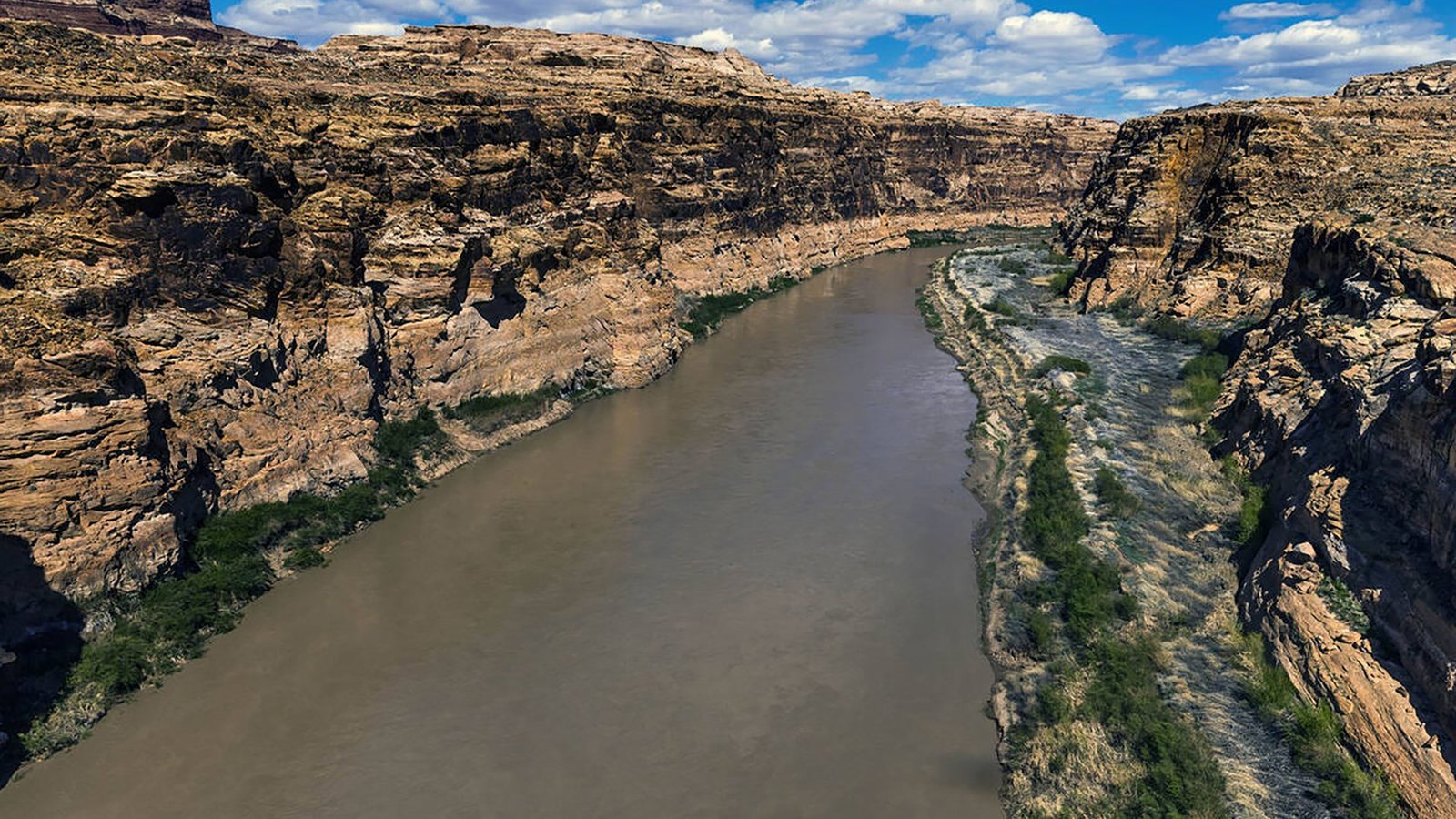
The Colorado River has existed for millions of years, but in the year 2026, there’s a brewing battle over control of that river. It’s a battle that crosses political lines and has pitted groups of states against each other.
The agreements that delegate the usage of the water in that river expire in 2026, which means new deals need to be reached. However, those negotiations, which involve seven different states, have not gone well.
“Until we have seven states agreeing, there’s no certainty about how the river will be managed,” Jennifer Pitt, Colorado River Program Director for the National Audubon Society, told Straight Arrow.
Negotiations
Those seven states are broken into two groups: The upper basin and the lower basin.
The upper basin includes Colorado, New Mexico, Utah and Wyoming. The lower basin includes Arizona, California and Nevada.

Straight Arrow also spoke with Tom Buschatzke, the Director of the Arizona Department of Water Resources, who put the state of these negotiations bluntly.
“As to a seven-state agreement for the near term, there’s not going to be one,” he said.
The major issue that’s keeping the divide is water usage, which is a product of a decades-long drought.
Since 2000, the Colorado River Basin has experienced a historic, prolonged drought that’s strained the river’s resources and those of nearby Lakes Powell and Mead.
That means these states need to better regulate their water use, especially with tens of millions of people relying on the river.
“Forty million people in the U.S. and Mexico rely, in whole or in part, on this river for businesses, for residential homes, for irrigation, for industrial use, and it’s critically important that we have a viable system,” Anne Castle, senior fellow at the Getches-Wilkinson Center at the University of Colorado School of Law, told Straight Arrow.
The upper basin states and the lower basin states can’t agree on water usage.
Lower basin states wanted the upper basin to reduce water use because of the limited resources.
Those upper basin states maintain they’ve already taken less water than they’re entitled to and that the lower basin has taken more.
“There’s been a negotiation amongst the seven states ongoing now for quite a few years that is at a stalemate,” Pitt said.
Lower basin proposal
With negotiations between the upper and lower basins clearly at a standstill, there are a few options to move forward.
Earlier this month, the lower-basin states sent their own proposal to the federal government on what they want to see happen.
If adopted, it would run through 2028. However, that’s up to the federal government, meaning the Department of the Interior and the Bureau of Reclamation.
“They’re considering that for adoption,” Buschatzke said.
That proposal would cut water usage in the lower basin states.

“It’s not enough to meet the gap that we’re currently experiencing, and so there will be more discussion about that in the future,” Castle said.
While negotiations are at a standstill, the two sides do not seem hostile.
The executive director of the Upper Colorado River Commission wrote that the proposal is a necessary step towards a solution, but is concerned about long-term efficacy.
“I’m trying to be fair to the Upper Basin,” Buschatzke said. “Their view is we should just focus on Lake Powell and Lake Mead.”
Both of those lakes, like the river, are facing critical water shortages.
What’s next?
That’s not totally clear.
At the end of the day, the federal government makes the decision because they operate the dams, and most parties expect to hear from them next month.

They can decide to adopt the lower basin’s proposal. They can lean more towards what the upper basin wants. They can come up with their own plan completely.
However, all of that would then be subject to litigation by whichever side doesn’t like the decision.
“We’re in this situation where we really need those seven states to figure out how to share the river and how to agree on the rules that govern that sharing, and absent that, we’re in a really precarious situation with the potential for litigation at a time when the water resources are also in a really precarious place,” Pitt said.
As part of the lower basin’s proposal, they left the lane open for potential litigation.
“If there had been a seven-state agreement, we would have set aside our right to enforce the compact in a courtroom,” Buschatzke said. “The lower basin proposal retains our legal rights to challenge whatever we need to challenge.”
The other wildcard is the thirty Tribal Nations in the Colorado River Basin. They have significant rights when it comes to river water, too.
In fact, they hold 20-25% of the river’s water rights and are some of the strongest legal contracts because they come from treaties and federal law.
What’s unclear is how much they are involved in any of these negotiations.
“They all have rights to the amount of water that’s necessary to provide a permanent livable homeland on their reservations, and reducing the amount of water that tribes are entitled to raises a whole host of issues about whether we as a nation are fulfilling our trust responsibility to those tribes,” Castle said.

Moving forward, the distribution of the limited water in the Colorado River will be filled with tough negotiations and tough decisions.
And that will seriously impact tens of millions of Americans.
“Water management requires a lot of planning,” Pitt said. “Think about farmers who need to plan their crops, or cities that need to figure out their municipal supply, and how they’re going to adjust if what water they have access to is changing.”
Round out your reading
- They built an Epstein files library, but realized they couldn’t let everyone read them.
- The doctor who claims functional medicine reversed her MS.
- For many Americans, ‘one more round’ no longer serves their lifestyle or budget.
- Trump claimed economic data is ‘rigged.’ Former officials pledge to ‘watch like hawks’ for political manipulation.
- We’re building a new Straight Arrow. Help us shape our future by taking our survey.